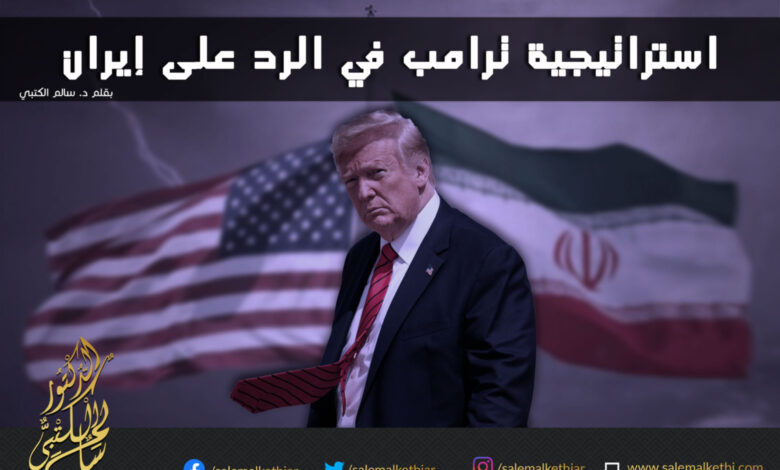
It is clear that US President Donald Trump does not intend to launch a limited or large-scale military strike against the Iranian mullahs’ regime in response to the regime’s threat to global energy security by engaging in attacks against Saudi Arabia’s Aramco facilities. This is evidenced by President Trump’s clear statements in this regard, or the statements of the US Secretary of Defense.
But the latest evidence came from US House Speaker Nancy Pelosi’s warnings to President Trump against a military strike on Iran in response to the Aramco attack. Pelosi’s warnings may not have added much to President Trump’s position, who does not essentially plan military action. But it has important implications for the US Congress’ vision of strategic relations between the two allies, the US and Saudi Arabia.
Pelosi expressed her conviction that Washington was not responsible for protecting Saudi Arabia in a radio interview. Asked if Washington should put military options against Iran on the table, after the Aramco attack, she said, “I don’t see any responsibility for us to protect and defend Saudi Arabia.” “What agreement is that a part of?”
The speaker said Trump was not authorized to wage war on Iran without congressional approval. Pelosi made it clear that presidential powers allow such decisions to be made without consulting with legislators when the United States, not Saudi Arabia, is attacked from outside.
Decidedly, Pelosi is well aware that Trump does not intend to do so. So Pelosi wanted to block any plans in this direction from other US decision-making institutions. In the same interview, Pelosi expressed her conviction that Trump is not seeking war on Iran, pointing to Trump’s own criticism of the invasion of Iraq, which the speaker of the House of Representatives described as the biggest mistake in US history.
President Trump’s strategy to manage the Aramco attack crisis is based on two points.
First, Trump has excluded military action and made it the last available strategic alternative. Some of his remarks suggest that a complete exclusion of this alternative, at least in the foreseeable future.
President Trump said about a week ago that the United States does not want war with Iran. Asked just after the Saudi attacks as to whether diplomacy with Iran had now been exhausted, Trump replied, “It’s never exhausted.” Trump will remain committed to the option of negotiations, even if this option was met with failures and Iranian rejection.
The second point in President Trump’s strategy concerns the US role in defending the security of the Saudi ally. Trump said he believed that much of the responsibility lay with Saudi Arabia in defending itself, and if there was protection for Saudi Arabia, it was up to it to pay a great deal of money.
This is not surprising given President Trump’s approach to the strategic allies of the United States, not just Saudi Arabia. Trump deals in the same way with NATO allies in Europe as well as with South Korea and Japan.
This policy, which many criticize, does not apply only to the Kingdom. This is President Trump’s approach to managing all crises that do not directly affect US security.
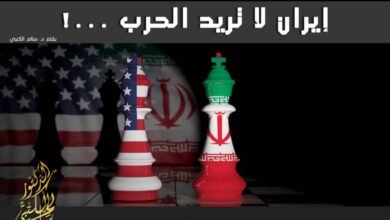
Given Trump’s two strategic points, it cannot be said that the United States fears an Iranian reaction. The gap is huge in the balance of military power between the two countries. But what Trump does fear is any negative impact on his chances of winning the next presidential election.
A military clash would torpedo President Trump’s election campaign, which calls for the withdrawal of US troops from conflict zones and the return of US troops home. Withdrawal is an important aspect of President Trump’s election speech in his first campaign. It is hard for him to backpedal in the campaign to win a second term, otherwise he will lose credibility in the eyes of his supporters.
Also, one of the elements of this campaign is to make the Allies pay for their security. It is also difficult for him to retreat from that goal.
For President Trump, the whole issue is about his campaign, not something else. The problem, however, is that the mullahs’ regime knows this very well. They believe that the White House is not willing to venture at all, and therefore go too far in their escapades. They continue their abuses without worry of a quick US reaction.
The question now is whether President Trump should not rule out such a military option and at least balance the big stick and the carrot in dealing with the mullahs?
The Iranian regime, as previous experience suggests, understands only the language of power. We saw how the regime cooperated and fully complied with any US demands out of fear during the wars in Afghanistan and Iraq.
Because he has no political history and is overwhelmingly confident in his own views and conclusions and does not listen much to his advisers and strategists, President Trump has over-sent positive messages to the mullahs, encouraging them in their reckless regional behaviors. They are unlikely to back away unless they receive firm messages from the United States and the international community.