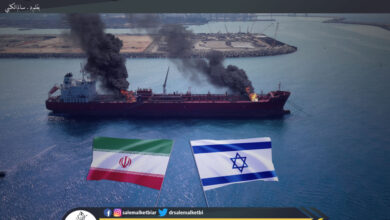
The media and pro-Iranian regional sectarian groups have publicized the mullahs’ so-called gains from bringing down the US drone. However, they overlook the huge differences in military power between Iran and the United States.
They do not realize that the major powers can deal with such incidents through political manoeuvres that provide them with the maximum possible strategic gains. They sometimes even consider them as a timely opportunity to work towards certain vital objectives.
We all remember how Russian President Vladimir Putin exploited the incident of Turkey’s shooting down of a Russian Sukhoi aircraft in order to achieve all of Russia’s strategic objectives in Syria. He took advantage of the Turks’ desire to redeem themselves with Russia to move away from any military response to this incident when many were expecting a violent military reaction from the Russians.
But, all the more so since the incident did not claim any victims, President Putin chose to make gains of much greater scope than a rapid military victory. In parallel with the landing of the Russian pilots from the burning plane, President Putin went as far as to describe the incident as a “stab in the back by the terrorists’ partners. ” Then he alluded to the consequences that would be disastrous for relations between Moscow and Ankara, to get Erdogan to do what he wanted.
He even spurred the split between Turkey and NATO which the Turks relied on in the aftermath of the Russian plane crash. There are many examples of crisis management similar that President Trump is now running, which some consider to be hesitant.
Others see it the weakness of President Trump’s ability to make a war decision, given that he agreed to a limited military strike last Friday at dawn, before quickly reversing his decision, after learning that, in his opinion, the attack should be delayed, at least for the time being.
President Trump and US strategists understand that the strike can give an advantage to the Iranian mullahs and enable them to manage the crisis, thus ruling out other scenarios. From Trump’s point of view, there is still the possibility of imposing more severe sanctions on the mullahs and waiting for them to bear fruit.
Secret diplomacy and other military options such as naval blockades and alternatives can be used. A strike would likely expand if the Iranian regime decided to carry out large-scale strikes against the interests of the US and its regional allies.
We can be with or against President Trump’s opinion. But we must know his reasons and arguments, especially since, sooner or later, the crisis will eventually bring us to the negotiating table.
The GCC countries must be true partners of the US and understand the motives of the US administration, whether in the option of war or negotiations. The situation is very complex and the Iranian regime is an irrational rival.
Extreme caution and intelligence must be shown in order not to lose advantage. Iran must not be allowed to lead a scenario of regional destruction that it actively seeks. President Trump certainly did not want to rule out the option of responding when he said that there was a fool in Iran who decided to shoot down the U.S. drone. What he meant was that he should not follow the fools and let them manage this highly sensitive crisis.
Trump stressed that he will not be manipulated by Iran, as this will embolden the North Koreans. He knows that the two crises are interdependent, that the two rogue regimes are similar and that they learn from each other in their relations with the United States.
The Trump doctrine of hurting the adversary may differ from traditional political attitudes. He wants to cause as much pain as possible, but not necessarily by a decisive military strike. Perhaps he is aware that these dictatorships will not be harmed by the deaths of thousands and even millions of their citizens. But he hurts them so much that they feel self-threatened and look to the future with fear for their own interests.
I believe that President Trump is truly committed to building his cause and mobilizing world public opinion. He could subsequently receive Security Council approval for a limited military operation against Iran, either through a limited international coalition or by the US alone. In any case, the Iranian regime’s sense of threat and anxiety remains more effective than to start a war.
The miserable regime is now living under pressure, thinking about its fate. It has no clue when and how the US will hit. In my opinion, this formula is more likely to lead Supreme Leader Khamenei by the nose and push him to swallow the poison and accept the conditions necessary to maintain regional and global security and stability.