The world has hardly breathed a sigh of relief after the defeat of the Daesh organization in Iraq and Syria.
In recent days, a new wave of terrorism has erupted in Afghanistan with the headquarters of the Ministry of Communications and IT targeted in a criminal attack by Daesh.
The incident killed and injured about ten civilians. Security forces saved hundreds by evacuating more than 2,800 people from the government building.
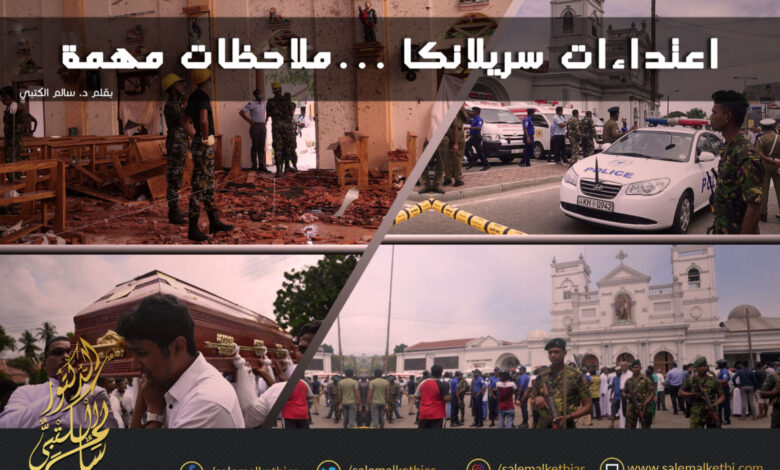
Then came a series of church bombings in the Sri Lankan capital of Colombo and neighboring cities in conjunction with Easter celebrations. In one of the most dangerous waves of terrorism, more than 300 people were killed and some 500 wounded.
The bombings of churches in Sri Lanka have heightened terrorist threats. The exacerbation is not only because its victims compare to the victims of conventional military conflicts but also because the plot to carry out these bombings indicates a high risk level.
The seriousness of the situation describes a serious and firm stance from all countries involved in combating extremism and international terrorism.
Although the perpetrators of the terrorist attacks against churches in Sri Lanka belong to the local population, this does not completely deny the risk of transcontinental terrorist organizations.
It has become difficult to deny any links between these organizations and attacks by local terroristgroups for many reasons.
The first is the rise of offshoots of terrorist organizations, especially of Daesh who has already taken responsibility for the attacks on Sri Lanka and Afghanistan. The organization is based on local elements that have been trained and have experience in battlefields such as Syria.
The second reason is the growing lone wolves attacks. Solo attackers work in ideological contexts with terrorist organizations and execute the orders of the virtual organization. The organization consists of an unlimited network of unknown sympathizers and terrorist ideologues.
Third, most terrorist organizations are resorting to recruiting sleeper cells in different countries. The mother organization instructs them to carry out terrorist crimes against specific targets and in partical timings.
These cells are only different from lone wolves in the regulatory framework and the level of commitment and communication with the terrorist organizations leaders.
Fourth, the defeat of terrorist organizations in the areas of their activity in several countries lately may have prompted the terrorist to expand their scope of activities geographically. The goal is to distract and confuse the parties involved in targeting terrorist elements. Another objective is to work in areas that are not a security focus. Lack of security helps terrorist organizations achieve their goals.
They are seeking at the current stage to raise the morale of their members and cadres and restore confidence in the ability of these organizations to implement new crimes and achieve their malicious goals.
In the Sri Lanka bombings, the tools of execution appear primitive in most of the crimes that have taken place in capital Colombo and other cities, according to official reports so far. There are improvised explosive devices – homemade bombs made up of tubes with explosives inside – and a variety of terrorist crimes between the traditional and suicide bombings.
There are other important observations in the Sri Lanka attacks. Some of the terrorists involved are from the country’s wealthy class. They belong to the National Thowheed Jamath and were educated in the West. The case brings to mind the experience of Osama bin Laden, the founder of al-Qaeda, which denies the idea of a rudimentary link between living conditions and terrorism.
Sri Lankan security officials confirmed that most of the bombers were from the prosperous Muslim community in the country. The community represents less than 10 percent of the population.
The fact that most of Sri Lanka’s terrorist attackers belong to the wealthy is a matter that needs further study and research from the security services. The research usually focuses on poor areas as hotbeds for terrorism.
Another observation is that there are no indications that the terrorists have traveled to areas where terrorist organizations are based in the Middle East or have fought for Daesh in Syria and Iraq. The idea confirms Daesh and Al Qaeda are turning into ideological umbrella groupings of extremists, whether through direct e-recruitment or individual attacks.
Another concern is that security agencies sometimes do not take seriously some of the intelligence they receive from counterparties.
Moroccan security services have warned their Indian counterpart that the Indian Embassy in Sri Lanka may be attacked by extremists, news reports said. India has informed the Sri Lankan side, but the latter has taken no action to foil the attacks.
When it comes to platforms of cyber-instigation, the leader of the attack cell, Zahran Hashim, was reported to spread his inciting rhetorical through social media calling for the murder of non-Muslims. His radical tendencies have not been seriously dealt with.
Reports say Muslim leaders in Sri Lanka have warned the authorities about this person’s activities several years ago. Hilmy Ahamed, the vice president of the Muslim Council of Sri Lanka, told AFP that the man was “Rejected by us and only radicalized a limited number of youth.”
One of the terrorists has been radicalized while studying in Australia.
His sister said, “My brother became deeply, deeply religious while he was in Australia… he came back to Sri Lanka a different man.” Obviously, radicalization can heppen not only in poor areas but wherever conditions and stimuli are available.