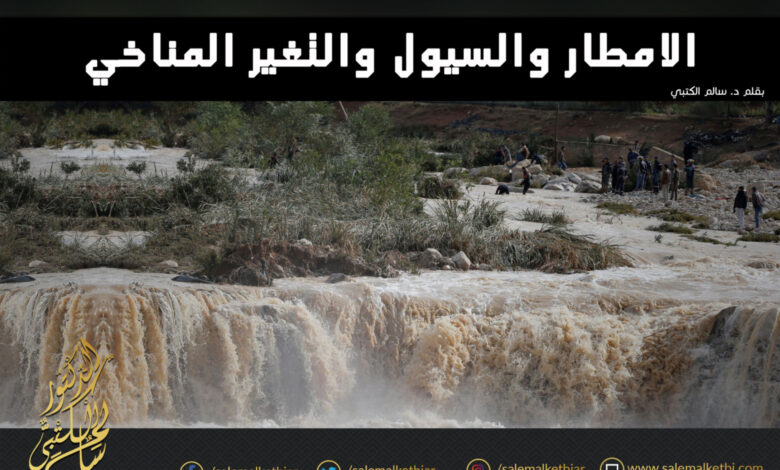
In recent years, many Arab countries have witnessed heavy rains, most of which turned into torrential floods that caused severe damage to the population. In Jordan, the rains recently hit the tourist city of Petra, two weeks after 21 people died after being washed away by floods in the Dead Sea. Heavy rains have also caused floods in Saudi Arabia, Oman and Kuwait. The Kuwaiti Minister of Public Work resigned following the floods.
Rain has also caused problems in several countries, including Egypt, whose cities have never been as hit as last year.
The sinking of cities and streets may be a common sight in the Middle East countries in the coming years due to climate change. It is important to prepare for these changes in terms of infrastructure of cities and environmental planning.
What some countries saw exceeds the usual capability of facilities and infrastructure that were not designed to cope with torrents and heavy rainfall. Cities should develop management capabilities and create relief teams in order to deal with possible floods disasters.
We must also raise awareness of how to deal with these crises, and develop new architectural standards for buildings, roads and facilities.
Indeed, climate change, which has been the world’s top priority for years, has become a neglected issue on the working agenda among world leaders, especially since US President Donald Trump announced the US withdrawal from the Paris agreement, which was reached after years of arduous negotiations.
Neglect does not change the fact that climate change is a serious problem. The UN Secretary General Antonio Guterres has recently warned that climate change will be out of control if we don’t act to change the current path by the year 2020, calling it “a direct existential threat.”
Guterres draws a grim picture of the effects of climate change, saying that the whole world saw heat waves, forest fires, storms and floods that left large destruction this year.
The effects of climate change in the Arab region are not as serious as in other regions of the world.
The global debate on combating this phenomenon has almost stopped. UN negotiators have recently met to try to push this process forward. But differences between rich and poor countries over the funds that are supposed to be spent on fighting have been overshadowed in this meeting by hard-line positions and a lack of opportunities for understanding. Negotiators are expected to meet again in December in Poland in an attempt to complete the drafting of the implementation guidelines for the Paris Climate Convention, amid negative expectations about the possibility of reaching understandings and solutions.
The world is not moving fast enough. Studies confirm that by 2100, the waves of asylum seeking from some 103 countries will increase due to global warming. Due to this climate shock, some countries will see temperature change to a very cold or very hot one. Scientists found a possible causal link between the increasing number of EU immigration applications and climate change in some Asian countries.
The Arab region and the rest of the world will experience climate shifts in the coming years so we must prepare now, especially as torrents and heavy rainfall can cause enormous losses to weak infrastructure.