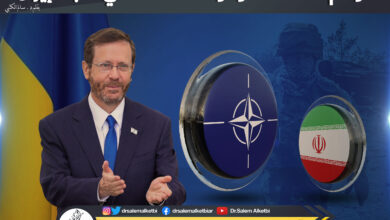
The recent years were transformative in international relations. For example, NATO is no longer as cohesive as it was during the Cold War and the several years following the collapse of the former Soviet Union. Differences grew between NATO partners—on defense budgets between the United States and European members, and even the third military force in NATO, Turkey, has bought strategic weapons from Russia.
Another transformation came about as the US exited many global-level accords including the Paris climate and trade partnership agreements. Russia came back to the international action arena through its Syria intervention, bringing back an influence sphere of the former USSR.
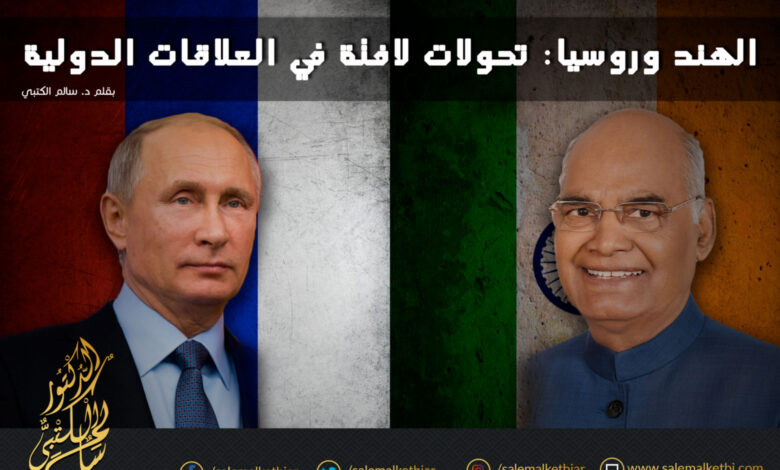
The latest changes in international relations are the recent signing of a deal between India and Russia to supply five S-400 air defense systems. Turkey was one of the NATO countries to contract to purchase them. So did Iran and a number of other countries want to follow suit, clearly reflecting the development of Russia’s military technology and restoring a great deal of trust recalling the once reputed Soviet Union weaponry.
In addition to the Russian advanced missile deal worth more than $ 5 billion, about 20 cooperation documents have been signed between New Delhi and Moscow. India, one of the emerging international powers and a strategic partner of the United States, seems to no longer adhere to that partnership. It is now seeking to achieve its goals and interests, diversifying alliances. In retrospect, the alliance had been very strong between India and the Soviet Union in the face of a Pakistan–US alliance.
Washington itself has expressed “disappointment” at India’s decision to buy Russian missiles. The United States recognizes that the deal strengthens the status of Russian weapons in the global arms market. However, it is difficult to expect Washington to carry out threats to sanction arms export to India should this deal be signed, following a bill passed by the Congress in 2017 on Russia’s involvement in Ukraine and the alleged interference in the US presidential election. The bill imposes economic sanctions on any entity or country that concludes arms contracts with Russian entities.
India has signed the deal, although it has not yet received a US exemption from the bill, but so far just more warnings. But India, with its desire to have a bigger global role, seems to have realized that it should become more than a regional power. Meanwhile, The United States is strongly seeking to strengthen its relations with India in order to counter the strong Chinese rise in Asia, and it will not risk losing its position in the Indian arms market. The United States is now the second largest arms supplier to India’s military after Russia.
Statistically, the S-400 deal is another move to strengthen Russia’s position in the Indian arms market, but the competition was not just over a missile deal, but also over plans by India to modernize the army, for about $ 100 billion, in the face of Pakistani and Chinese rivalry.
The US industry is concerned that S-400 missile sales would expand because it is the only competitor to the Patriot system, not so popular in recent years following doubts around its operational effectiveness against missile threats.
Apart from the arms deal, the United States is watching with great concern the Russian expansion in Asia. Russia is deliberately expanding from Syria to Iran to India, as well as Pakistan, the former US ally, while maintaining strategic relations with China and North Korea, just when the US expressed the desire to move to Asia to counter the growing Chinese influence regionally and globally.
The most important test facing India will be the extent of the commitment to implement the US sanctions imposed on Iran in November. Will India remain committed not to import Iranian oil, or will continue to implement its deals and ignore the US sanctions? India is not interested in losing relations with Iran without getting something in return from the US. It no longer regards itself as a small force that adheres to what Washington decides, but believes that it has an important role to play in managing the world order. It is therefore difficult to predict whether or not it will comply with oil sanctions against Iran, unless the administration of US President Donald Trump gives something in exchange for its position on Iran.