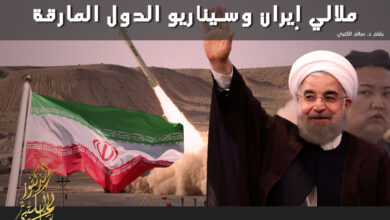
The death of former Iranian President Hashemi Rafsanjani, who was serving as head of the Expediency Council, received a lot of interest by Iranian affairs monitors at the regional and international levels. His death raised a lot of questions about trends in Iran during the next phase, especially after allegations in some media reports about the circumstances of the death and circulated statements attributed to his son, where he accused the militant mullahs of murdering his father.
Most analysts believe that the death of Rafsanjani allows the militants to pull the Iranian policy towards more extremism and isolationism and justify that by saying that the Revolutionary Guard would use the death of the Chairman of the Expediency Council in strengthening his influence after the end of the role of the man who became famous for his influence in the military force in the country.
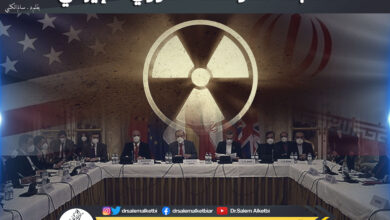
Most speculations are not only raised because of the death of Rafsanjani but because this death came four months ahead from the presidential election in Iran, which is an exceptionally important election because it comes in very complex conditions internally and externally. Internally, there are growing doubts about the health of Supreme leader Ali Khamenei and there are concerns about the possible successor, and the extent of his commitment to the revolutionary approach. These concerns are related to the departure of the first generation of followers of Khomeini who disappeared one by one from the arena. There is also an internal concern about the orientations of the new American president, Donald Trump, and the presence of a high probability of pressure on the mullahs’ regime in order to make adjustments to the nuclear deal, which has long been criticized by President Trump during the election campaign, which culminated in his victory in last November.
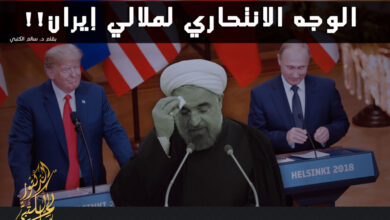
Regionally, there is escalating tension between Iran and Saudi Arabia. There is an Iranian concern about the acquisition of Russia and Turkey of strategic gains in Syria, in light of the emergence of indications of the possibility that Russia would sacrifice the relations with Iran in order to win a comprehensive deal to ensure the settlement of disputes with the United States, as President Putin is keen on making relations better with the Trump administration.
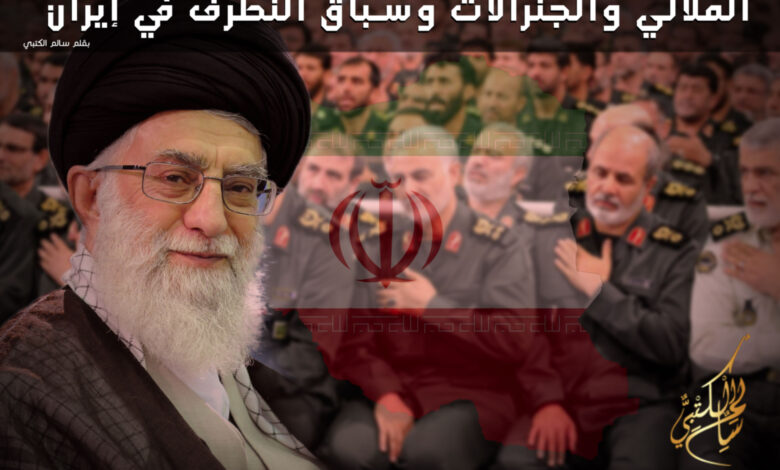
In such a climate and circumstances, Iranian extremists and hard-liners have a great chance to tighten their grip on power in Iran, especially that the Iranian colonial expansion in wars abroad has provided, directly and indirectly, a valuable opportunity for the generals of the Revolutionary Guard to be the main player in the Iranian scene. The world media is talking about TV personality Gen. Qassem Soleimani more than President Hassan Rouhani. News in Iran focus on comments attributed to generals such as Defense Minister Brigadier General Hossein Daqiqi, who came out recently with an absurd and provocative statement that Iran’s power in the region and the world is an undisputed fact, in reference to the display of power by Iran in Syria and Iraq under the eyes of the world and with complicity with the two ally regimes.
Gen. Daqiqi went on to say that the protecting of “missionary goals” of Iran requires the support of what he called the Islamic currents of resistance and steadfastness. The “missionary goals” were not explained by anyone, however. If al-Baghdadi the leader of Daesh or al-Zawahiri the leader of Al Qaeda said so, we would find many people trying to analyze such concept and the Western media attacking the Islamic religion that these terrorists allege to protect. But Daqiqi’s statement did not draw any attention despite the fact that his practices are the other face of terrorist organizations as he himself declared as he said that he is fighting in the name of religion and has “missionary goals”. We do not know what are those objectives of Iran, but Daqiqi is the one who commissioned Shiite sectarian forces to deport Sunni Muslims from their own towns and villages in Iraq and Syria and replacing them with Shiites, and he is the one who is causing a change of demographic identity in Sunni provinces in these two countries to achieve “missionary goals.”
Brigadier General Mohammad Jafar Asadi, who is described as a top adviser to the commander of the Iran Air Defense Force, also said in recent days that what he described as “a defense front of Islam” has reached the coast of the Mediterranean Sea, adding that during the war with Iraq Iranian forces were “in Khuzestan (southwest), just 10 minutes from the front line, but the Islamic Defenders front now reached the coast of the Mediterranean.” He meant of course the presence of the Revolutionary Guards in Syria, which Iran hopes to occupy by proxy forever.
In light of the obscure Iranian scene, which is controlled by the extremists of the Revolutionary Guard commanders, defining the identity of the next leader will be, most likely, in the hands of arrogant mullahs and leaders of the Revolutionary Guards. The Assembly of Experts would obey them under pressure and all candidates to succeed Khamenei belong to the hard-liners and even extremists of Iran.
We have to expect the worst in the Iranian scene. Iran is gradually devoid of minds to run its affairs and ensure the Iranian people’s true interests, not the interests of the Guard commanders and militias.