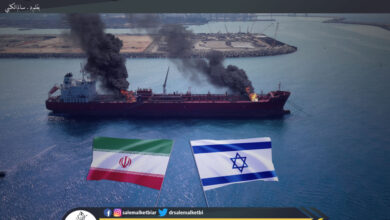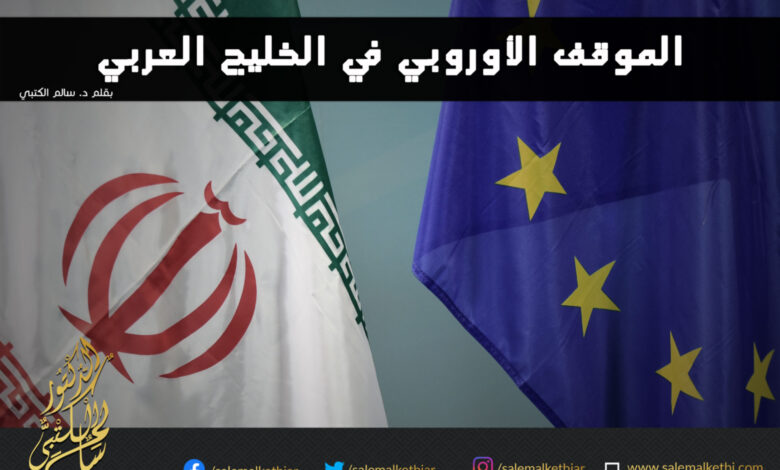
In recent years, the European position on the Iranian nuclear agreement has been an important loophole used by the mullahs’ regime to challenge US sanctions.
Hesitant and cautious, Europe has encouraged the mullahs to increase violations of international law. This mistrust is mainly due to the fear of a large-scale military conflict in the Middle East, which is acceptable.
But the Iranian regime, in turn, does not consider these fears and logical calculations that concern the interests of the people. Rather, the regime sees it as a reason for it to pursue the implementation of sectairo-expansionist objectives and plans.
As the European side had had enough, Britain, Germany and France jointly warned that the Iranian regime would continue to violate the terms of the 2015 nuclear agreement.
Several factors have contributed to bringing European positions closer to the US position on Iran.
The first is the presence of British Prime Minister Boris Johnson, who is firm towards the Iranian regime, especially after Iran’s escapes in the British flag tanker crisis.
The second is the failure of French President Macron to resolve the Iranian position and thwart his initiative to hold an American-Iranian summit in New York.
Thirdly, Europe’s extreme embarrassment. Regional security violations in the Gulf by the Iranian regime continued and gave rise to threats. The regime has put the major powers in a bad situation because of their inability to tame the regime.
European dissatisfaction has been exacerbated by recent statements by Iran’s supreme leader, who is violently attacking European countries. He accused them of being subordinate to the United States and not being able to apply their political will.
Due to the relative change in the European position, it may be possible to move closer to the US position, which is in line with a common international position in the face of threats from the Iranian regime.
But does this change contribute to the withdrawal of the three European powers from the nuclear agreement? The answer depends on the behaviour of the mullahs’ system. To continue to violate the terms of the agreement means, of course, that it is emptied of its content. The natural alternative would be a European withdrawal that would coincide with the American withdrawal.
Moreover, the European position could be limited to a strong warning message to the Iranian regime. But it depends on how the mullahs received this message.
They are more likely to pursue the policy of arrogance and tenacity, believing that they will bring the major powers to their knees and force them to comply with Iranian conditions and requirements. We doubt it.
It is true that the suicidal tendency in the political discourse of Iranian political and military leaders and leaders is increasingly visible. But this trend will not diminish the willingness to counter the Iranian threat if certain conditions are met.
These include the transatlantic consensus and the success of the Trump administration in developing an issue that persuades public opinion in various countries that it must address Iran’s danger. This requires resolutions, the first of which could be a military strike against Iran.
The mullahs do not realize that the conflict is gradually becoming a complex strategic conflict over roles and domination in the Middle East. This may differ from what is required of transatlantic powers to contain Iran in its regional expansion in order not to become a potential threat to Europe itself in the future.
From the north, south, east and west, the mullahs’ regime threatens to attack several countries in the region. Its militias in Lebanon, Yemen, Iraq, the Palestinian territories and Syria are omnipresent in the regime’s discourse, which evokes a geographically broad front.
The regime wants to create a front that can destabilize the region, testing not only the United States but also Europe. Admittedly, relations between the two Atlantic partners, the United States and the European countries, are determined by considerations that are well known to strategists.
However, for the security and stability of Europe, the Middle East is an extremely sensitive region. The region is not only relevant from the point of view of energy resources, but also from the point of view of refugee flows, which have become one of the most difficult problems to solve for security and stability on the European continent.
How Europe’s attitude towards the mullahs’ regime will evolve in the next stages. Will the Iranian regime continue to ignore the terms of the nuclear agreement by pursuing uranium enrichment, or will caution prevail and Europe will continue to play the role of mediator with the United States?