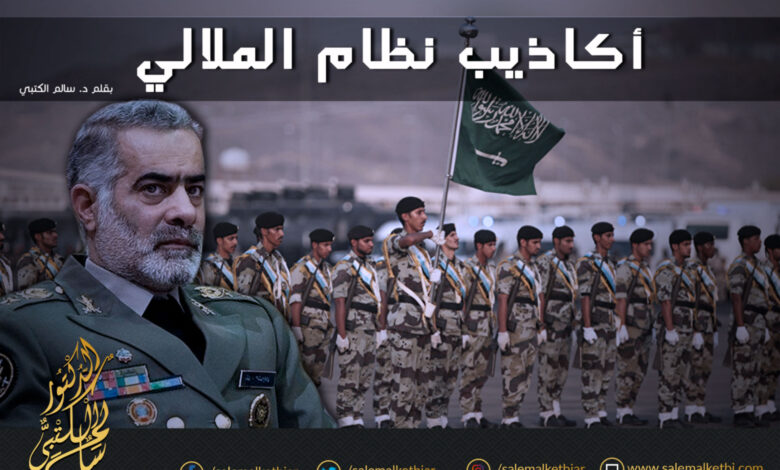
The mullahs’ regime has been faking allegations against SA. Iranian lies deserve no response. But when it comes to an Iranian Senior military Advisor then we are dealing with an unprecedented recklessness of the mullah’s regime. Recently, Senior Advisor to the Iranian Army Commander Brigadier General Amir Reza Khorram Tousi warned Saudi Arabia, claiming that the kingdom cannot stand for 48 hours before the Iranian military force.
That would be normal if this was said by an ordinary man or a non-specialist. But to be said by a senior military adviser that is a state of complete ignorance.
Followers of military and security balance between the two countries are fully aware that it is not in favor of Iran. Nowadays, wars no longer depend on the number of armies and their practicality but strongly on the overall strength of countries. States are being keen to create defensive alliances capable of protecting their security and strategic interests. The Iranian economy is about to collapse because of the potential US withdrawal from the nuclear deal.
Tehran is aware that Riyadh has an advanced army, especially air forces, capable of destroying the Iranian army and militias. Iran bets on proxy war and sectarian militias to implement its expansionist ambitions more than on military operational capability. SA possesses sophisticated defensive systems that can deter Iran’s missile capabilities in any possible regional military conflict.
The idea of the total defeat is only in Tousi’s mind because it has vanished a long time ago from the military literature. The US army, the most powerful army in the world, needed allies and spent a long period of time to defeat Saddam Hussein’s army in 2003. It also needed longer time to beat conventional organizations like Taliban, al-Qaeda and Daesh. All modern wars have reached no overwhelming victories.
Tousi’s statements are part of a psychological war. The mullahs’ generals cannot read the regional strategic developments. Tehran’s sharp tone would be effective in other political circumstances. The countries in the region are under the rule of young leaders working to develop their defensive capabilities and protect the interests of their countries and people. Tousi must reread the military balance reports and take their results into account before threatening neighboring countries.
In an interview with the Economist last April, MBS said that a confrontation with Iran is unlikely to take place. This is something SA does not expect, he said. A war between SA and Iran will be the beginning of a disaster to the region and it will have repercussions on the world but the Kingdom won’t let that happen, he added.
Unlike the mullahs’ regime, the Saudi leadership is wise. The threat that Gen. Tousi talked about is simply SA’s effort to take an international stance to stop the Iranian expansionist plans. The SA is working on the implementation of international laws in order to safeguard its national security. Iran uses a language of bullying and does not recognize international conventions governing relations between countries.
No Saudi official has ever mentioned a direct military confrontation with Iran nor has issued military threats against it. The matter is about respecting international law and the sovereignty of the neighboring countries. It has nothing to do with military confrontations. Tousi had to direct his threats to the Israeli army. The Israeli army has launched many attacks against the Iranian militias in Syria and caused the deaths of many Iranians. The mullahs, like the al-Assad regime, only announced their intention to respond in a timely manner.
Gen. Tousi must understand that the tactic of diverting attention from the insults that his troops receive in Syria from Israel will not succeed. The Iranians know that the confrontation is now with Israel and not with SA. Tehran has to direct its threat towards the right place or accept the insults in silence.