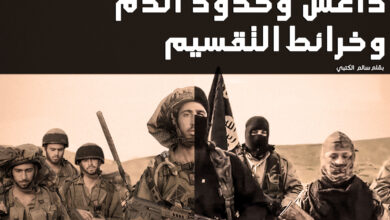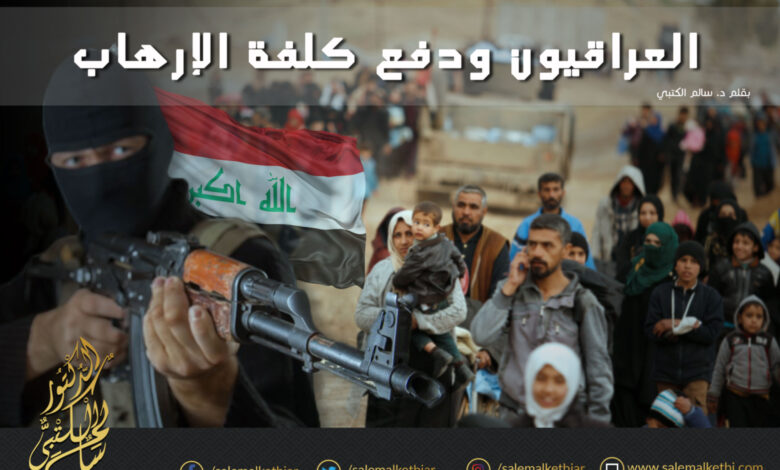
The United Nations has recently revealed that some 4.5 million Iraqis have fled their homes since Daesh has taken control of large areas of northern and central Iraq over the past three years. Hundreds of thousands of people, including tens of thousands of young children, have been in serious danger, stress and trauma, and will need specialized support and care for years to come, said Lise Grande, the UN humanitarian coordinator for Iraq.
This is one of the costs borne by the Iraqi people because of the terrorist activity on their land; the displacement of millions of people and the disruption of Iraq’s demographic distribution raises questions about the extent of complicity of Iran and its allied Iraqi politicians in this Daesh scheme
Was the expansion of the organization in the Iraqi Sunni provinces in particular engineered by Iran in order to free these areas of its Sunni population and even move millions of Shiites there?
Reports indicate that more than half a million people fled Mosul when it was controlled by Daesh and 800,000 others fled during the military operation to regain control of the city which lasted for months. Thousands fled Hawija before it was recovered from the grip of the terrorist organization by Shiite militias and Iraqi forces.
The evidence in Iraq and Syria now confirms that the organization did not come of nowhere nor did it control this vast area of land by its own power. Some actors helped them achieve certain interests for the expansionist regional powers that wanted a bite from the Iraq cake and to end the influence of an Arab country that once hand a say in the balance of regional powers.
The subject of displacement and demography is an old file in Iraq. It was used by the regime of Saddam Hussein against Iraqi Kurds and Shiites. Ethnic and sectarian cleansing campaigns were carried out, and these catastrophic practices were expected to end after the fall of the regime. But the evidence confirms the emergence of other forms of displacement induced by the confusion or fear of Daesh and the killings carried out by the militias of the Shiite Mobilization, not only the displacement of Sunni Muslims, but also of Christians and other minorities. The statements of local officials reflect the changes in the proportion of Sunni Arabs in cities such as Basra and Mosul due to Sectarian displacement, and the same applies to the displacement of Shiite families from Iraqi provinces such as Nasiriyah.
The disaster is that the reported displacement figures are not accurate. Outside accessible areas such as camps, the figures are much higher. Families that have migrated and lived with their relatives are seldom accounted for.
Iran was not thinking about the Iraqi Kurds taking the step of the referendum that paves the way for independence when it focused on reengineering the Shiite and Sunni areas. But it was surprised by the scenario of the Kurdish separatism and so was Turkey, which also made catastrophic mistakes when it supported the Kurdistan’s economic and political divorce from Iraq.
The disastrous practices committed by Iran and successive Iraqi governments have led to communal and ethnic polarization. A real road map that contributes to containing tensions ethnic groups is needed. The solution in Iraq must come through enshrining coexistence in the constitution and laws, or partition could be the fate of Iraq.
Iraqi national politicians must work to address the mistakes of the past and reunite the country to prevent it from turning into a “playground” for the Iranian Revolutionary Guards.