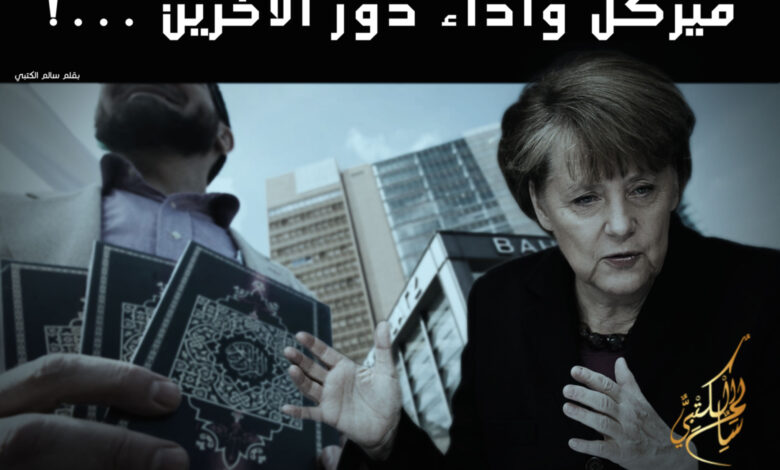
In the middle of the intellectual blockade on Islam and Muslims in many Western countries, and amid the growing dredge of the extreme right against Muslims in several European countries, German Chancellor Angela Merkel spoke with much objectivity and appreciation about Islam and Muslims. In the Munich Security Conference, which was held recently and was attended by many security and military officials from around the world, Merkel said Islam is interpreted wrongly, and that it is not a source of terrorism, as rumored. Amid a wave of attacks against the Islamic religion, such defense deserves appreciation and respect.
The German Chancellor is known for her calm and moderate positions toward the Muslim religion. She has already taken a historic stance by receving Syrian refugees, for which she was criticized fiercely, but still was appreciated by many German media outlets. It seems she did what many hesitant or cautious Muslims could not do.
The German Chancellor has also an objective attitude towards Jews and others groups. She vowed to protect the Jews and Muslims living in Germany from intolerance, saying that Jewish life is part of “us” after she said that Islam is part of Germany. In a speech to the Parliament, Merkel said that the Germans will not let anything divide them. They will fight anti-Semitism by all legal means, she added, and the same applies to the attacks on mosques, stressing that all Christians, Jews and Muslims have their place in Germany.
Chancellor Merkel made many remarks about Islam urging Muslims to always confirm they are not linked to terrorism in the name of Islam, and that Muslim scholars have to represent the true image of Islam and separate Islam from terrorism. At the Munich conference, Merkel called on Muslim clerics to draw clear boundaries between peaceful Islam, and terrorism practiced in the name of Islam.
Nonetheless, the Arab and Muslim world seems to have lost even the enthusiasm for the defense of the Islamic religion. Now it seems all we do about terrorist acts is condemnation and denunciation.
Years of speeches, lectures, seminars and conferences on the cross-cut holistic counter-terrorism mechanisms and dozens of recommendations and conclusions yielded no practical results.
Separating the Islamic religion and terrorism is not difficult and does not require budgets or conferences or seminars, but effort of Islamic scholars to denounce the practices of terrorism spreading panic, violence and bloodshed in the name of jihad and incriminate this great religion.
To deny the link between Islam after every terrorist crime is not enough; the other wants clear limits between the Islamic perspective on jihad, and what these terrorist organizations are doing.
Some say that this issue is fraught with risks and sensitivities or that it may require jurisprudence rulings that Islamic concerned institutions might deem untimely, given that certain conditions and requirements are not available under the current circumstances. However, the world is looking at Muslims today and time is running. Now is the time to take action even if it means balancing profit and loss.
Such debate in a region like the Middle East might be risky. Nonetheless, it is the German chancellor who is defending Islam, despite any political costs, while Muslims are holding limiting beliefs.
Stating that Islam has nothing to do with terrorism is no longer of impact in light of the fierce campaigns against this religion. Muslim politicians and scholars should make things clear and prove them. We cannot simply say that terrorist organizations do not represent the Islamic religion if we fail to represent it ourselves.
To show the line between Islam and terrorism, first we need to draw it. By remaining silent about the practices of these organizations, the Islamic world risks cultural and civilization conflicts that will cost millions of Muslims a lot.