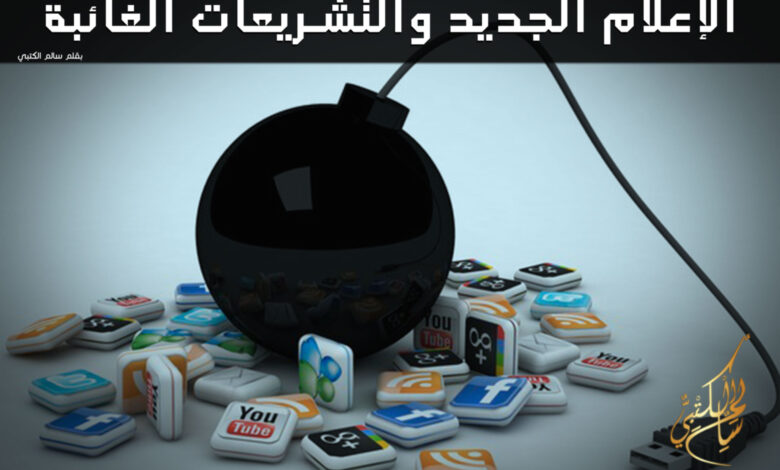
Recent years have seen a tremendous development in the new media, to the point that a lot of traditional media disappeared in the face of the enormous power of Facebook, Twitter and Instagram, which turned out to have strategic, social and political impacts.
A few years ago, Facebook was leading waves of unrest in some Arab countries, fueling situations and the fall of some regimes, to the extent that some described what happened as ‘the revolutions of Facebook’. Scientific studies and researches about the role of social media are still to be made. The social media has played a vital role in the success of the campaign of US President Donald Trump, as he used Twitter to communicate with his supporters as he was subject to media isolation by US press and television networks.
The social media has become an integral part in daily life. However, the evolution of the roles of these means is not legally controlled. The accelerated evolution exceeded lawmakers who could not produce legislative frameworks, making them, like the traditional media, followers and transforming them into producers of social communication and a public opinion maker for a variety of issues.
The lack of legal framework governing the use of the social media has heavy social costs. Recently, a mass rape in Sweden was aired on Facebook.
Since last year, Facebook started a new communication service called Facebook Live which allows to broadcast live footage. Here lies the irony. The audience of millions of people no longer has to wait for YouTube or traditional television networks.
This live broadcast is popular among Facebook users, and major media organizations and the traditional media even used it in the reporting of events. Broadcast crimes are on the rise too.
Facebook has adopted a policy that broadcast material will be treated like any posted content, but this is difficult to apply and control and saying so is somewhat ironic.
It is true that crimes are not the result of Facebook, but there is an easy way for the promotion and marketing of crimes. The issue deserves legal intervention so that live footage of the slaughter or executions by terrorist organizations would not propagate and cause panic.
What should we care about is not legal and legislative frameworks for the mediatized crimes, but also how to avoid the negative effects of the bad use of these means when the material does not amount to a crime in the legal sense.