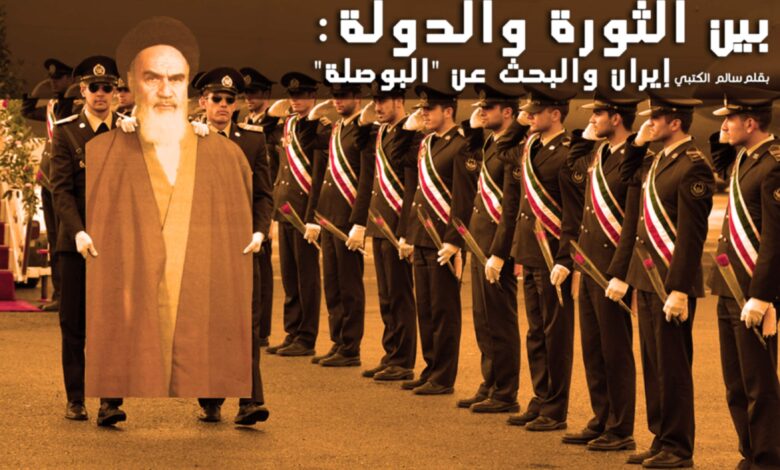
Against the backdrop of regional riots and bullying triggered by the Iranian regime, whose intensity exacerbated recently because of the interference in Saudi affairs and the attack on the headquarters of the diplomatic missions of the Kingdom to Iran, there are several explanations, interpretations and analyzes seeking to understand the perceptions and motives of Iran’s foreign policy. These explanations do not deviate largely from the overall context of the system and the internal Iranian political environment. But I think that the real dilemma experienced by the Iranian regime after nearly 36 years of Khomeini’s revolution is that it still lacks identity, looking for a compass to lead it from the stage of “revolution” to the stage of “state”!!
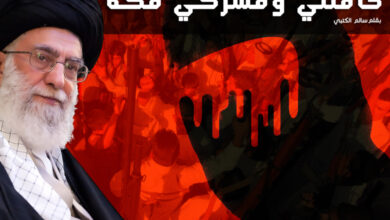
A lot of published literature, studies and research discussed the idea of the transition of Iran between the two phases, and if it is still revolving around the “revolution” or has already moved to political adulthood and to the thought of “the state.” For my part, I think that Iran is still at a standstill after all these years and decades. It still thinks with the mentality of the “revolution”, and the mullahs are still dominating the joints of the system and shouting the same slogans, leading their followers and disciples with the same tools, and the voice of the “revolution”, its Guide, is still at the top, being the one having the most control over the joints of the regime and its policies, and security and political repression still terrorize the Iranian president , whose weak grip on power is felt by the world, as well as the erosion of his ability to guide the system institutions towards achieving the goals he wants.
To demonstrate this, for example, the Iranian theocratic regime raises the logo of defending Islam. This is a good thing, and no one disagrees with it in the Arab and Muslim world, but acts and practices are entirely incompatible with this slogan, since Iran does not defend Islam nor preserves Muslim blood nor protects the oppressed! Indeed, almost all its victims are Sunni Muslims, who suffer at the hands of the militias of this system and its agents in Yemen, Syria, Iraq, Lebanon and other areas where chaos, conspiracies, intrigues and all that is contrary to true religion in word and deed have spread, all of this being managed by “the heads of the snakes”!
In light of the confusion experienced by the first generation of the Iranian revolution, some symbols of which are still in control of the ruling regime, Iran would remain within the “export the crisis” circle after it has failed to “export the revolution”, and has become convinced that the export of its internal crises has succeeded in maintaining the system for the previous decades, and therefore it is necessary to hold on to this approach in order to maintain the “expediency of the regime”, to which the system has set up a major political entity that is one of the most prominent institutions of this system, which is the “Expediency Discernment Council,” which is an organization made of “Aldhaguenh”, whose mission is to provide advice to the Supreme leader, and is the highest political body of arbitration between the institutions of the system, which in their entirety are subject to the authority of the Supreme leader, featuring symbols of extremism on the Iranian political scene.
To illustrate this I say that Iran moved to the thought of “the state” for only a few sporadic months over the past decades, and it quickly returned back, following the instructions of the Wali of the Faqih, to hide behind masks and to disguise itself behind the policy of “exporting the crisis.” Perhaps the current period is among the periods during which the Iranian system most senses the need to hunkering down behind this policy to distract Iranian people from what is going on at home, for two main reasons. First, the country is entering a crucial elections period for the future of the revolution, since next month, elections for the Shura Council and for the Assembly of Experts will take place. It is expected that the Assembly of Experts will play an important role in the identification of the next Supreme leader in light of successive news reports about the deteriorating health of Khamenei, and since Iranian policy experiences serious concerns over the collapse of the foundations of velayat-e faqih in the event of the rise of a new generation that does not has strong spiritual ties with the mullahs as was the case since the revolution. The second reason is that the Iranian regime fears the fate of the nuclear agreement signed with the West, which will most likely wait until the identity of the next newcomer to the White House is known, in light of the hesitation of the United States to lift the sanctions fully, according to the agreement, and the search for ways to procrastinate until the post-election period, or to developing alternative policies that keep restraint regarding the Iranian regime, at least until Washington becomes certain it has achieved its goals from the signing of the nuclear deal.
The problematic of “Iran’s revolution” is still the same so far. Iran feels insecure as it is living in a Sunni circumference, and the issue here is not about doctrine, which preceded the mullahs’ revolution about 1,400 years ago, but is related to the political employment of doctrine to achieve national goals that have Persian character and roots, therefore, it is difficult to understand the Iranian interference in the internal affairs of Arab countries without understanding the strategic vision of Iran as a whole, it is no different from Chahinchahi Iran, but is in fact more intransigent and extreme than it was in that era, and those who do not believe that have to read Iranian political literature and the statements of many personalities belonging to the ultra-conservative current in Iran, to realize the patronizing, racism and the perception of inferiority, which controls the Iranian political outlook for its regional neighborhood. Bragging about occupying four Arab capitals was not a matter of political chatter, but was expressing the core of a strategic vision based on the view that Iran is the dominant regional power and that the Gulf States are historically located in its scope of influence and that Tehran has the right to regain this influence whenever it wants to!!
Is it possible, then, that the speech of Persian domination overshadows the political line of a country that claims to be Islamic and to defend the oppressed Muslim peoples? In my opinion, Iran will not change in the foreseeable future, especially in terms of policy towards the brotherly Saudi Arabia, which Iran considers as the first and foremost strategic opponent in the battle of regional influence, and this Iranian approach has increased since Saudi Arabia and the United Arab Emirates challenged Iran’s attempt to undermine the internal security of the Kingdom of Bahrain in 2011. This Iranian orientation has gained an extra dose after the decision on the “firmness storm” and the intervention of the Arab coalition led by Saudi Arabia to stop the aggression of Iran’s proxies on the Yemeni people and the coup d’état on the constitutional legality in the country with all the dangers and grave threats it entails to the national security of Yemen and the Gulf alike.
Mistaken are those who think that the existence of political institutions in Iran makes it a “State” in accordance with the generally accepted foundations in the contemporary political science. Few examples are similar to the Iranian regime in the contemporary world, and the issue here is not about dictatorship, poverty and corruption only, but mainly linked to the existence of institutional heads for regional and international bullying, such as the militias of the Revolutionary Guard, which is a contemporary model for spreading chaos and turmoil in the region.
My personal conviction is that these key features of the absence of identity will continue to be inherent to the Iranian regime, so that they make it difficult to stabilize the concept of “State” in this system’s practices, which implies the absence of a compass, and a tendency to bullying and regional riots, until the complete disappearance of the first generation of the advocates and founders of the revolution from the Iran political arena.