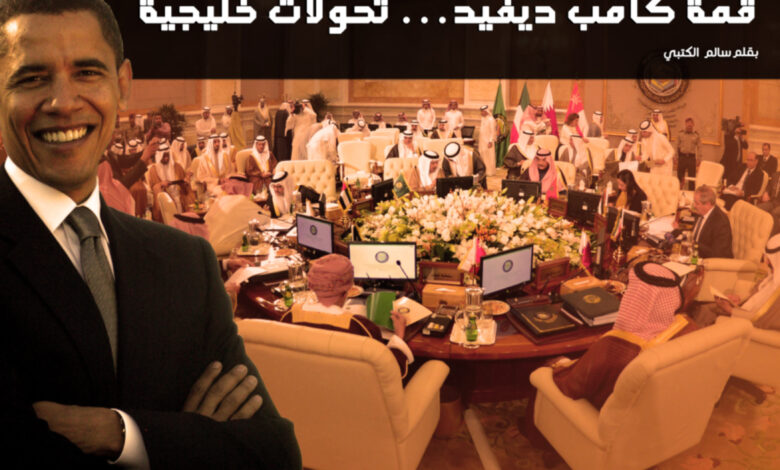
Many are discussing the upcoming summit at Camp David between President Barack Obama and the leaders of the Gulf Cooperation Council (GCC). The high level meeting signals that Washington started to work with Arab Gulf states collectively. Before, the US expressed reservations on the signing of a free trade agreement with the GCC as a unified economic entity and opted for open negotiations with each Member State. In the past, Washington used to play with the minor political differences between the GCC countries in order to maximize its interests and strategic or economic return. When the United States decides to open a collective dialogue with the leaders of the GCC countries, this necessarily means something new in the course of relations between the two sides and in the overall regional scene. The regional reality indicates vital changes not just linked to American political transformation and changing strategic priorities in the Middle East, but also associated with the parallel shifts in the GCC policy from reaction to action and taking the initiative to defend interests and seeking to achieve goals.
Operation Decisive Storm is a good example of a GCC’s new management of relations and regional crises. This was not the first step of its kind at this level. the call to the Camp David summit was almost simultaneous to it. Therefore it is difficult to say that this strategic step was the main factor behind the US invitation to the summit. There GCC pushed the US to rethink its foreign policy towards it, including the position of the United Arab Emirates and Saudi Arabia on what happened in Egypt since 2011, specifically after the rise of the Muslim Brotherhood to power in Egypt and the risk of the collapse of the Egyptian strategic power. What is certain is that the position of the United Arab Emirates and Saudi Arabia towards the situation in Egypt did not amuse the American side, which saw the Muslim Brotherhood as a potential ally able to achieve the US goals and interests in the Middle East. Washington then had to revisit the new variables when its allies did not remain silent while it pursued interests against their strategic objectives.
The Camp David summit will focus on important files like the final nuclear deal with Iran and reassure the allies in the Gulf, but also on the restructuring of the security arrangements in the Gulf. The summit represents an opportunity for the GCC states to dedicate a new regional reality so as to review security equations and alliances according to the views of both Iran and the GCC.
This summit sheds the light on a new regional view that the Gulf Cooperation Council is a central regional player for the construction of international alliances, and that any accounts of major powers in the Gulf region must be made through the Gulf Cooperation Council, which is a sign of the end of an era during which the GCC countries remained silent due to limited military strength and to limited ability to control the pace of regional strategic maneuvers.
No one would disagree that the United Arab Emirates and Saudi Arabia are key players in regional security equations, and they guarantee the remainder of the gains of the Arab peoples and their right to security and stability. The countries now have international and regional political presence and are capable of building a new Arab regional order. This is what can be deduced from the statement of His Highness Sheikh Mohammed bin Zayed Al Nahyan, Crown Prince of Abu Dhabi and Deputy Supreme commander of the armed forces, during the meeting with Vice President Prime Minister of the Republic of Yemen, that ‘We all as Arabs have to realize that protecting the Arab space from the interventions and ambitions is a common asset we have to seek together.’
The new regional reality is due to the fact that the GCC remained a major player even following the signing of the Iranian nuclear deal. Since 2011, there were shifts in the foreign policy of the GCC and transformation from reactivity to proactivity. This led to confusion for regional countries such as Iran and Turkey and the fall of their expansionist projects of Shiite influence (transforming the Shia crescent into a circle to encircle the GCC) and Erdogan-led Ottomanisation respectively.
Camp David summit signals a new phase in regional and international relations in which the GCC countries play not only against Iran, but also take part in decision making in the Middle East region.