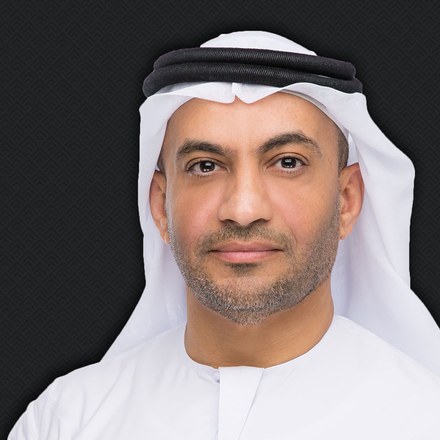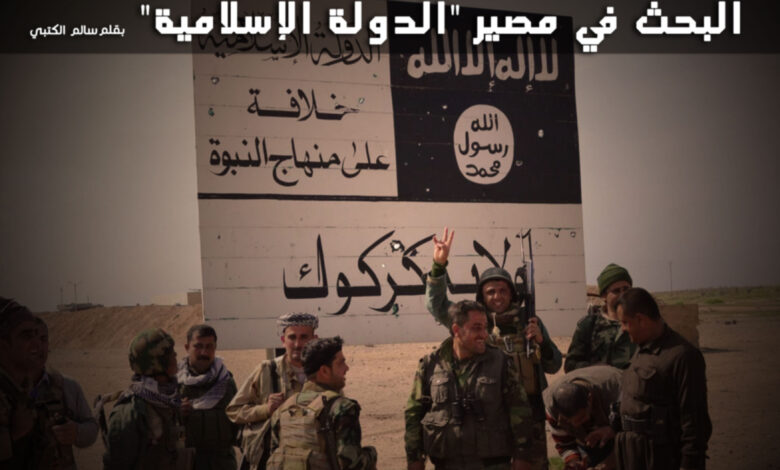
Emirati writer and political analyst Salim Al Ketbi believes that the idea of jihad has a renewing ideological momentum that should be taken into account on the analytical level, therefore, facing Daesh with a containment strategy policy can tempt the organization to expand further. Hence, the fate of Daesh should be the preoccupation of Arab studies and research centers in order to figure out solutions and alternatives and scenarios for any presence Daesh could have, as the West might be inclined to tolerate such a presence.
‘What if ISIS Wins?’
This question was raised by Stephen Walt, Professor in political science at Harvard University, in an article published in the Foreign Policy magazine. Professor Walt is the author of the study that sparked worldwide controversy in 2010. Predicting the end of the American era and the hegemony of the USA over the world, he called on the US to re-prioritize its foreign policy and mitigate its international liabilities and obligations, to preserve its place in the new world order and avoid resource-draining military adventures as futile as the Afghanistan and Iraq wars.
For such a notable figure as Walt to discuss said possibility suggests it must be taken seriously. The views of Walt were far from fictive. He said that the triumph of Daesh would not mean that its leaders will be able to achieve their ambitions and make a major impact in the Islamic world by establishing the Caliphate spanning from Baghdad to Rabat. Rather, considering the Iraqi army’s inability to launch a successful counter attack, a more likely scenario would be that Daesh controls the regions it has seized and challenges foreign efforts to undermine it.
Walt’s views represents the American mindset open to consider all possibilities, regardless of personal stances. think tanks are normally expected to study in that manner all best- and worse-case scenarios, not to provide apological pieces for pre-established policies, plans or programs.
More than 700 British citizens went to Syria to join the jihadists. 350 of them have returned to Britain.
The bad thing about Walt’s hypothesis is that Daesh could turn into a de facto ‘State’. This would require an Arab military intervention to remove the organization from Iraqi and Syrian territories, as the American political mood would no longer accept the idea of military intervention to achieve less important priorities or objectives of other countries, adopting the Obama administration’s increasing accepted ‘leadership from behind’ strategy.
The US decision-making strategy is purely interest-oriented. To consider land intervention against Daesh, the US should first have more interests in doing so than not. But the state of affairs suggest that neutralizing Daesh is more of an Arab than an American objective. Therefore, it is difficult to say that Washington will carry out a land war against Daesh.
In his article, Walt recommended dealing with Daesh in a different way. His alternative involves a huge strategic risk, and that is to adopt a containment policy toward the ‘State of Daesh’, given that its ‘State’ would not be a major actor in the international scene, so the American power should not waste efforts combating it. He justified that saying that a crowd of about 25 thousand jihadist, compared to a world population of 7 billion people, should not be a primary concern for a superpowers.
The recognition of the de facto State of Daesh
What is alarming is that Walt seems to yield the recognition of a Daesh power in the region. He says that Daesh has already started to establish administrative structures of the state through taxation, border control, the building of the armed forces and cooperation with local communities, and that some neighboring countries implicitly recognize this reality as they are turning a blind eye to the smuggling of goods into the treasury of Daesh, probably referring to Turkey. He therefore asks ‘how long will it be before other countries begin to recognize the “Islamic State” as a legitimate government?’
‘This might sound preposterous, but remember that the international community has often tried to ostracize revolutionary movements, only to grudgingly recognize them once their staying power was proven[,]’ he answers. If Daesh succeeded in clinging to power and strengthening its position into establishing a de facto State in parts of Iraq and Syria, other countries will need to work together to introduce it to the facts of life under the international system.
‘The Arab strategy makers are facing additional sources of risk. Contrarily to what some Western theorists maintain, Daesh will not settle for the territories it controls in Iraq and Syria; the idea of jihad has a renewing ideological momentum that should be taken into account on the analytical level, therefore facing Daesh with a containment strategy policy can tempt the organization to expand further.’ —Salem Al Ketbi
From the point of view of some in our region, Walt might seem somewhat exaggerating. However, researchers think differently from politicians and military commanders; they deal with the abstract truths. If we look at it from this angle, Walt’s views might appear reasoned and theoretically well-founded, as there is at least a slight possibility that Daesh would get away with their crimes and turn into a nightmare for the Arab world.
The Arab strategy makers are facing additional sources of risk. Contrarily to what some Western theorists maintain, Daesh will not settle for the territories it controls in Iraq and Syria; the idea of jihad has a renewing ideological momentum that should be taken into account on the analytical level, therefore, facing Daesh with a containment strategy policy can tempt the organization to expand further.
Although the unlikely scenario seems everything but optimistic, the US plans do not promise the imminent demise of this obnoxious organization, and the Arab States should not be interested in wasting more time. Every day, the organization spreads its ideology in new territories. Its ‘model’ even seems tempting to some other groups. The survival of the organization is now perceived as a moral victory with special connotations for the radical ideologists. In fact, Daesh has moved to an advanced level of the ‘management of savagery’, the plan put forward by the theoreticians of Al Qaeda as a road map to supposedly build an Islamic state.
The fate of Daesh should be the preoccupation of Arab studies and research centers in order to figure out solutions and alternatives and scenarios for any presence Daesh could have, as the West might be inclined to tolerate such a presence.