It’s no longer a secret that the Gulf region, in general, and the UAE, in particular, have turned into a diplomatic center of gravity on the international stage. This has become clear in recent weeks as the UAE has played host to numerous world leaders and high-ranking officials for talks on bilateral cooperation and the inking of agreements in various areas.
Economic and joint investments take center stage in all countries’ dealings with the UAE and the other Gulf states. This is especially true considering that these nations’ policies have become adaptable, diversified, impactful, and adept at handling their relationships and interests with all major regional and international powers separately.
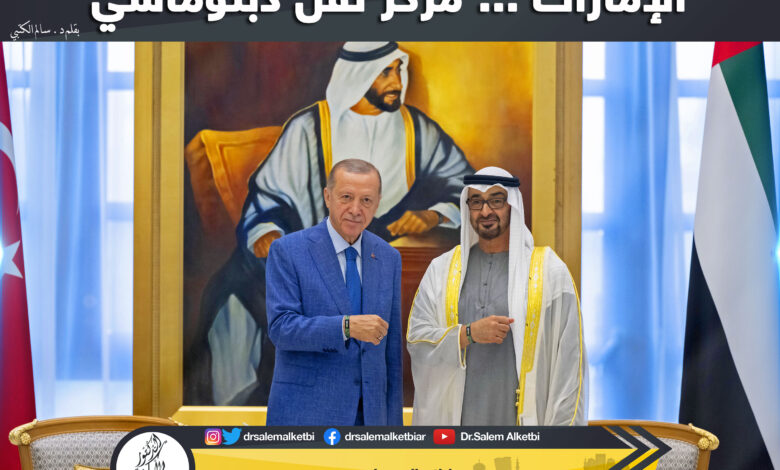
Amidst recent events in the UAE, one visit stood out – the Turkish President, Recep Tayyip Erdoğan, embarked on a Gulf tour covering three countries: the Kingdom of Saudi Arabia as the initial destination, followed by Qatar and then the UAE. This carefully chosen itinerary reflects the tour’s aims, which revolved entirely around investments, economic cooperation, and trade between Turkey and these nations. To accomplish the goal he spoke about before the visit – attracting more Gulf investments to Turkey – President Erdoğan was joined by a substantial delegation of around two hundred Turkish businesspeople.
The tour yielded the biggest defense deal in Turkey’s history, as Saudi Arabia bought Bayraktar drones, which grabbed the attention of experts and specialists globally for their effectiveness and impressive combat and operational abilities in different conflicts worldwide, especially in counterterrorism and unconventional warfare.
The UAE and Turkey have inked memorandums of understanding and agreements worth approximately 50 billion dollars across various sectors. This substantial amount reflects the level of development their relations have attained. However, this progress is not solely measured by the numbers; it’s also demonstrated through the mutual respect and appreciation between the leaderships of both nations.
His Highness, the President of the UAE, bestowed the country’s highest civilian medal, the Zayed Medal, upon his Turkish counterpart, as a gesture of appreciation for the efforts he made in strengthening the friendship and bilateral cooperation between the two nations, contributing to their prosperity on all fronts. His Highness, the President of the UAE, expressed that awarding the Zayed Medal is a way to convey gratitude and admiration for the exceptional endeavors undertaken by the Turkish President in advancing the long-standing historical friendship and mutual cooperation between the two countries, and for the personal esteem, fondness, and respect that the UAE holds for him.
Furthermore, the UAE received the Prime Minister of India, Narendra Modi, and the Prime Minister of Japan, Fumio Kishida. These visits came after HH Sheikh Mohammed bin Zayed Al Nahyan, the President of the UAE, traveled to Russia, where he participated in the St. Petersburg International Economic Forum, alongside holding discussions with President Vladimir Putin around the two countries’ growing strategic partnership.
The UAE-Turkey relations are swiftly advancing and strengthening. They jointly announced the establishment of a joint High-Level Strategic Council, signaling the creation of robust strategic ties with promising opportunities that will undoubtedly have a major impact on the ongoing regional transformations.
These diverse visits from countries worldwide demonstrate the UAE’s role as a center for dialogue and partnership formation. Countries from all over the globe are eager to enhance their relations with the UAE, as stated by President Erdogan, who mentioned a remarkable leap in cooperation and joint investments based on a win-win approach.
He viewed the year 2023 as an opportune time for trade exchange and investment cooperation. He also spoke of forming a “belt of peace and stability” to ensure his country’s economic security.
The visit of the Indian Prime Minister to the UAE holds great strategic importance, considering India’s growing regional and international influence, as well as its increasingly strong partnership with the UAE.
The increasing cooperation and the growing number of mutual visits between the leaders and officials of both countries in recent years attest to this fact. As a key outcome of the Comprehensive Economic Partnership Agreement, which took effect in May 2022, the countries have recently agreed to boost non-oil bilateral trade to reach $100 billion annually by 2030. This goal appears attainable, given that statistics show the bilateral trade volume was around $84 billion last year.
The signing of an agreement to settle trade transactions using the Indian Rupee and the UAE Dirham stood out as one of the noteworthy highlights of the Indian Prime Minister’s visit to the UAE.
During his first visit since taking office, the Japanese Prime Minister, Fumio Kishida, aimed to lay a strong foundation for enhancing bilateral relations with the UAE over the next fifty years. He stressed the importance of collaborative efforts to position the region as a global hub for the supply chain of the new generation of energy sources and mineral resources. Additionally, he sought to strengthen the strategic partnership with the UAE, home to the largest number of Japanese expatriates in the region, along with around 340 Japanese companies.
The overall outcomes of these visits indicate that the matter goes beyond mere protocol visits and movements. It involves joint action between the UAE and friendly countries, in pursuit of highly ambitious plans.
All of this showcases the confidence and standing that the UAE holds among its strategic partners, cementing its position as a focal point for diplomatic endeavors and international cooperation across various fields.