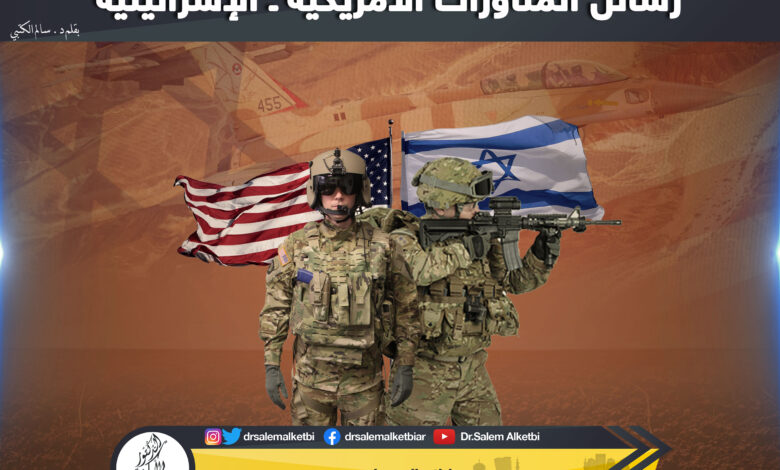
Several of the recent joint US-Israeli military exercises have been called the largest ever. Thousands of military personnel from both sides participated. The exercises sent a clear signal to Iran that the US will not turn its back on the Middle East, and especially on its ally Israel, despite its concerns about the war in Ukraine.
According to media reports, the US aircraft carrier USS George W. Bush participated in the joint exercise and was the control center for the exercise, which took place off the coast of Israel. More than 140 aircraft took part in the military exercise, which also involved some 6,400 US troops and 1,100 Israeli soldiers.
New Chief of General Staff Herzi Halevi said the exercises strengthened his country’s defense capabilities, adding, “We know how to defend ourselves.” He believes that the best defense is a response to an attack, and stressed that Israel has offensive capabilities that send a very clear signal to Iran that the capabilities are ready to strike back in the event of an Iranian slip-up.
From my analytical perspective, these maneuvers also carry other messages, including that both Russia and Iran know that their emerging alliance will be matched by a strong US-Israeli one. This comes against the backdrop of the development of military cooperation between Tehran and Moscow.
The first is stepping up its military support for Russia and supplying it with missiles instead of drones, which had been actively used in the Ukraine war. This move is expected to be followed by advanced Russian fighter aircraft suuply to bolster Iran’s airspace capabilities. In my opinion, these maneuvers have another important message for Israel itself.
The US will not abandon its absolute strategic commitment to Israel’s security. This signal comes in the wake of the certain failure of negotiations to revive the nuclear agreement with Iran and the return of Netanyahu to the helm of a government that observers fear will move to launch a preemptive military strike against Iran.
The exercise, then, is essentially a message of US reassurance to Israel: the US strongly supports Israel’s security. This constitutes a strong deterrent to Iran as well. And it adds credence to US efforts to convince the Netanyahu government not to unilaterally attack Iran without US approval.
The maneuvers also reflect Israeli efforts to draw attention to Iranian involvement in the war in Ukraine and to encourage allies to recognize the relevance of Israel’s view that Iran is a “global problem” and a threat to countries outside the Middle East.
Indeed, the intense US participation in these maneuvers is aimed at preventing a possible confrontation between Iran and Israel and increasing pressure on Iran to curtail its efforts to increase uranium enrichment as attempts to revive the nuclear agreement have floundered.
The current US administration wants to maintain the status quo in terms of complete control of the discord over the Iranian nuclear issue and avoid a sudden chain reaction crisis that could be triggered by Iran or Israel. These maneuvers also refute recent analyses of the crisis of confidence between the Netanyahu government and the Biden administration.
It seems clear that the US is seeking strong communication with the Israeli ally to avoid a new crisis in the Middle East. Washington cannot stand idly by when Israel’s security is put at risk, regardless of the level of understanding between the two governments.
Despite whatever disagreements there may be with the current Israeli government, Washington’s strategic commitment to Israel remains unswerving.