About a year after its onset in February 2022, the world is not what it was before the war in Ukraine. The expectation that the outbreak of the coronavirus pandemic would shape the new world order has moved into reality and gained credibility. In many regions of the world, due to the new realities created by the war in Ukraine, a strategic repositioning is taking place and has already begun to shape the post-Ukraine order. In several areas, one can observe a strategic shift toward forming the foundations of a new world order.
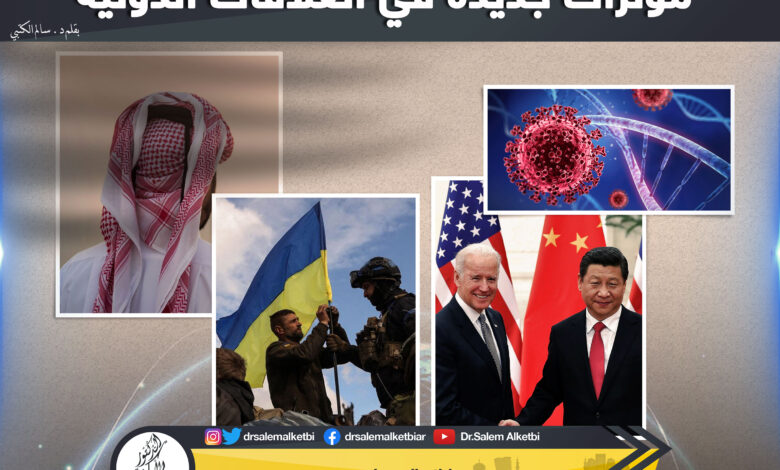
In the foreground are the relations between the two largest competitors for influence and hegemony at the global level, whether in the context of a bilateral, pluralistic, or even unilateral leadership formula, the latter being relatively excluded. We are talking about China and the United States of America. Despite the breakthrough achieved by the outcome of the summit between President Biden and his Chinese counterpart Xi Jinping on the sidelines of the G20 summit in Indonesia last November, the reality is that China is determined to take back Taiwan. Recently, one of the largest military deployments, both air and sea, took place near the island. Some 71 Chinese fighter jets and drones entered Taiwan’s special air defense zone.
Beijing confirmed that it has conducted “offensive exercises” around Taiwan in response to alleged provocations by the island and the US. These Chinese moves reflect Beijing’s determination to challenge US influence on Taiwan. China’s behavior has evolved from rejection and condemnation to actual military action as it perceives growing US support for Taiwan. This is intended to reinforce the impression that China is determined to retake the island, even if forced to choose a military scenario. This does not appear to be contemplated in the foreseeable future. But Beijing wants to keep emphasizing that its potential remains great.
The net result is that China no longer favors a reactionary posture in its relations with the US. Rather, it is focused on taking the initiative in line with its own interests and exercising maximum caution to avoid direct military confrontation with the US. Against the backdrop of a changing global strategic reality due to the consequences of the war in Ukraine, one can observe a strong rise of new influential forces in the coming world order.
A new international bloc has emerged, the characteristics of which have not yet crystallized institutionally and which includes countries that did not want to side with the West, led by the United States of America or Russia, in the war in Ukraine.
It belongs to the middle powers, which include a whole range of countries, including the countries of the Gulf Cooperation Council, which have economic and strategic weight and whose role in global decision-making is increasing significantly. The role of Saudi Arabia, the UAE, Turkey, and India, considered by many to be the major strategic winners of the war in Ukraine, has increased significantly. Ankara has conducted several political maneuvers, achieving many successes in its favor, especially on issues affecting Turkey’s national security, such as the Syria crisis. Turkey, a NATO member, has not joined Western sanctions imposed by the allies over the war against Russia.
Ankara has become one of the international candidates for any mediation efforts in the crisis. This role has already been played by its mediators in the resumption of the implementation of the agreement on grain exports through the Black Sea. Moreover, Saudi Arabia and the UAE are playing an increasingly important role in the global energy portfolio. This role is expressed in the strategic weight attached to the status of these two countries and in their ability to influence international decisions. There is no doubt that the war in Ukraine will have no less strategic consequences than World War II. The war is still far from the endgame. The end scenario will play a prominent role in shaping a new world order, regardless of whether Russia emerges as the strategic winner or vice versa.
Either way, the end scenario will be the prelude to a post-Ukrainian order, the broad outlines of which already coincide with the emergence of a third international bloc. This time, however, it will not be a non-aligned bloc, as was the case in the Cold War era, but a bloc that will be more effective and influential in shaping the course of events in the years and decades to come.