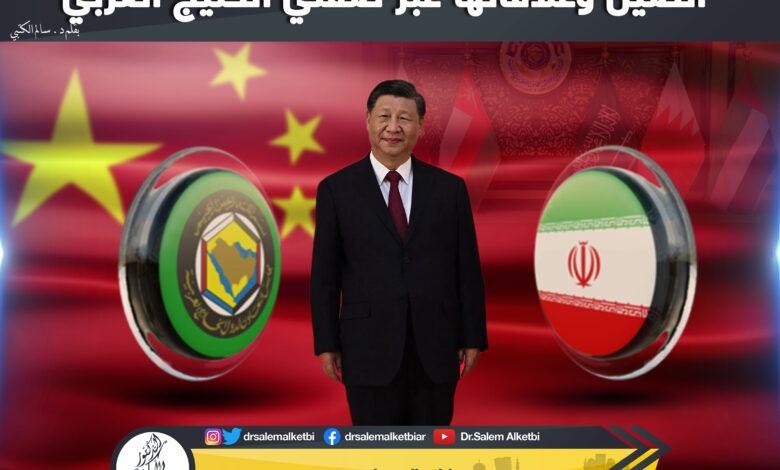
Shortly after Chinese President Xi Jinping’s historic visit to Saudi Arabia and three summit meetings (with Saudi Arabia, Gulf and Arab countries), Chinese Vice President Hu Chunhua traveled to Tehran, where he met with President Ebrahim Raisi.
China regards its relations with Iran as strategic and will not hesitate to build a comprehensive strategic partnership, said Hu after the meeting. Beijing, he went on, is ready to work with Tehran to implement the important consensus between the two leaders and make joint efforts to push forward the implementation of a comprehensive bilateral 25-year cooperation plan. The timing of the visit and discussions among observers revealed how China views its relations with the Gulf states and how it can shape those relations given the complexity of current geostrategic realities.
A look at the facts shows that there are no surprises on this front.
China’s relations with Iran, on the one hand, and the Gulf Cooperation Council (GCC) countries, on the other, have been moving in parallel for many years in a direction that Beijing would like to see succeed and be effective. This is despite the realities of the regional environment, which sometimes pits the interests of the two sides against each other in their relations with the Gulf.
In other words, the prevailing climate of tension that marks Gulf-Iran relations is not reflected in China’s position or in either side’s ties with Beijing. The simple reason is that China, at least at this stage, does not seek unilateral strategic alliances, but rather broader cooperation and common ground with all sides.
Similarly, it continues to pursue a trade partnership with its strongest strategic competitor, the US. The GCC countries themselves do not seek to be the only partners in strategic relationships, but rather rely on their competitive advantages to benefit from partnerships with all international parties.
This also speaks to the nature of China’s strategic role and expansion in the Gulf region and beyond. Beijing is pursuing economic and strategic approaches that are in the interest of both parties in any case. It is still far from the idea of zero-sum alliances premised on polarization, unilateralism, and traditional power struggles.
True, Chinese expansion is in some ways the embodiment of Chinese strategic influence. However, China does not fall into the confrontation trap as it tries to manage its interests without coming into conflict with other international powers. Instead, it leaves it to the other partner to determine its strategic priorities, areas of cooperation, and relations with these powers.
From a broader strategic perspective, China is a major international power that wants to compete for global leadership, whether it declares it or not. It does not want to engage in sharp polarization that could harm its interests in both the short and long term.
Despite the different degree of mutual benefit between China and Iran on the one hand and the Gulf states on the other, these remain important strategic interests for China. It cannot favor one side over the other.
The volume of trade exchange between China and Iran is $11 billion and increased by 19 percent last year, while the volume of trade exchange between China and the Gulf countries is about $160 billion. However, these figures do not show the full extent of China’s strategic interests beyond trade relations, although they are important to both sides.
For example, China does not see Iran as a mere trade exchange. Rather, for Beijing, Iran is a strategic linchpin in managing tactical conflict with the US and strengthening Beijing’s ties with its Asian neighbors.
China’s strategy and soft power, as expressed in initiatives such as the Belt and Road, naturally does not exclude any of the regional parties, certainly not influential ones such as the GCC and Iran. This allows Beijing to develop balanced visions and positions that ensure two parallel paths of relations in the Gulf region without having to choose one side or the other.
The idea of partisanship is not present in Chinese foreign policy. It takes positions, as we know, in favor of partners such as Russia and North Korea. But it is equally careful not to take on the costs or direct involvement that may result from the orientation and policies of these partners.
The country keeps its positions within a delicate framework and sidesteps the notion of polarized traditional alliances. Such alliances can hinder China’s new development and bring it into sharp confrontation with international strategic partners, which it finds difficult to do without, at least for the moment. China’s stance on the crisis in Ukraine illustrates this very well.
Beijing, for which strategic cooperation with Moscow knows no defined boundaries, has not supplied Russia with weapons. Nor has it supported it militarily, although Russia has turned to countries like Iran to acquire drones for the war in Ukraine.
China has managed to walk a fine line between maintaining economic ties with Russia and easing Western sanctions against it (China-Russia trade exchange was about $146 billion in 2021). It has done so without military intervention and has maintained Russia as a major energy supplier while maintaining its trade and economic partnership with the US and its allies.
But again, it is important to note that the same thing is happening in the Gulf region.
While relations between Iran and the West are tense and confrontational in most cases, the situation is quite different for the GCC countries: The West, especially the US, remains an important strategic partner for the six countries, and the tactical partnership with China gives these countries crucial leeway in diversifying cooperation and shaping their policies.
The capitals of the GCC countries have managed to assert the notion of multilateralism and diversification in shaping their international relations. They have established strategic partnerships with international powers other than the US, a traditional ally, such as China and Russia. In general, China’s cooperation with Iran is not inconsistent with its growing partnership with the Gulf states.
Unilateral alliances no longer accommodate the complexity of states’ strategic interests. Both sides (the Gulf states and China) share a common desire to diversify their international relations and place them on a basis largely based on trade and economic cooperation, without losing the necessary openness to all parties.