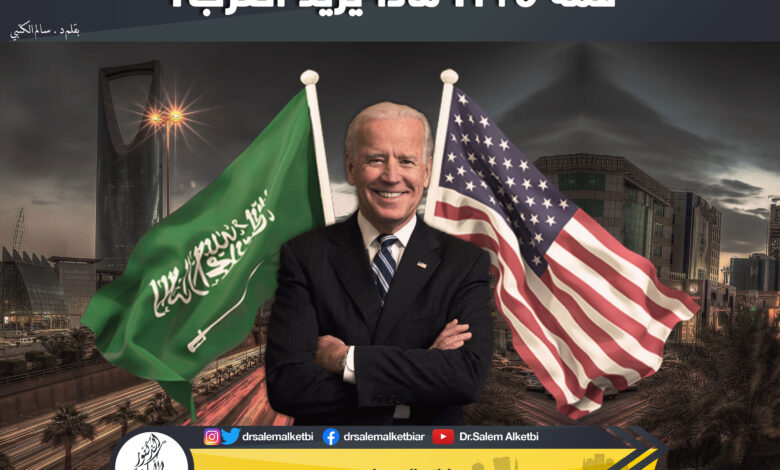
The upcoming summit in Jeddah will bookend President Joe Biden’s important visit to Saudi Arabia this month. President Biden and Gulf leaders from Egypt, Jordan, and Iraq will meet at the GCC+3 Summit, providing a good opportunity for dialogue and consultation between the US and the region.
The importance of the summit stems from the key issues raised by the media regarding the US attitude and policy toward the region over the past decade. It is a policy that is known to all and its ambiguity needs clarification and explanation.
President Biden is trying to address one of the biggest mistakes of his administration, which has not paid enough attention to the Middle East since it took office until it was surprised by the consequences of that mistake after the Russian war in Ukraine began. Washington has found the region to be a theater of fierce international rivalries and conflicts with its strategic adversaries.
It needs to realign its priorities to bring the Middle East back to the center of American attention. Beyond the issues and agenda of the upcoming summit that are being raised in the media, this is an important opportunity to realign and reprioritize Arab-US relations, especially since the US is ignoring many of the problems and crises that have kept the region in a cycle of chronic crises.
The situation in Libya, as well as in Syria, Lebanon, Iraq, and Yemen, are issues in which the US plays an influential role in one way or another. There is also the nuclear challenge posed by Iran, a vital, even existential, issue whose threat the US and its GCC partners cannot ignore. The US is well aware that things are not as they used to be.
Relations between Washington and its allies should not be managed as they once were. A lot has changed in these relations.
Moreover, Arab societies know how dearly they have paid for US positions and policies in support of chaotic organizations that have undermined security and stability in several Arab countries since 2011. Correcting all these mistakes will require transparency and clarity in diagnosing errors and developing new visions and insights that will help repair cracks, restore lost trust, and turn a new page in US-Arab relations.
I believe that one of the most important keys to turning a new page in this relationship is to agree on a common strategy to address threats to security and stability in the Arab region. The issue of Iranian aspirations, including nuclear aspirations, is paramount.
No one denies that addressing Iranian expansionist policies is one of the most important keys to stability in the Middle East, especially in Syria. When we talk about restoring stability in Syria, Lebanon, Iraq and Yemen, it leads us to Iran. In other words, the security of four important Arab countries begins and ends in Tehran. No one is asking the US to go to war with Iran.
Nor is anyone asking Washington to enter into a cold or hot confrontation on behalf of the countries of the region. But the point is that the US will not again engage in agreements that open the door to Iran’s continued expansionist role or give Tehran a green light to forge ahead with its policies in this regard.
Everyone knows that the disastrous nuclear deal signed between Iran and the major international powers in 2015 was Iran’s gateway through which it could pursue its expansionist dreams of domination in Iraq, Syria and Yemen and tighten its grip on Lebanon. All the people in the region continue to pay the price for this grave US strategic misstep.
Today we are facing the second chapter of this mistake: new negotiations to revive the disastrous agreement, replaying the same mistakes.
Most importantly, this includes Washington ignoring the views of its allies in the Arab world and the Gulf about Iran’s expansionist role and insisting on limiting negotiations with Iran to nuclear capabilities without addressing other equally dangerous issues, such as Iran’s ballistic missile program and regional influence.
This time, the Arabs would not want President Biden to promise them something that will not come to pass, or to justify mistakes whose consequences will last for decades to come.
All want the US to recognize the danger of losing what remains of its popularity and prestige in Arab collective consciousness, and to adjust its policies and posture to protect its interests and increase its resilience in the struggle for power and influence in the 21st century.