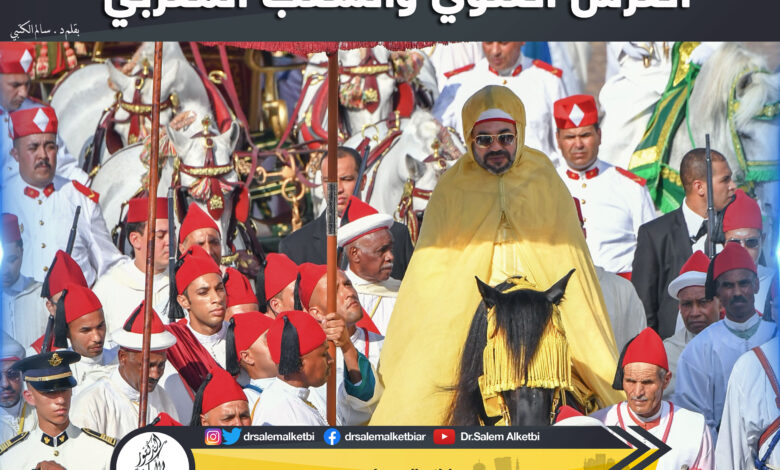
People in general, and those with cultural and historical depth like the Moroccan people in particular, have the collective consciousness to understand their situation well, including their relationship with their leaders. The Moroccan people are well aware of what binds them to the glorious Alawite throne and its great historical contribution to the civilized path of the country.
This strong relationship between the Moroccan people and their leadership has been maintained both during the times of colonialism and the struggle for liberation, as well as during the phase of construction and progress.
His Majesty King Mohammed VI’s commitment to strengthening human rights and concern for the Moroccan people since his accession to the throne has certainly helped to strengthen the close relationship between the throne and the people, and has added new building blocks that reinforce the historic relationship that has existed for decades.
The exceptional relationship is undoubtedly strongly and deeply reflected in the spirit of the Green March, which encourages us as researchers and specialists to appreciate the relationship between the throne and the Moroccan people. The march continues to embody the best expression of the strong unity between the throne and the people, as His Majesty King Mohammed VI said in one of his speeches.
The throne’s concern for various aspects of the life of the Moroccan people is clear. Attention is paid to the development of basic infrastructure in the various regions of the sister kingdom. This emphasizes the close relationship between strengthening the geographical connection between the various regions through extensive road networks and promoting development and stimulating the economy.
All this is linked to an equitable distribution of wealth in a clear strategic effort to promote social justice and overcome any regional disparities in development. «The Morocco we want must be based on harmonious and integrated actors, benefiting equally from infrastructure and major projects that should benefit all parties,» the king said.
All this will strengthen the ties between the throne and the people. I am drawn to His Majesty King Mohammed VI’s interest in striking a strong balance between vital issues. His Majesty accords importance to balanced and equitable development in all parts of the Kingdom.
The King’s throne speeches at national events center on intensifying reforms and the implementation of development plans and projects, as well as sharpening the concerns of the Moroccan elite and institutions for further work.
There is a desire to achieve results that positively affect the lives of citizens by having all officials fulfill their tasks and functions, and to ensure the effective implementation of decisions and plans.
In his address to MPs, His Majesty called for «positive competition» to serve citizens and meet their aspirations, urging deputies to monitor what the government does in all public affairs in various areas and to consider how well it meets the real concerns of citizens.
All this in the name of strengthening the relationship between the throne and the people and national unity, which His Majesty described as a «one body» relationship through times good and bad. This strong relationship is reflected in His Majesty King Mohammed VI’s speech at the height of the crisis caused by the Covid-19 epidemic.
His Majesty addressed unforgettable scenes of cooperation and volunteerism between neighbors, with the elderly and families in need, in the distribution of aid, support and guidance.
He also proudly captured vivid moments embodying the spirit of high patriotism, especially the singing of the national anthem from the windows of the houses and the exchange of greetings between security forces and citizens. These details may seem simple to some.
But they mean a great deal in the relationship of a leadership that lives with its people in every detail of life, driven by deep national sentiment and an awareness of the value of this great nation and the urgency of taking on all aspects of leadership responsibility in such exceptional circumstances.
As an observer, I also liked the fact that His Majesty’s speech at the time was not an occasion for flaunting accomplishments and listing only pluses and successes. On the contrary, it was dictated by a transparent, frank and honest approach to his people who respond with love, appreciation and pride.
This, I believe, is one of the most outstanding features of the effective management of the kingdom under His Majesty Mohammed VI. In this throne speech, we see a national sense of responsibility for recognizing that the consequences of this health crisis will be severe, despite our efforts to alleviate it.
An appeal was heeded for vigilance and preparedness for any second wave of the epidemic, God forbid. Lessons from this phase are there to be learned.
Serious recognition took on a number of shortcomings, especially in the social sphere. These include the size of the unstructured sector, the weakness of social safety nets, especially for the most vulnerable, and the relationship of several sectors to external fluctuations.
A clear commitment is to make this phase an opportunity to reallocate priorities, build the foundations for a strong and competitive economy and a more integrated social model.
The government has been instructed to focus on the problems, re-prioritize the results of this crisis and launch an ambitious economic recovery plan that will allow productive sectors to recover, increase their ability to provide jobs and maintain sources of income.
It was promised to inject some 120 billion dirhams into the national economy, develop a strategic investment fund to support productive activities, launch universal social coverage for all Moroccans, universal mandatory health insurance and family compensation in the next five years, and then expand it to include pensions and compensation for loss of employment.
This is a subtle procedure that reflects a high level of awareness and active strategic thinking, as well as familiarity with the details of development planning that the Kingdom needs in the current environment. From the beginning, Morocco’s national experience has relied on loyalty, connections and strong bonds between the people and the throne. It is a solid and unbreakable link.
God willing, it will remain a bulwark protecting Morocco and its people from the machinations of ambitious and mean-spirited forces.