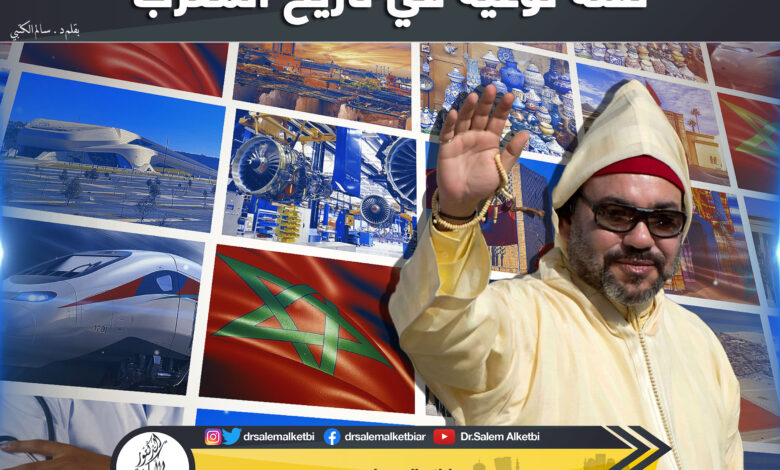
Since his accession to the throne in 1999, His Majesty King Mohammed VI has brought about a qualitative change in the history and civilizational development of the Kingdom.
These efforts have contributed to the development of the country in various sectors and fields, especially in terms of constitutional and human rights reforms, which have provided the Kingdom with an environment of social and political stability.
The reforms aimed to promote democratic practices, build the rule of law and its institutions, modernize human rights, create justice and a culture of coexistence, and achieve inclusive development at all levels. The constitutional reforms adopted by the Kingdom of Morocco since 2011 are the country’s most important reform efforts in its modern history.
They provide a constitutional framework for the development of political practice and democracy according to standards that take into account the cultural specificities of the Kingdom and the unique relationship between the throne and the people
To be sure, the reforms were not limited to the constitutional, legal, political and human rights framework. Rather, they involve infrastructural reforms in the areas of roads, ports, airports, agriculture, industry, and alternative energy sources, making the Kingdom of Morocco a regional and international hub for the latter and securing it a privileged position on the world energy map.
Reforms have been extended to invest in the Kingdom’s human resources and religious sectors, as initiated by King Mohammed VI and in line with a deliberate royal vision aimed at strengthening Morocco’s faith foundations while reaffirming the Kingdom’s true identity and creating a culture of moderation and tolerance.
His Majesty King Mohammed VI has adopted a new concept of governance since his accession to the throne, based on his October 1999 speech, which envisions a modernist approach to the development of the Kingdom of Morocco in various fields and sectors.
This is done within the framework of a comprehensive and binding concept, as His Majesty called it, which involves all authorities – the executive branch, the parliament and the judiciary – and in which attention to citizens becomes a binding right for all within the framework of this concept.
This underpinned the rule of law with principles that helped weather the storm of chaos that swept the Middle East in 2011 and later years. Perhaps what distinguishes the Moroccan reform experience is that it represents continuity and evolution. The reform train has not stalled since it started in 1999.
It is proceeding according to progressive rules and standards, including the consideration of free and fair general elections as the basis of human rights and public freedoms, and His Majesty’s commitment to national democratic choices and respect for electoral integrity, beginning with the organization of the first electoral process under His Majesty in 2002.
Legislation regulating the practices and role of political parties was introduced to institutionalize the political process and ensure that the rights of all are protected.
These practices are intended to be a strategic lever for development plans rather than an obstacle to economic development, uphold the values of citizenship, strengthen the relationship between the state and its citizens, and ultimately serve to revitalize the business climate, create transparency, a culture of accountability, and deal with all forms of corruption.
All of these reforms were strengthened by the 2011 Constitution, considered the boldest and most progressive development in Morocco today. It is a new social contract between the throne and the people.
In its broader and more inclusive perspective, the reforms also extend to other important aspects such as human development and foreign policy, which has placed the African dimension at the center of its concerns and priorities in the South-South strategy, and since 2017 there has been a significant breakthrough in Moroccan-African relations.