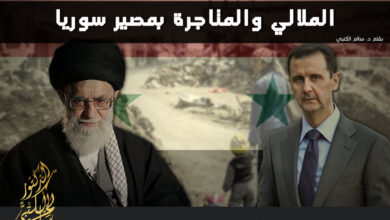
Iran has had expansion plans for long years. These plans were the direct reason behind Iran’s proxies deployed in various parts of the Arab world, from Lebanon to Yemen. With the emergence of Daesh, Iran found in this organization a golden opportunity to achieve its aspirations and expansionist ambitions, directly and without equivocation. The world witnessed the Iranian interference in countries such as Iraq, and even a tacit agreement was given by the United States and some major countries.
A few days ago, the commander of Iran’s ground forces announced that the Daesh is present not only in Iraq and Syria, but also in Afghanistan and Pakistan, and that Iran has to fortify its arsenal to protect itself from this threat. Iran’s military budget for the current Persian year (March 2015-March 2016) has increased by more than 30 per cent to about ten billion dollars, in addition to about 2.1 billion dollars from one of the Iranian sovereign funds.
Daesh already announced its presence in Pakistan in mid-May as it claimed responsibility for the killing of about 40 people from the Shiite minority in Pakistan. However, the untold story is that Iran is exploiting the expansion of Daesh to expand its influence in neighboring countries in an unprecedented way, especially in countries that suffer the chaos and the absence of state control, such as Syria, Yemen and Iraq. Western reports indicate that the Iranian funding of the Shiite militias working in these countries amounted to about $ 8 billion annually, in addition to an estimated six billion dollars of financial assistance provided by Tehran to the Assad regime since 2011.
Hezbollah, which has around 25 thousand members, consumed annually from the Iranian Treasury about two billion dollars. Iran also funds about 70 thousand people in the Shiite Mobilization Force. The Iranians do not spend money on the militias in vain. They are aware about the important juncture in the Middle East with international plans for partition scenarios. What happened to Iraq and Syria indicates that sectarian and ethnic mini-states are part of the planned scenario.
Daesh plays suspicious roles in these conflicts. It was designed by and serves the interests of major powers to achieve creative chaos plans. The plans consist of a new geopolitical distribution and directing the terrorists’ surplus of power against each other to fuel sectarianism to ultimately serve the involved major powers.
It is absurd to think the United States is unable to stop Daesh from expanding in Iraq; months ago, President Barack Obama called them ‘amateur terrorists’ not as powerful as Al Qaida. US troops cannot deter these amateurs, can they? They are not amateurs but in fact around thirty thousand people with a strategic plan. The United States is only pretending to fight Daesh while using it for its interests even if they do not receive direct instructions from Washington.
Many Arab states realize that what is happening around us is nothing but a sectarian or ethnic trap. Other Arab countries should avoid falling into the trap of internal fighting under the same pretexts of revolution or protests.
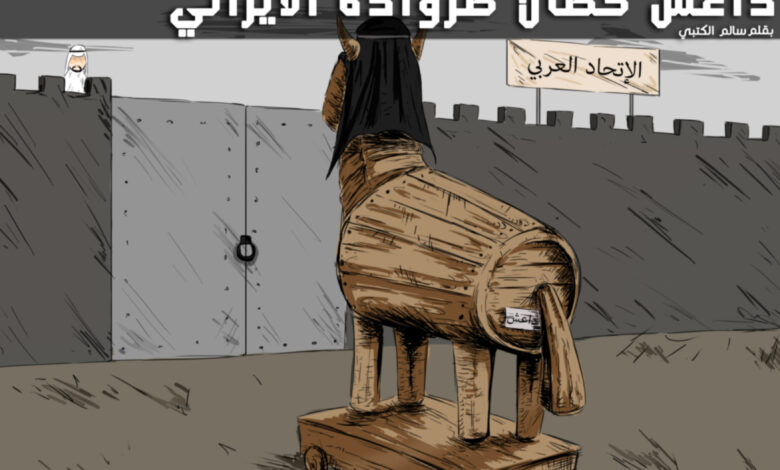
Daesh is a tool for many major powers. Iran realized that and resorted to the use of this organization in achieving its expansionist aims too. This was done through interference in neighboring countries, trying to embarrass or blackmail them into conflicts of influence. Iran’s strategy uses Daesh like a Trojan horse to turn Tehran’s influence in several countries in de facto presence and force the international community to recognize it to ultimately have a piece of the final pie.
All of the above does not mean that there is a real conflict between Iran and Daesh or that what is happening in Iraq and Syria is a ‘play’. What is going on there is a long and a real sectarian conflict, but Iran has seized the long-awaited opportunity to achieve its expansionist goals.
The Arabs should really understand what is going on and not be misled by the likes of Daesh or Iran. Sectarianism is a manifestation not the essence of the conflict. Both Iran and Daesh want to attain political objectives and achieve colonial expansionist goals that have nothing to do with the interests of the peoples.