I am deeply amazed at this widespread absurd polemic that has been circulating in the Arab social media lately about the established doctrinal issues on women’s rights in the Islamic religion, as well as other issues such as the hijab and the niqab. The disputants exchange angry verbal attacks, sometimes insults and targeted slurs, sometimes name-calling on both sides.
Prefabricated stereotypical accusations ready to fire, clear macho posturing, loud political play on religion in some cases and women’s rights in others. Even the whole issue sometimes shifts from a debate about women’s rights to a battle between proponents of restrictions (of all kinds, communal and religious) and proponents of modernization.
Buzzwords such as “toxic masculinity,” “oppression of women,” “sexual obsession,” “secularism and moral decay,” vacillate between one and the other. The discussion itself reveals an offensive face of society, regardless of its goals.
Fourteen centuries down the road, some preachers still fall into the trap of seeking fame, yielding to the temptation to influence, and seeking the monetary or even moral gain from it.
Words that have nothing to do with religion are used to talk about women and interpret some social crimes whose motives have absolutely nothing to do with religion, mosque, halal, haram, hijab and niqab. On the other hand, there are those who believe that there is a problem in understanding Islam.
I am not here to side with any religious, moral, psychological or any other interpretation of the crimes that are being witnessed in some of our Arab societies. I am not here to side against those who attack the proponents of these interpretations, however harsh they may be. The main problem is neither here nor there.
This is because they are all just symptoms of a deeper illness that has afflicted various Arab societies for a long time. Unfortunately, it is spreading in the body of these societies, putting their gains, foundations and security under threat.
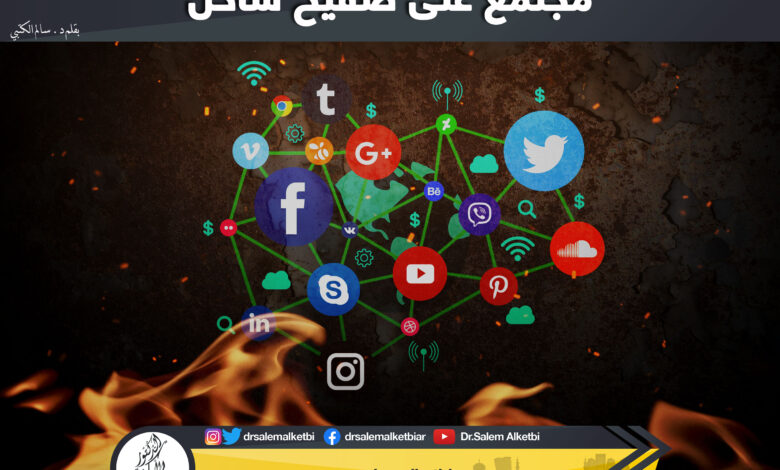
The main problem that causes these bullying practices in the media is the lack of a culture of dialogue, the widespread verbal violence and the lack of accountability. The public space has become accessible to anyone who wants to achieve maximum value, moral and religious abuse. This is not the fault of the states.
It is not the result of government procedural and regulatory failure. It is one of the results of abuse of modern tools, the pursuit of fame, and the lure of being trendy.
It is, by the way, a temptation that affects not only the young man or woman with limited education and experience, but also some of those who should have the awareness, education and ability to judge things and understand the consequences and impact of words. It is true that there are laws of deterrence that can hold some people who violate social media accountable.
But it is impossible to imagine that legal measures, however effective, can act against all violators, otherwise we would need armies to monitor and address all the excesses that flood cyberspace.
The dilemma of action, reaction, and apparent public watchdogs focused primarily on religion is really a conflict between two known sides: those who claim to protect and defend religion, and those who claim to know and believe in women’s rights. Both got things wrong. It is a race between extremism and parallel extremism.
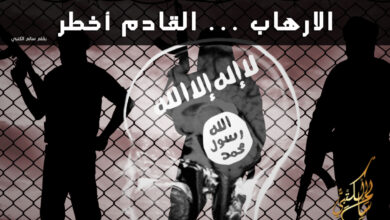
In between or behind this is a third type of extremism that reaps the rewards of what they grow. In my opinion, any confrontation in which there are no rules and no control is an ideal environment for the spread of what might be called executive extremism — type that turns words into deeds, that is, the practice of terrorism, violence, and bloodshed in defense of ideas.
This is how terrorism begins. In other words, ideas veer into absurd intellectual battles that revolve around constants and fundamentals that have been firmly entrenched in minds and books for centuries.
I am not talking here about the dialectics of the revision of religious discourse, to avoid that the debate leads us into rabbit holes from which there is no escape in these extraordinary circumstances. Rather, my point is to warn of the dangers of chaos, of the desecration of public space, of the traps of verbal extremism through the mass media and social media.
Women’s rights are not enforced by rantings, insults and accusations, but are guaranteed by laws, constitutions and, above all, by divine order.
The mutual alarmism between those who claim to carry the banner of religious persuasion or da’wa and some defenders of women’s rights or those who position themselves as defenders of civilization and modernization has become the fuel that creates an ideal environment for the emergence of new terrorist organizations. We should not underestimate the premises.
The past has taught us that such people have dragged our Arab and Muslim world into the catastrophe of terrorism, for which many have paid with their blood and safety. As a result, entire countries fell victim to the ideas that were born timidly and later developed into epidemic Daeshism, which declined only when many countries united, but still lurks to inflict sinful crimes from time to time.
In summary, any extremism in the expression of religious or doctrinal views or in the interpretation of religion according to a momentary identity or in response to what might be considered heterodoxy or anomaly in the interpretation of views and doctrines, regardless of its purpose or origin, is a clear call to violence, terrorism and bloodshed.
It is a breeding ground for extremism, a fertile soil for the growth and spread of radicals, one that contradicts the values of coexistence and tolerance. A criminal act against social peace.