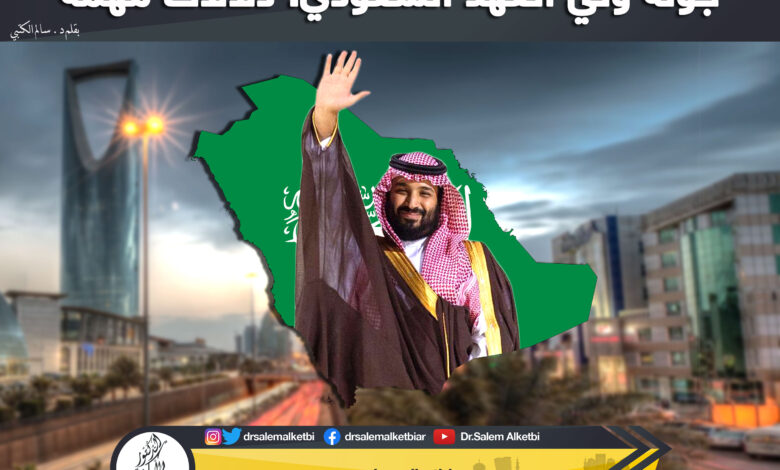
Ahead of US President Joe Biden’s upcoming visit to Riyadh, it is hard to sum up the goals of Crown Prince Mohammed bin Salman of Saudi Arabia’s recent important tour.
The tour goes beyond that visit to involve the formal announcement of several things, most notably to turn the page on the Saudi-Turkish tensions, end an era of discord and begin a new phase of joint cooperation with all the strategic results that this means at the regional level.
It is also central to enhance Saudi-Egyptian partnership relations, to emphasize the continuity of Saudi support for Egypt and Jordan given the current global economic conditions and changes, and to demonstrate the Kingdom’s central role in supporting Arab sister countries in addressing the challenges they face.
Prince Mohammed bin Salman is well on his way politically, regionally and internationally in a rhythm that meets the aspirations of the new Saudi generations, establishing a role for the Kingdom commensurate with its weight, strategic status and the aspirations of its people.
His Highness’ tour, which included Egypt, Jordan and Turkey, was an important avenue to discuss views and consult on all issues and subjects that may come up during US President Joe Biden’s upcoming visit to Saudi Arabia, where he will host an emergency meeting of the leaders of the Gulf Cooperation Council (GCC), Egypt, Jordan and Iraq.
The summit is expected to be a milestone in rethinking the role of the US and its relations with the Arab and Gulf countries, exchanging positions, especially as the conflict and competition between the major powers worsens against the background of the situation in Ukraine and the related friction over the positions of Riyadh and Abu Dhabi on the Ukrainian crisis.
Undoubtedly, the current situation in the Gulf and Arab regions is not what it was a few months ago, especially with regard to efforts to resuscitate the Iran nuclear accord, which entered a dark tunnel, being a brain dead deal.
The failure of these efforts is hindered only by each side’s desire to avoid responsibility for failure, especially the US administration, eager to cut any deal, even to save face, as long as it holds a minimum of political and media appeal for US voters. The Saudi crown prince’s recent tour is certainly a complement to the recent qualitative gains in regional relations.
Saudi diplomacy has succeeded in clearing the atmosphere in the Persian Gulf and turning the page on the bitter dispute with Qatar. The actual closure of the Saudi-Turkish dispute was a further addition to efforts to calm regional tensions.
Riyadh’s response to efforts to discuss tensions with its Iranian neighbor is another bold move that shows Saudi diplomatic seriousness and courage in addressing the causes of tensions and resolving them in proportion to the kingdom’s role, status and strategic weight as an active player in both the regional environment and internationally.
No doubt that we are witnessing the birth of a new Middle East based on coexistence and peace.
Achieving this goal has required great effort on the part of several countries. In particular, the UAE led the locomotive of what might be called the second wave of Arab-Israeli peace by signing the Abraham Accord in September 2020. Saudi Arabia and its young crown prince, meanwhile, have added to the leadership role of Saudi diplomacy in this historic phase of our region.
A new world with all its possibilities and challenges is taking shape. A new strategic reality is unfolding, amid all the shifts in security and economic systems and balances of power between regional and global actors.
And that calls for coordinated efforts, sustained consultation and building positions that shore up national gains in the context of the coronavirus and Ukrainian crises, which exclude no one from their many effects, manifestations and consequences: in energy, food, health, economic and financial terms.