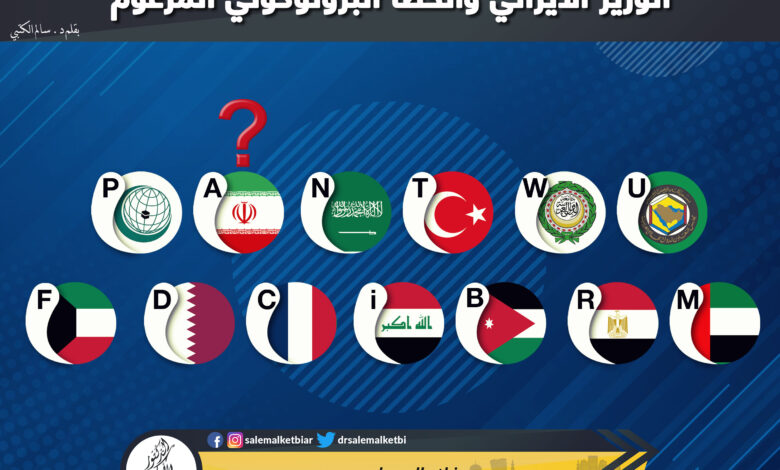
Several media outlets recently reported on what was described as an error in protocol by Iranian Foreign Minister Hossein Amir Abdullahian at the Baghdad summit of Iraq’s regional neighbors. The new Iranian minister was standing with the heads of state when the commemorative photo of the conference was taken.
This scene may be interesting. The likelihood of mistakes on such occasions seems very low for several considerations, the most important of which is that protocol personnel usually inform participating officials of such actions before they do.
Then there are the briefings of his staff. The minister himself is not new to working in the diplomatic field to make such mistakes. He is a professor specializing in international relations.
He previously served as Iran’s deputy foreign minister and special assistant to the head of the Iranian Shura Council for international affairs. Thus, the obvious protocol at such meetings cannot be overlooked by him, especially since he is new to his position as foreign minister and his first international appearance.
M. Abdullahian did not, during or after the commemorative summit photo was taken, show any indication of an unintentional protocol error on his part, nor did he apologize for what some considered a mistake, or even ask an associate to explain the situation.
He acted in such a way that suggested he deliberately wanted to send a message to everyone with a lot of connotations. Something like Iran is at the forefront of influence in the Iraqi issue: it cannot be subject to protocol procedures and be at the second row.
Indeed, the Iranian mullahs’ regime, which blatantly violates international conventions and laws through expansionist interventions in Arab countries and then publicly boasts of occupying some Arab capitals, will not hesitate to violate protocol on an important occasion like the Baghdad summit. For the mullahs, the issue is not what some see it as.
They deal with their regional neighborhood and the world at large according to their narrow strategic perspective, an illusion that they can impose their visions on everyone through de facto politics. Some reports have given this move whimsical connotations, such as diminishing Iraqi sovereignty. The photograph of the Iranian minister, breaking protocol, condemns no one but the wrongdoer himself.
It has nothing to do with Iraqi sovereignty. Iraqi protocol officials are not required to pull the Iranian minister off his arm and turn him around, which could have turned into a major diplomatic crisis at a time when Baghdad is trying to overcome the reality that everyone knows through intensive efforts on different tracks.
This image certainly reflects the problem of the mullahs’ regime: its absurd view of international law, which leads it to violate all the rules governing international relations, including the principle of good neighborliness and non-interference. The mullahs do not want to deal with their regional neighbors on an equal basis.
On the contrary, they deal with a haughty attitude reflected in many of their positions and statements of their leaders. Worse is the mullahs’ willingness to play the role of guardianship of the Shiites in the neighboring countries without taking into account the issues of the sovereignty of these countries and the citizenship considerations that concern their relationship with their countries.
On balance, the Iranian foreign minister, for all his radical ideas, did not commit an error of protocol. He sought to satisfy the egos of his leaders in Tehran.
They wanted to make an impression at the summit. As for him, he wanted to start his term with a controversial action that he thought could help bridge the gap between him and former minister Mohammad Javad Zarif. The latter left a large diplomatic vacuum that is difficult to fill.
But the mullahs’ hardliners often prefer controversial actions and practices to draw attention to themselves on such occasions.