It is historically well established that the culture of coexistence does not develop by chance. It is not like pollen spread by the wind. All the more so in environments where cultures are antagonistic, or have experienced conflict between adversaries both materially and morally.
Great efforts must be made to inculcate and nurture it, so as to grow, strengthen and become an intrinsic part of the culture of societies. The experiences of the historic peace agreements that the Arab-Israeli conflict has had have not, in all these long years, turned into a reality for people, especially the new generations. They have remained elitist, chimeric agreements.
They did not make their way down the streets, alleys and neighborhoods of nations and did not develop in the communities of both sides.
They have not found the atmosphere and circumstances to ensure their growth and entrenchment so that coexistence between the parties to the conflict becomes an acceptable reality and wars and conflicts become history, as in all the experiences of conflict in the world over the past decades.
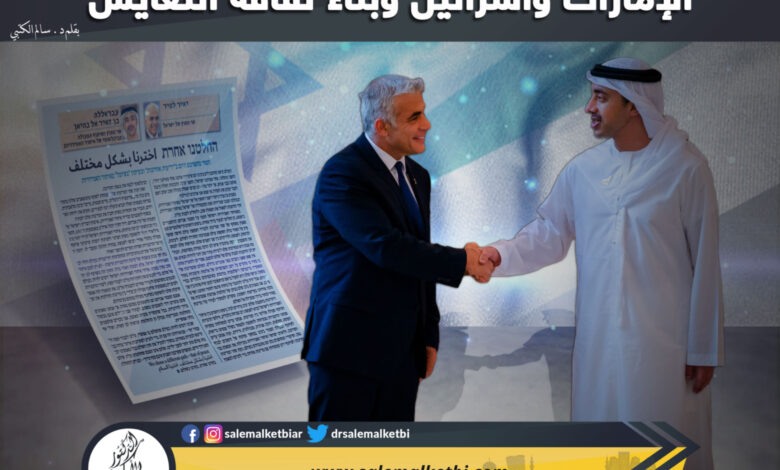
What inspires me to write this is the joint article by HH Sheikh Abdullah bin Zayed Al Nahyan, Minister of Foreign Affairs and International Cooperation, and his Israeli counterpart Yair Lapid on the latter’s visit to the UAE.
They published an article in Hebrew entitled “We chose a different path.” Although the article is a common diplomatic practice between officials of friendly countries on official visits, it is steeped in connotations stemming from the specificity of UAE-Israel relations and the regional atmosphere in the budding peace relationship between the two countries.
The article was profound. It showed the enthusiasm of both sides and the common desire to complete the journey they started together, namely the path to peace. It should become a living model of relations based on common interests and an objective view of things.
In their article, HH Sheikh Abdullah bin Zayed Al Nahyan and Mr Lapid discussed a very important issue in our region. Does the past determine our future, or is our fate in our own hands?
They considered the visit of the Israeli minister and the current momentum to lay the foundations for peace between the two countries, such as the opening of an Israeli embassy and consulate and the signing of many important agreements with the UAE, as an appropriate opportunity to express the answer, that the future depends on what we do in the present.
Differences in identity and ideology and the conflicts of the recent past cannot prevent us from having the will to shape the future. The joint article also talked about the peace agreement signed by the two parties, the UAE and Israel, from a long-term strategic perspective.
They saw it as the embodiment of a common vision to deal differently with the complex geopolitical reality by building a “new paradigm for our region.” This is based on the common search for peace, stability, security, prosperity and coexistence for the peoples of the region.
It follows from a common understanding of unity of purpose, “particularly in our commitment to fostering a better future for generations to come. If we have the opportunity to create a world of peace for them, we must not let this chance pass us by.”