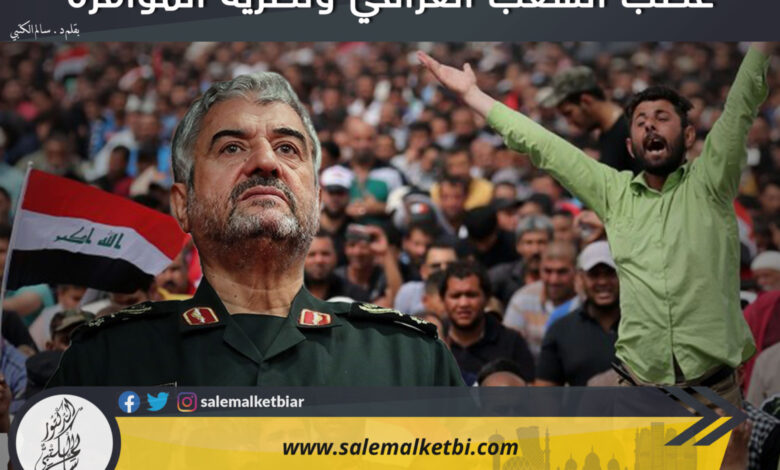
The United States and Saudi Arabia are the culprits behind Iraq’s current riots, says the deputy commander of Iran’s Revolutionary Guards, Maj. Mohammad Ali Jafari.
“The Iraqi nation should know that as long as they do not get rid of the Americans and they remain in Iraq, the Americans always hatch plots and contact and provoke the deceived or dissatisfied people,” Jaafari said.
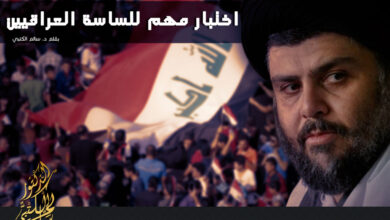
This appalling statement was a commentary on the ongoing demonstrations of anger in Iraq. Since the beginning of October, the demonstrations have killed 250 people.
Jaafari and the Iranian mullahs’ regime do not understand that Iraqi demonstrations are above all against corruption and the deteriorating economic situation in Iraq.
It is so ridiculous to attribute such conditions to parties such as Saudi Arabia or even the United States. Iran itself boasts, according to its leaders and leaders, of its influence in Iraq. Some of these officials spoke of Iran’s control and “occupation” of four Arab capitals, including Baghdad, the old Arab capital, which has long resisted any conqueror.
Jaafari did not understand the magnitude and geography of these demonstrations. He chose to recite the naive discourse on the mullahs’ conspiracy theory and accuse foreign powers of causing the disasters they cause, whether for Iranians or for other countries where they have intervened.
In Iraq, most of the demonstrators are young people. All successive governments have failed to give them a clear perspective on their future or a glimmer of hope for a better future. Nevertheless, the country is the fifth largest oil producer in the world and the second largest OPEC producer after Saudi Arabia.
At the heart of the real Iraqi crisis are corruption and unemployment. They are the result of poor management, the failure of governments, as well as the transformation of Iraq, a geostrategic country, into a simple consumer market for Iranian products.
Iraq is ranked among the world’s most corrupt countries, according to a number of indicators of corruption in the world. The corollary is the loss of accountability, transparency and political communication.
Focusing mainly on Shia and not Sunni areas, the demonstrations conveyed a very important message of the fall of sectarianism, which numbed Iraqis for many years and did not bring them any progress in their daily lives.
It cannot be said, as some Western media have said, that the masked and black-clad men who shoot demonstrators in the streets of Iraqi cities belong to pro-Iranian Shia militias. But the biggest question remains: Who is firing on young Iraqis?
The mullahs’ regime reaps what it has sown over the years. For the regime, the anger of the Iraqi and Iranian peoples is deplorable and their demonstrations against corruption are an external plot, even though the regime itself has supported demonstrations in other countries, qualifying them as demands for freedom and democracy. The mullahs’ double standards reveal their refusal to recognize the realities resulting from their interventions in Arab countries’ affairs.
The Iraqi and Lebanese peoples are victims of sectarianism and are suffering the full brunt of Iran’s and its proxies’ interference in the political decisions of both countries.
The mullahs must understand the Iraqi-Iranian message and the conscience of the people. The scene of Iraqi demonstrators who tore the image of Iranian Supreme Leader Ali Khamenei in Karbala deserves a careful pause from the mullahs. We should not blame other countries and parties but review its policies and stop its interventions.
Sectarianism is not a blank check that makes people forget their suffering and the persistence of interventionist policies that are devastating to people’s lives.
What is happening in Baghdad, Karbala, Najaf and Basra is a spontaneous public outrage at the failure of government policies, endemic corruption, poverty, unemployment and lack of public services. All this is taking place in a country rich in human and natural resources, but which has been caught in an unholy alliance between certain political elites and the mullahs’ regime.