No one disputes the sacrifices made by the Palestinian people to defend their cause. No one could deny either the sacrifices made by several Arab nations who have led different stages of the struggle alongside the Palestinian people.
And no one can disavow the role of several Arab leaders and states in supporting the Palestinian people to achieve their legitimate rights, including the establishment of an independent state with Jerusalem as its capital. These include the UAE, from its founding by Sheikh Zayed bin Sultan Al Nahyan to the present day.
So we are surprised that the ill-willed media leaves out what is happening in the occupied Palestinian territories and takes aim at the UAE and its rational leaders.
Despite this fact, whenever turmoil erupts between the Palestinians and Israel, tension escalates and blood is spilled, some parties and movements in the Middle East seize the occasion to detract from efforts of Arab leaders and governments. Accusations abound of treason, pandering, defeat, cowardice and other long lists of name-calling.
Words that do not suit self-styled defenders of the Palestinian cause. Day after day, they confirm that they have bollixed up this just cause even more through opportunism, pursuing self-interest and exploiting the suffering of the Palestinian people to blackmail others.
Unfortunately, the role of these hecklers will remain one of the most dangerous aspects of the Palestinian reality as long as this just cause remains without loyal advocates of its own. The same is true as long as the issue remains far from the priorities of the global collective, or at best, is not treated with the seriousness it deserves.
The Palestinian question is still a factor of tension and instability in the Middle East. It will remain so, given the explosive variables that prevail in the Israeli-Palestinian conflict. Worse, there are interventions from several regional parties that engage in sloganeering.
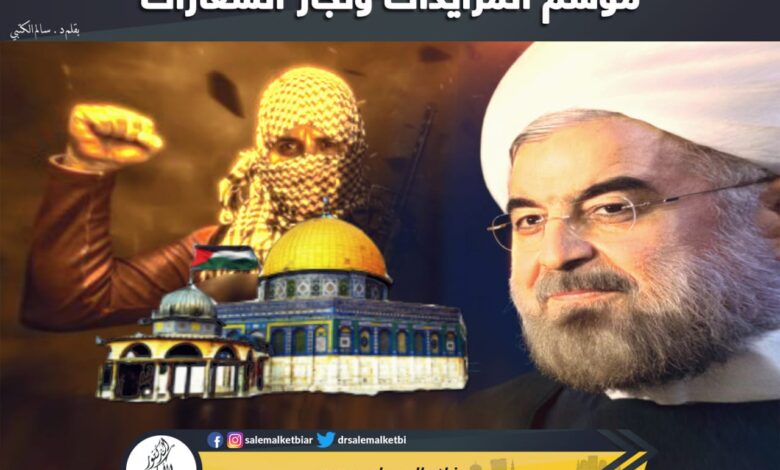
They do not mind splintering relations between Palestinian parties and deepening differences, in order to gain control over certain factions and organizations. The Iranian mullahs’ regime, for example, gives the name “Al Quds” (Jerusalem) to the most dangerous of the Revolutionary Guards’ brigades, the Quds Force.
The latter has played a leading role in inflaming conflicts and turning several Arab countries into Iranian regime-controlled spheres of influence. It has taken advantage of the deep spiritual status of Jerusalem in the hearts of Muslims. It does so without any positive payoff for the Palestinian people.
Political panderers to the Palestinian cause do nothing for the Palestinian people. They only fund and arm militias and factions without any effort to find political solutions to a historic conflict that wise minds know can only be settled at the negotiating table.
Many remember the words of Iranian Revolutionary Guard Air Force Commander Ali Hajizadeh. “All the missile capabilities of Gaza and Lebanon have been supported by Iran, and they are the front line for confrontation,” he said in mid-January.
I don’t know how this statement escapes the Palestinian leadership; he is talking about using Palestinian organizations as Iran’s defense front. Hajizadeh also boasts that the mullahs have taught members of the “resistance front” how to fish rather than giving them fish.
His point is that the Lebanese Hezbollah and some loyal organizations in the Gaza Strip now have Iranian technology to make missiles. The capabilities of these militias are not the same as they were ten years ago. Palestinians can “fire rockets instead of throwing stones.”
I do not question here, as some do, the role of the mullahs in supporting the Palestinian people in this harsh environment. That’s the wrong question. The mullahs are not the holders of the cause. They are only mere chancers. Their slogans on this issue are just a ridiculous ploy to gain sympathy and support from gullible minds in Arab and Muslim circles.
But I wonder: For how long will the Palestinians leave their cause to the politicking and racketeering? And for how long will the Palestinian class remain divided between those loyal to Iran and its militias on the one hand, and those concerned for the Arabness of the Palestinian cause on the other?
Some will say that some Palestinian movements want and prize Iranian support in the absence of Arab backing and silence on their cause. But this is fallacious. It is well established that the strategic circumstances surrounding the Israeli-Palestinian conflict provide the Arabs with little diplomatic latitude in the defense of their central political cause.
Everyone knows the extent of the internal and external pressures and challenges faced by Arab actors, including Egypt, whose role cannot be denied or overlooked. However, this does not justify the use of anti-Arab forces that want to alter the course of the cause and twist it from an issue of occupation and historical rights to a purely religious one.
Nor should we overlook the sincere efforts of countries like the UAE to find a third way to help unblock the situation and restore the rights of the Palestinian people.
Detractors and piggybackers obviously stand in the way of any sincere efforts to seek avenues for a peaceful settlement under such complex international and regional circumstances. The Palestinian question must not remain captive to the whims of detractors, politicos and sloganeers.
Every drop of civilian blood in the hostilities between the Palestinian and Israeli sides stands to condemn anyone playing politics with lives and stoking the conflict for personal ends and narrow interests.