Far from the heated political debates in the US over the fate of incumbent President Donald Trump, whether the impeachment proposal materializes a few days before the official end of his presidency on January 20, or whether he ducks the most miserable political end in US political history, the landscape in America is revealing new realities.
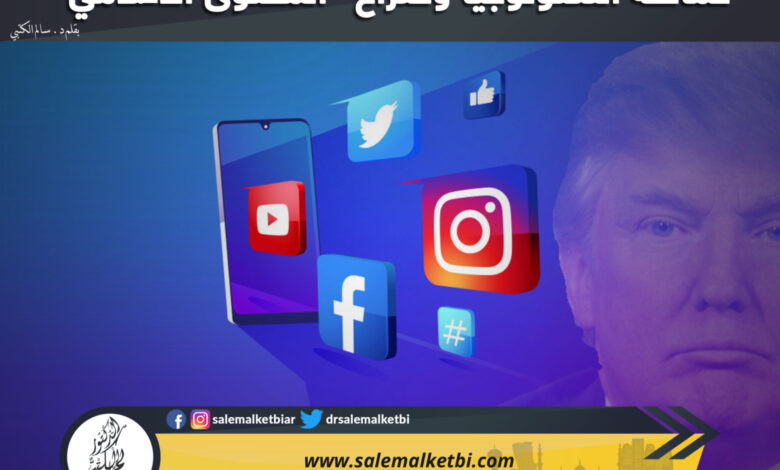
Chief among them is the tremendous influence of social media, already exerting a growing sway over the president of the world’s number one power. The nexus between Twitter and outgoing US President Donald Trump is not new. Since the start of his 2016 campaign, Trump has been betting on Twitter to reach his electoral base and the world.
Unfortunately for him, the last few months have been marked by serious tensions between President Trump and his favorite media. All the more so since the management of Twitter and Facebook have taken firm positions on what Trump publishes on the two famous platforms.
They have issued a signal suggesting that his posts are “misleading” because of his claims to win the US presidential election. President Trump’s accounts were eventually banned because of what has been described as a violation of the platforms’ publishing rules, following violence by his supporters on Capitol Hill on January 6.
Between the accusations of interference with free speech made by experts against social media platforms, other accusations of laxity, of enabling marauders and radicals to disseminate their views, and the delay in the intervention of technology companies to stop President Trump’s incitement to violence for his supporters, the facts testify to a new concept of power and influence emerging in the current world order.
It is the power of tech titans. They can play an active role in national policy-making and even international relations in the 21st century. It’s been four years since the world has been waking up to the handful of words President Trump leaves on Twitter.
These tweets have served as a compass for US policy around the world in recent years. The site itself has ended up restricting the president’s ability to talk to his supporters and his own world; the medium has become the message, proving that its role is more powerful than that of a communicator.
Trump’s influence on Twitter was not so exceptional. He didn’t top the list of the 100 most influential people, based on the number of followers. Former President Barack Obama was ahead of him. But Trump made Twitter his main means of communicating with the public and expressing his positions and orientations on various issues.
The website has become sort of President Trump’s unique informal platform. Everyone knows that the main reason Trump relied on social media is his poor relationship with traditional American media, especially the more popular networks such as CNN.
He accused newspapers and TV networks that he considered hostile to him of spreading fake news and skewed bias against him. It is worth noting, however, that President Trump was able to use his tweets to directly reach the American public throughout his presidency.
In addition, his tweets helped shape the agenda of the daily conversations that took place in the US media. It was not easy for people to miss the content of most of these tweets or dismiss them from everyday political debates.
Admittedly, Trump’s tweets have shaken the world’s capitals during his presidency, as Twitter has become a platform for expressing US foreign policy instead of the usual traditional diplomatic tools. But Trump managed to establish his favorite platform and use it to put pressure on US opponents and rivals, and play carrot and stick with little political cost, as in traditional diplomacy.
Here, social media gained from the global controversy associated with Trump’s presidency to strengthen their political role as an influential driving force in international relations. They were able to outgrow traditional American media.
President Trump played a major role in the growth of Twitter’s role and the dramatic increase in its impact and market value. According to some estimates, Twitter would have lost 20% of its market value without President Trump’s tweets.
Proof of this is that the site lost nearly $5 billion of its value once President Trump’s account was shelved once and for all as a result of events in Congress. This may explain why the site’s executives did not want to confront Trump during his presidency.
Curiously, they did not delete his old tweets insulting heads of state and other officials. Overall, the president’s ban on using popular social media such as Twitter, Facebook, Instagram, Snapchat and YouTube is still controversial, so some of Trump’s critics were not entirely satisfied with the move.
German Chancellor Angela Merkel called it “problematic,” while EU Internal Market Commissioner Thierry Breton said: “It is puzzling that a CEO can take the President of the US off speakerphone without any checks and balances.”
UK Health Minister Matt Hancock said that social media are “making editorial decisions now. ”He added that these platforms “are now choosing who has and should not have a voice on their platform.”
Proponents of the ban argue that social networks are private companies that have the right to set rules and standards for their customers, while many oppose Facebook founder Mark Zuckerberg or Twitter’s Jack Dorsey being put in charge of the new censorship of publicly posted content.
In all objectivity, it must be said that intervening to prevent a disaster or escalation of violence at the Capitole events was a good decision that should not be seen from a narrow angle. National security must be placed above all other considerations when dealing with such sensitive circumstances.
Worthy of note here is how technology companies have responded to many leaders since the coronavirus outbreak, during which conspiracy theories went unchecked. Facebook and Twitter have deleted posts from Brazilian President Jair Bolsonaro and Venezuelan President Nicolas Maduro for allegedly pushing misleading information about Covid-19.
Basically, if players in the technology sector are extremely cautious about the content of President Trump’s tweets, his ban will mark a turning point in the history of the tech giants and in the way published content is treated.
Laws that absolve social media from legal accountability for users’ publications will likely be brought to light again. The legal protection of these businesses remains highly controversial. It could eventually disappear and push corporations to step up their control over content so that states and governments can regain theirs.