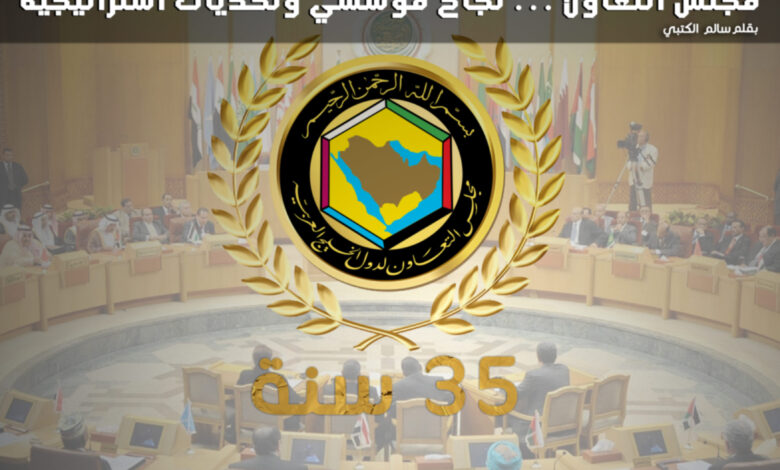
In an area characterized by a tremendous amount of complexity and strategic entanglements, in the twenty-fifth of May, the Cooperation Council for the Arab Gulf States completed its thirty fifth year, a historic station one can stop at to provide an inventory account for the march of the Council at the organizational and operational levels.
First, we must emphasize that this continuity in these circumstances is in itself a success for the six countries of the Cooperation Council, this is not a justification for failures or setbacks, manifold are the successes achieved by the Cooperation Council at the organizational level, and also at the level of security and stability and at addressing the threats and challenges facing Member States, in addition to achievements on the economic, security, cultural, political and sporting levels. These are tangible achievements that have contributed as much to keep the peoples of the GCC countries in a permanent connection and convergence throughout that period. The Council may have stumbled in the completion of some major strategic projects, such as the monetary union project, but that stumbling is normal in the march of major organizations and unions, and does not necessarily mean the failure of the organization or union; and if the Council had been able to reflect the unity philosophy of the late his Highness Sheikh Zayed bin Sultan Al Nahyan and his fellow founders of the Council, the GCC leaders, the objective consideration of its historical path confirms that it had succeeded in achieving many of its objectives, particularly with regard to preserving security and stability of the GCC countries in the face of difficult regional challenges and threats.
The Cooperation Council was established at the height of Iran’s sectarian lawlessness and Revolutionary tide to face the aspirations of Iranian expansionism, which did not stop but witnessed tactical changes. And the Council went through very difficult conditions when Saddam Hussein invaded sisterly Kuwait on the second of August 1990, to put the GCC countries in the face of a test and an unprecedented strategic challenge, and this ordeal has been overcome through concerted efforts of Member States with brotherly and friendly countries, and the most important lesson that remained is that the unity of destiny and common interests between the GCC states are not mere slogans, but a reality proved by the crime of the Iraqi invasion of Kuwait.
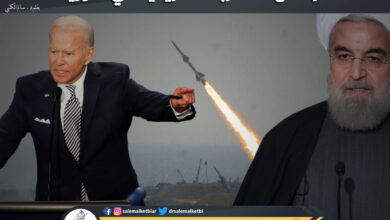
From the extrapolation of the historical march of the Cooperation Council, it appears to the reader as if this Council was born and founded to face challenges, hardly a year or two go by without the region witnessing a new strategic test. After the fall of Saddam Hussein’s regime in 2003, Iraq has witnessed a security and political turmoil that Iran has taken as a gateway for access to this ancient Arab country, and went as far as Ali Yonsei, adviser of Iranian President Hassan Rouhani, boasted that “Iran today has become an empire as it used to be throughout history, and its capital is Baghdad now, and it is the center of our civilization, our culture and our identity today as it was in the past,”, which is a complex strategic challenge for the Cooperation Council, not only because Iraq is a big Arab country that influences the security equation and regional stability, but also because the Iranian incursion in Iraq has made the Iranians hungry to clone the game itself in Yemen, where Iran has sought to encircle the GCC through its proxies of the Houthi group, who sought strength from Iran to control the joints of the legitimate authority in Yemen, which pushed Saudi Arabia to form an Arab coalition under its leadership to intervene in defense of the constitutional legitimacy in this influential Arab country in the Gulf regional security equations.
And certainly, undermining the institutional framework of the Cooperation Council remained a strategic Iranian objective since its inception. Tehran did not leave a chance without exploiting it to try to dismantle the unity of the GCC countries. It used all its cards in order to achieve this purpose, and it almost achieved partial breakthroughs difficult to deny on this path, but the wisdom of the leaders of the GCC countries always stood in the way of this Iranian goal. The Cooperation Council also suffered a difficult test following the outbreak of regional chaos and disorder in the year 2011, where ruling systems were overthrown in several Arab countries, in the forefront of which is big sister Egypt, whose security and stability are part and parcel of the security and stability of the Gulf Cooperation Council, so some countries in the Council, led by Saudi Arabia and the United Arab Emirates, took upon themselves the initiative to give full support to Egypt in this historic juncture, a view that was validated and that confirmed the foresight of the leaders of the GCC countries and their deep forward-looking vision, which considered that what is described as revolutions of freedom and change are just plots managed by foreign hands and carried out via internal tools like organizations and groups such as the terrorist Muslim Brotherhood group and others, so that the perpetrators of the conspiracy took advantage of harsh developmental conditions experienced by these countries in order to bring the chaos that has become evident in countries such as Syria, Iraq and others. Today, strategic threat levels facing the GCC countries have not diminished, but to them was added terrorism, which controls large areas of Iraq and Syria, and intensifies its activities in Yemen, while Iranian interventions and ambitions that are no longer hiding behind slogans as in the past continue. These interventions and ambitions have become public under sectarian banners such as “protecting the vulnerable” and other sectarian slogans used by Iran, which has set itself up as a protector of the Shiites without the slightest regard for the principles of international law and the international rules and norms on the principles of good neighborliness and non-interference in the affairs of other States and other.
Some believe that the failure of the Cooperation Council in the transition from Cooperation to Gulf Union stage according to the idea put forward by the late Saudi Arabia’s King Abdullah bin Abdul Aziz in 2011, represents evidence of the difficulties of evolution, which are facing the institutional entity and its regulatory framework. But this analysis is not accurate for several reasons and considerations, the first being that the march of the Council confirms beyond any doubt the existence of a super-will of cohesion and unity in the face of existential and decisive dangers and threats, so the idea of the Union is present, it is even the spirit of the Council, regardless of the institutional frameworks governing relations between the six states, since the feeling of cohesion and unity of destiny among the peoples of the GCC countries goes beyond any existing regulatory frameworks, it even goes beyond these frameworks, outdoes them, proves itself and emphasizes the fundamentals and pillars of its strength in moments of hardship and adversity. However, the foregoing does not mean that the march of the GCC is “perfect” in its historical and organizational development, but suffers many errors and confusions. There is a withdrawal from the Gulf line on the part of some Member States in many periods, and there are difficulties facing the development of a common Gulf policy towards vital files such as the relationship with Iran as well as difficulties and obstacles at the level of the economic unity and others, but these are generally accepted things in their entirety in regional federations, especially in light of the complexity of international interests so that the GCC remains one of the success stories achieved in the Arabian Gulf region.