The spirit of the Green March still fills the streets and alleys of the Kingdom of Morocco, even though forty-five years have passed since history was made. This extraordinary event marks a milestone in the sister kingdom’s past. It never ceases to provide its people with lessons, some of which have been learned in the field, while others have revealed themselves over the years.
On the occasion of this beloved anniversary, His Majesty King Mohammed VI made a speech that drew together many such lessons, all of which deserve special attention as we commemorate the triumphal march.
These lessons reflect the values and principles that fill people’s consciousness, deserving a prominent place in the collective consciousness of the young Moroccan generations who did not witness this unique moment.
As observers and researchers, we must study on this exceptional occasion the lessons to be learned from the event. One of the key elements that His Majesty King Mohammed VI highlighted in his speech is that the Green March has become a model of collective mobilization, commitment, discipline and commitment to rights.
These are the foundations and values of successful action in any era, all the more so at the current stage where all societies are facing major challenges in development, livelihoods, the economy and even health, education and ecology.
Such challenges demand that these foundations and values be evoked to transform any difficulty into an opportunity, to harness the energy of millions of young people in productive collective action for the benefit of their homeland, and to preserve its development, progress and national sovereignty.
The triumphal march will remain a beacon to the fellow Moroccan people. The people responded in a heartfelt patriotic spirit to the call of an outstanding leader, His Majesty King Hassan II, to write an epic bequeathed from generation to generation, and to record a page of history of good and strong ties between the leadership and the people of the sister kingdom.
What I find most important in this legacy is that it has achieved its relevant strategic objectives through a civilized mechanism. Such national mechanism mirrors the will of the societies and their ability to fulfill their hopes and preserve their territory as well as sovereignty.
Through this mechanism, the Moroccanness of the Sahara was established and this value was instilled in the hearts of Moroccans and promoted at the regional and international levels; then, starting from this spirit of patriotism, a dynamic force for construction and development went on.
His Majesty the King said that the march is “renewed and constant,” emphasizing that the wise Moroccan leadership is on the same path. It is inspired by the spirit of the triumphal march to push ahead with the construction, progress and modernization in the sister kingdom.
The patriotic spirit born from the glorious march has had positive repercussions on the international vision of the Moroccan Sahara issue. This vision has been enshrined in international resolutions that legitimize the Moroccan position towards the southern regions.
Any illegitimate approach or argument aimed at altering reality through “unrealistic and outdated” ideas and proposals, as His Majesty’s speech pointed out, has been ruled out. The royal speech assured the fellow Moroccan people that a political solution based on realism and consensus has become “irreversible” thanks to the active participation of the parties concerned.
This attitude corresponds to the will of the Moroccan people and its wise leadership, which values security, peace and stability, and dedication to construction and development without compromising on the national territory or the will of a people determined to hold on to every inch of its land. The popular will is embodied in the autonomy initiative.
The autonomy project proposed by our sister kingdom has received the support of the Security Council and the major international powers. The initiative is the only way to resolve this conflict through civilized action that preserves security and stability, as well as Moroccan sovereignty, dignity and national pride.
His Majesty’s speech also highlighted the harvest of Morocco’s successful diplomacy through the platform of the African Union. “Thanks to Morocco’s return to its African home, the AU has managed to get rid of the maneuvers that have held it hostage for several years, by now adopting a constructive approach, based on full support for the efforts deployed exclusively by the United Nations. ”
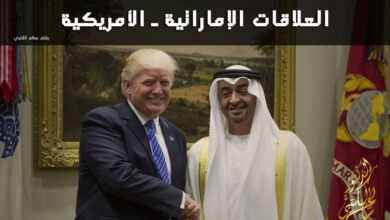
His Majesty also paid tribute to a parallel political achievement: the recently established legal and diplomatic channel. Many countries, including the United Arab Emirates, have opened consulates in Laayoune and Dakhla cities, “thereby plainly and clearly recognizing the Moroccanness of the Sahara and affirming their full confidence in the security and prosperity that prevails in our Southern Provinces. ” There are 163 countries that do not recognize the region’s ghost entity, representing about 85% of UN member states.
All of these qualitative achievements were made thanks to Moroccan diplomacy and the positive, evolving and growing relations that link the kingdom with its enlightened leaders and the rest of the world.
The speech also stressed the rightness of the Moroccan kingdom’s approach to its national question, through wisdom, relevance, political rationality and calm diplomacy in line with international legitimacy. This approach represents the most powerful weapon against all other parties’ desperate and provocative maneuvers.
The Kingdom has confirmed to the world its commitment to a political solution without backing down from its strong will to face any move affecting its southern provinces’ integrity and stability.
The rational way in dealing with the issue, as clearly formulated in the speech of His Majesty King Mohammed VI, echoes the spirit of the Moroccan people to contribute creatively to the march of progress, security and peace in the world.
A way that opens to construction and development, not to conflicts and wars. One that is based on adherence to international law, UN principles and the provisions of its Charter, including good neighbourliness and respect for the sovereignty of other states without resorting to unilateral practices to impose a fait accompli. Such practices are at the root of unrest and cause tensions in various parts of the world.
The royal speech also laid out an ambitious development plan. The plan aims to capitalize on the capabilities of all regions of the Kingdom, and to draw on their marine and land resources to unlock the potential needed to build bridges of the future between Morocco and its African depth, as described by His Majesty.
King Mohammed VI has skillfully linked the realization of these promising development ambitions with the spirit of the Green March, which can turn these ambitions into reality through determination, action, organization and mobilization of collective consciousness.
Honoring the spirit of the Green March requires achieving further strides to put the Kingdom of Morocco in its worthy place on the map of regional and global development and progress. We are confident that this goal will be reached, God willing, thanks to the firm will, confidence and deep ties that unite the people of Morocco and their wise leadership.