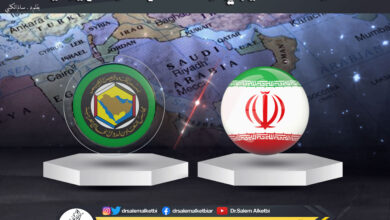
Through my previous articles, I have often pointed out that what happens in broad daylight between the mullahs of Iran and the US is one thing and what happens behind the scenes is another. The slogans and statements of the mullahs do not always reflect the intentions of the Supreme Leader. His pragmatism will inevitably lead him to give the green light to politicians to sign an agreement with the Trump administration if he gets what he wants or suffers what he fears.
Not long ago, we followed all the open political flattery between President Trump and the Iranian regime. The president thanked Iran for releasing a former US Marine. He had been detained for almost two years.
In his first comment on the release of Michael White, Trump tweeted, “Thank you to Iran, this shows that a deal is possible! ” “This can happen for all prisoners,” replied Iranian Foreign Minister Mohammad Javad Zarif after the exchange of prisoners, including American Michael White, in exchange for the release of the Iranian doctor held in the US, Majid Taheri, wishing that “Iranian hostages held in—and on behalf of—the US should come home. ”
The mullahs intend to keep the door open for dialogue with the current US Administration, even if it is for the time being an exchange of detainees. Both sides seem to share the same vision on the possibility of sitting down at a negotiating table. All that has happened in recent years is that they have taken steps to improve the terms of the negotiations, since they are all aware of the requirements of dialogue and the conclusion of major agreements.
The Iranian regime, which has been talking to the G5 representatives of the Security Council for years before signing the P5+1 deal on Iran’s nuclear capabilities in 2015, is stoic; it will endure anything to get what it wants.
As for President Trump, he is a businessman who likes or hates things according to his own interests. If he is tempted by a deal, he will not hesitate to make it. This explains why President Trump does not hesitate to take the opportunity to exchange detainees to remind the mullahs that he admires their negotiating skills in this round, which leads him to foresee the possibility of a “Big Deal. ”
The mullahs did not disappoint, but did not have the courage to speak directly like him. They merely indicated the possibility of repeating this gesture as a signal of their satisfaction at the idea of negotiating with the “Great Satan” so that the Iranian detainees can return home, as Zarif claims, or even sign a major agreement, as Trump unequivocally stated.
Curiously, there is a perfect compatibility between Zarif’s tweet in which he talks about the return of all Iranian detainees and the US State Department’s statement that says, “There is more work to be done, the US will not rest until every American detained in Iran and around the world returns to his loved ones.” It’s as if there is a common agreement on that wording so that we can resume dialogue under the pretext of returning the detainees.
In any case, the dialogue with the Iranian mullahs is fruitful for Trump. “We have now brought more than 40 American hostages and detainees back home since I took office,” he said. This in itself is a political gain that Trump can claim in his run for a second term.
The president called on the mullahs to make the big deal. He said this was realistic, given the success of the limited rounds of negotiations on prisoner exchange. He noted that Iran had conducted “very fair” negotiations. The Iranian regime responded, through Zarif, that a return to the nuclear deal and the lifting of sanctions depends on Trump. This again raises questions about the possibility of a major agreement that could be motivated by the parties’ own interests.
President Trump could consider concluding a major agreement with the mullahs’ regime as a positive alternative for a list of reasons: the failure of its domestic and foreign policy, the deterioration of the US domestic situation, the rise of racial tensions that threaten the social fabric, increased unemployment and the declining performance of the US economy as a result of the coronavirus crisis (and President Trump’s slow initial reaction), and the sharp deterioration of the US reputation in the world, the deterioration of relations with allies and competitors, and the failure of other agreements that Trump has wagered on as the “deal of the century” in the Israeli-Palestinian conflict.
For their part, the mullahs can see that President Trump is going through a serious political crisis and that he needs a helping hand to preserve his chances of winning the next elections in November. They can get important concessions in the negotiations, especially since Trump seems in the mood to accept major concessions to Iran, and then he will present the deal politically to his voters as an important victory and accuse the critics of the deal of clashing with him and pushing the US into a war with Iran.
The possibility that the two sides might seek an entry point for more comprehensive negotiations is reinforced by the fact that a senior US official hoped that the release of Xiyue Wang would signal that “Iranians may be willing to come to the table to discuss all the issues all issues” such as their nuclear and missile programmes, the release of US hostages held in Iran and Tehran’s harmful activities in the region.
President Trump’s campaign of extreme pressure is working, and it is very effective, the official said, recalling Trump’s announcement that he is prepared to meet with the Iranians without preconditions. This is also reinforced by the White House’s silence on the Iranian oil tanker movement in support of the Venezuelan president’s anti-American regime, which appears to be a political concession to the mullahs to affirm their goodwill.
On the Iranian side, there is an obvious flexibility and calm in the political discourse, and Iran’s silence on the strategic dialogue between the US and the new Iraqi government, which some see as a prelude to an American-Iranian dialogue, or a proxy dialogue between the two rivals, though the latter is less likely.
The mullahs may prefer to support Trump in order to increase his chances of winning the elections, given his refusal to wage war or use force against the Iranian regime. After all, it is the Iranian people, not the regime’s leadership, who are paying the bill for the embargo and sanctions, while the leadership is convinced that during his second term, Trump will be more vulnerable and more concerned about issues other than Iran and its nuclear and ballistic capabilities.