After seven years of crises and conflicts that resulted in millions of refugees and displaced persons, the political and strategic balance of power in Syria has changed. A major turning point in the Syrian crisis was the United States’ decision to withdraw its troops from the country.
Some said there will be winners and losers as a result of the US decision, but the sure thing is that it left many players in trouble. President Trump’s decision certainly confused Russia and Turkey, who decided to hold an urgent meeting to coordinate their next moves.
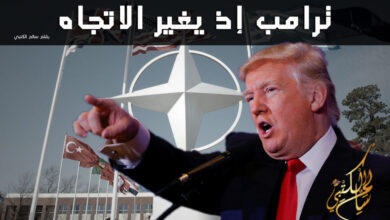
The US position is a bit of a mystery but should not be understood as a defeat for the US in Syria. President Trump is no supporter of deploying US troops in conflict zones. He has criticized the Obama administration for doing so. In March, he said he would withdraw troops from Syria.
What might help make sense if the decision is Trump’s statement made during a surprise visit to Iraq. President Trump said that US forces stationed in neighboring Iraq would be an advantage if the US intervenes militarily in Syria in the future. Withdrawing from Syria might also be part of a deal with Turkey.
Trump is still decided to use all the cards in his hand with respect to Syria.
Many media outlets reported that recommendations to keep the Syria’s Kurdish forces armed with US weapons will be submitted to the White House. Should the recommendations be approved, the crisis with be more complicated as this would anger Turkey who was pleased by of President Trump’s intention to leave Syria and open the door for Turkish influence.
The situation is getting worrisome. Turkish President RecepTayyip Erdogan did not imagine that the Kurds would call on the Syrian army and that withdrawing US forces is a new victory for the Syrian army, not for Turkey.
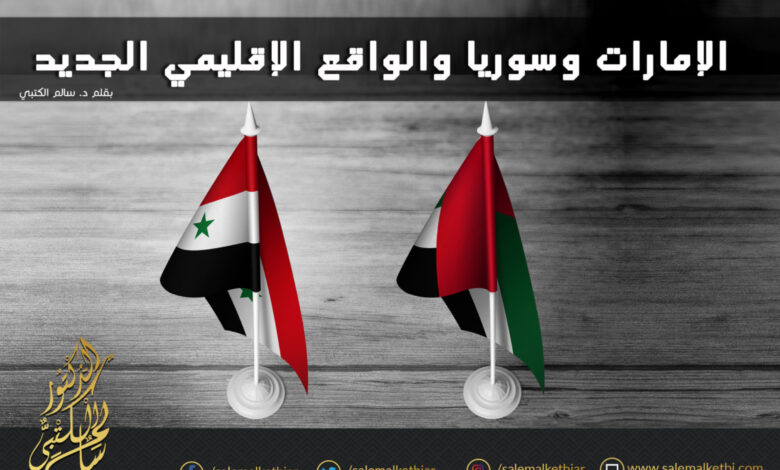
In a realistic move but also in support of Syrian State and people and to curb Iran’s ambitions and chances to reap the benefit of intervening in Syria, the UAE decided to reestablish relations with Syria.
Change is the only constant variable. It is in the interest of all Arab countries now to normalize relations with Syria. The country belongs to the Arab region and should not be left to the enemies of the Arabs.
It is in the common interest of both parties, Arabs and Syria, to restore relations. President Assad will benefit from strengthening his position against any external pressure that can undermine the sovereignty and territorial integrity of Syria now that a new constitution and power redistribution are in sight.
The Arab countries can support Syria against foreign plots to divide and conquer the country, provide relief for the Syrian people, accelerate the return of millions of refugees and displaced persons, and counter Iranian and Turkish influence in this Arab country.
Severing relations with Damascus was one of the reasons for the weak Arab collective influence in the Syrian crisis. Several meetings were held in Western capitals that not a single Arab country attended.
If Arab countries are responsible for suspending Syria’s membership in joint-action institutions such as the Arab League at the height of geopolitical agitation in the Middle East, rethinking the situation in crucial amid the rapid developments and the presence of foreign players in this strategic Arab country.
While some said that the decision of the UAE to re-establish relations with Syria was surprising or linked to the US decision to withdraw from Syria, His Highness Sheikh Abdullah bin Zayed Al Nahyan already said, back in March 2016—at the height of the Syrian crisis—that “no military solutions can solve [the Syrian crisis] without political solutions that include all parties. Baghdad and Damascus should integrate all their national components and put an end to Iranian intervention in the region.”
“I think it was a mistake to kick Syria out of the Arab league, it meant we had no political leverage at all, no open channel, we could not present an Arab prism to how the Syrian issue should be resolved,” UAE Minister of State for the Federal National Council and Minister of State for Foreign affairs Anwar Gargash told The National last June, before the US decision to withdraw from Syria.
Gargash also said it was strange that the Arab countries did not offer any comprehensive solutions to the Syrian crisis and that, although Iran and Turkey weakened the Arab role in Syria, the decision to exclude Syria from the Arab League was similar to when influential Arab countries found themselves excluded from meetings on the Syrian crisis.
The UAE had a strategic perspective on Syria that has been adopted for a while now. The decision of restoring relations is a part of the UAE’s anti-interventionist and stabilization policy in the Arab world.