The United States has destroyed a mock-up of an Iranian nuclear facility 80 meters underground, The New York Times reported recently. According to the newspaper, Washington 10 years ago constructed a model similar in size to the Fordow nuclear facility, about 100 kilometers south of the Iranian capital Tehran. The model was bombed as part of a simulation with the “Mother of All Bombs” weighing about 13 and a half tons.
The newspaper also revealed in its report that Israeli officials studied launching a military attack against Iran, with or without U.S. approval. Israeli officials believe that US President Donald Trump may not oppose such an attack, unlike his predecessor Barack Obama. There is a discrepancy between Trump and Obama over dealing with the Iranian threat, reported the newpaper.
Some observers considered this report as an indication of a possible escalation in the Iranian crisis, and that there is a high probability of a sudden military strike on Iran’s nuclear facilities. But past experience suggests that such preparations are conventional for a superpower like the United States. All strategic options must be on the table before POTUS, the supreme commander of the armed forces, as diplomatic tools against the Iranian threat to US strategic interests.
In Israel, such discussions would naturally be a top priority for strategists, amid escalation with Iranian proxies, led by Lebanon’s Hezbollah.
But there are important conclusions. The first is that Israel will probably not venture into direct conflict with the Iranian regime unless the capabilities of Iran’s agents to counter-strike deep into Israel are curbed.
President Trump is not at all inclined to the war option. The most obvious sign is not how he deals with Iran, but with the Taliban. The US president was planning to meet with leaders at Camp David on the anniversary of the 9/11 attacks to sign an agreement. A large part of the US forces stationed in Afghanistan would withdraw under the agreement.
It would be unconceivable for the White House to work to end the engagement of its forces in Afghanistan and then open a front next door with the Iranians, and at a critical time. The United States stands on the verge of the presidential election year.
Another important signal came during Israeli Prime Minister Benjamin Netanyahu’s surprise visit to London. At the height of the UK’s political crisis against the backdrop of the Brexit crisis, it was clear that the talks were primarily about how to deal with Iran.
Netanyahu fears a surprise summit between Presidents Trump and Rouhani on the sidelines of the UN General Assembly this month. Despite the diminished chances of such a summit, with the hawks of the Iranian regime pressuring Rouhani and his Foreign Minister Zarif to curb their rush to dialogue with the Trump administration, Netanyahu fears secret undisclosed understandings to hold the summit.
Netanyahu hinted at a briefing to reporters in London that such consultations were likely. “Obviously, I don’t tell the U.S. president when to meet or with whom,” he said. He added he would present a more assertive and rational approach than those presented so far.
As he could not categorically deny the possibility of a summit, Netanyahu seems convinced that the handshake between Trump and Rouhani has become a matter of time. The handshake sought by the US side weakens Netanyahu’s hand and limits his chances of winning elections next month. He is betting on a scenario of confrontation with Iran and its regional allies, unlike his ally Trump, who hopes to reach a deal with the mullahs.
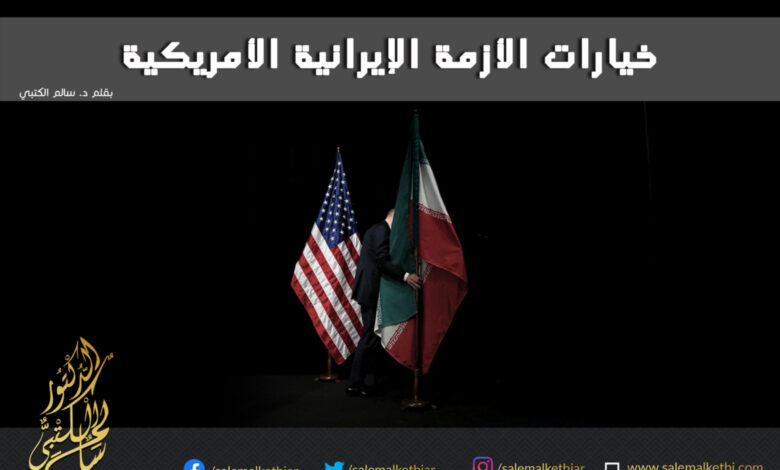
Clearly, the Iranian regime is thinking about what comes after the handshake, a la North Korea. So it tries to delay the handshake until it extracts concessions from the US administration, using all the cards, including the gradual abandonment of its obligations under the terms of the nuclear agreement signed in 2015.
It is also clear that Netanyahu cannot help but get behind President Trump, so as not to risk losing his support in the elections and delivering on his promises within the deal of the century.