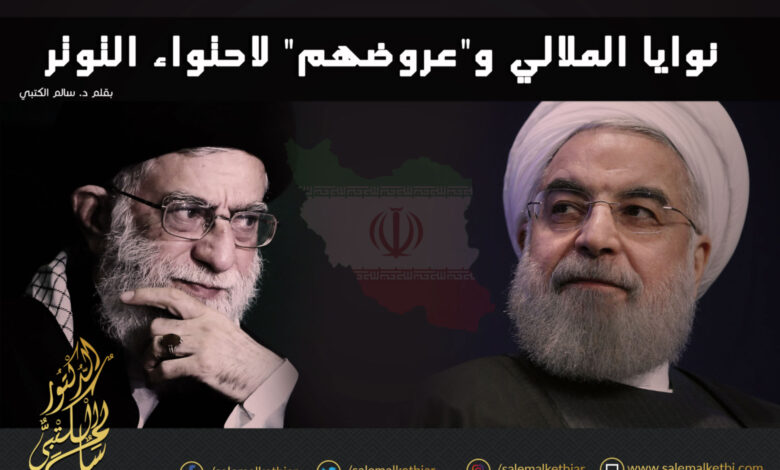
Political taqiya is a tactic on which the Iranian regime relies heavily in crisis management.
First, the mullahs want to appear as victims. The regime then develops a comprehensive strategy based on political victimhood, in order to win the sympathy of the international public and to avoid any threat to its future. But the political circles, both in the Gulf region and abroad, have become familiar with such tactics and strategies.
By targeting trade ships near UAE waters and Saudi oil installations through the Houthi putschist group, which answers to Iranian Revolutionary Guard orders, Iran has provoked a crisis. After days of deliberate armed escalation and brinkmanship in the region, if not for the rationality and wisdom of the leaders in Saudi Arabia and the UAE, the whole region would have been embroiled in a war that the regime wants to start, despite it claiming otherwise.
There are dictatorship regimes that feed on crises. They cannot survive in normal conditions.
The reason is simple. These regimes have no developmental ideas or projects in the interest of their populations. What they do have are doctrinal and sectarian agendas focused on military expansion and wasting the wealth of peoples and their resources in agents and clients abroad. These regimes include the mullahs of Iran and others who have fuelled conflicts, wars and tensions in the region in recent decades.
The mullahs’ system blends intentions of aggression and sectarian expansion with a political discourse that claims goodwill and a desire to contain tensions. But their mixed signals do not fool anyone.
Whenever senior leaders of the Revolutionary Guard make threats, Iranian politicians make statements of détente. For example, when statements were made about secret weapons in the hands of the Iranian regime that are capable of drowning ships in the Gulf, Foreign Minister Mohammad Jawad Zarif was signing what he called a non-aggression pact with Iran’s Arab neighbours in the Gulf.
The Iranian regime believes it can cause political and diplomatic embarrassment to the Gulf States with offers of appeasement and a so-called desire to build “balanced relations” with them, as Zarif claims.
The fact is that Iran’s overall political line is a testimony to the absurdity and lack of seriousness of such offers and allegations. Security and stability in the Gulf requires serious actions and conduct more than it does sweet words and mitigation.
Had the mullahs’ regime been serious, we would not even need non-aggression agreements. All it takes is for the Iranian regime to stop creating conflict and chaos in the region to ensure security and stability, without non-aggression or any other agreements.
To build balanced relations depends on the will of the Iranian regime, the political behaviour and practices of which are marked by Persian nationalist arrogance, recklessness and continuous interference in the affairs of neighbouring countries.
Interestingly, the Iranian regime is calling on European countries to take concrete steps and do more to preserve Iran’s nuclear agreement with the P5+1 group. At the same time, the regime itself offered no concrete measures to curtail tensions and demonstrate good will towards its neighbours and the world.
The Iranian regime’s intensive diplomatic campaign, both regionally and internationally, reflects its real concerns.
It fears that it may fall under direct military intervention or economic pressure that weakens its capacity to hold together and survive and leads to its inevitable collapse by popular opposition, because the Iranian people are just waiting for the right time to attack and eliminate this repressive regime.