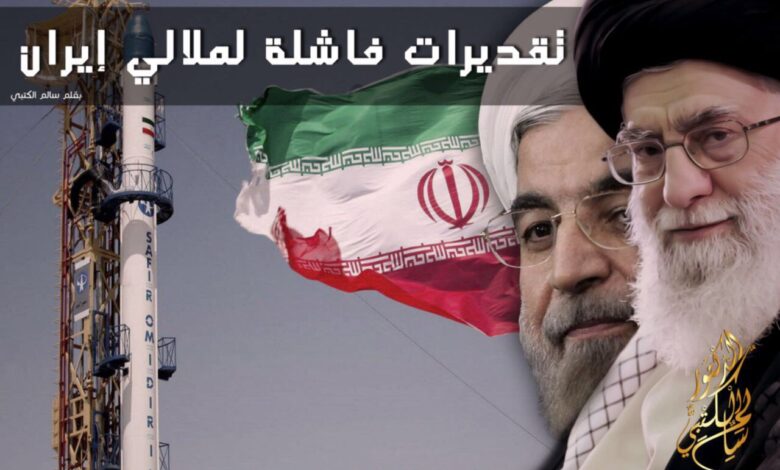
The Iranians are thinking that escalation concerning their missile program is inevitable to push the Trump administration to negotiate and compromise. They think it was what made the administration of President Barack Obama sign the nuclear agreement with Iran.
Making no compromises and escalating in tough negotiations on the nuclear program did put pressure on the Obama administration to follow the containment strategy for several years. But it was Obama’s own strategy not to engage any new military conflict in the Middle East. He tried to reduce US military interventions and thus the American leading role in the world order, to prove his foreign political theory.
Today, the Trump administration believes the US should restore its supremacy and control over the world. He took a tough stance on the Iranian threat and sees the nuclear deal with Iran as the worst agreement in American history. Because Washington is keen on protecting its relations with international allies and co-signatories, the Trump administration did not withdraw from the nuclear deal.
The mullahs of Iran might not see it but things have changed. The regional and international variables in the context of the missile program are different now, making it impossible to reproduce the scenario that led to the 2015 nuclear agreement.
Tehran ignored the joint statement of France, Germany, the UK and the US, the main signatories to the nuclear agreement, which condemned the provocative and destabilizing recent missile test violating UN Security Council Resolution 2231.
International efforts are being made to counter the Iranian missile program threat, alongside that of North Korea. The Iranians failed to understand the dynamics of intra-NATO relations. They bet on the slight disagreement between Germany and the Trump administration that could not affect the NATO position on international threats.
“We will continue ‘with full power’ our missile programme”, said Iran’s foreign ministry spokesman, as Western powers are now convinced that the Iranian threat concerns Europe more than the US. A secure and stable Europe needs strategic protection from, compatibility and coordination with Washington.
Due to economic interests concerns, the US and its NATO allies had slightly differed on the Iranian file in previous years but now that other threats are coming from Russia and North Korea, Europe has become particularly sensitive to the Iranian missile program.
Not only did they choose the wrong time but the Iranians also risked losing some gains they made out of the nuclear deal. The all-or-nothing mind frame destroys diplomatic efforts.
It was said that after he won a second term, President Hassan Rouhani would reign in the IRGC. Some observers even called the last presidential election a political defeat for Iran’s hard-liners. The theory of the Iranian president’s limited power has proven true regardless of the electoral support he received. The real power in Iran is in the hands of the Supreme Leader, the foreign policy chief in Tehran.
The Iranian president and the foreign minister aped their betters, the Revolutionary Guards, concerning the missile file. This can only confirm that they are all daredevil hardliners. The election was just a play portraying a false political conflict between parties in power in Iran.
The Iranian decision-makers went wrong on the missile program this time when they played the wrong card at the wrong time. Carrying on this course of action will have dire consequences for Tehran.
As for the GCC countries, they should support the US position to curb the growing Iranian threat and hostility to these countries.