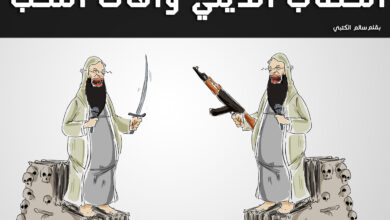
The Dar al-Ifta of Egypt posted an animated fatwa video on the birth of the Prophet Muhammad PBUH, one of 300 animated fatwas that will be produced by the religious institution.
The idea was met with mixed reactions.
Some social media users made fun of the idea, yet that is not unusual in such networking platforms.
The people who found it funny probably think that it is difficult to confront extremism with modern technology. The animated video would appeal to the young people who are more inclined to use devices than read.
Research in media studies link the spread of Daesh to the use of modern social networking sites such as Twitter, Facebook and Instagram. But when a genuine religious institution is creative and starts thinking outside the box, it is faced with criticism.
The Egyptian fatwa institution has not done what deserves to be criticized. Its animation unit is exposing the wrong ideas that obscurantist groups push forward and refutes them with the right information, understanding and in an appealing way.
Artistic expression simplifies information, and what the animation unit has done must continue in order to see results.
Another point that some people talk about is the use of a female voice in commenting on moving images, a controversial question as some still hold that a woman’s voice is “awrah” (not to be heard by male non-relatives).
The silence in the face of extremism and the debate over matters settled by Islamic jurists many years ago cost us many years, but controversy was stirred up again.
Silence can only help radicalization expand. The terrorist creed did not die with the defeat of Daesh in Syria and Iraq, not did Al Qaeda cease to exist when its founder Osama bin Laden died in 2011. Indeed, extremist movements decline and rise.
The point is that the counter-terror fight must continue and it starts from rejecting the radical ideology and encouraging the culture of tolerance, coexistence and pluralism. The United Arab Emirates is making tremendous efforts in this regard.
We must all realize that lost communication with younger generations, through the new technologies they are using, will allow radical ideology to spread more easily.