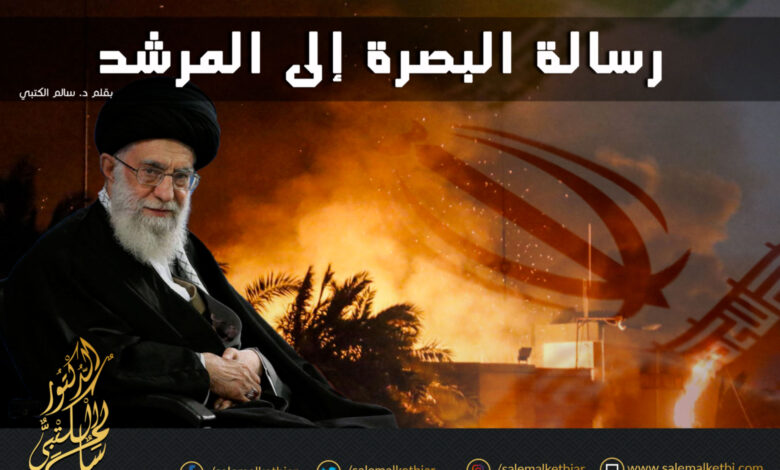
Iran opened its consulate in the city of Basra a few days after it was burned by the Iraqi people. It did not pay attention to the meaning of the message the Basran demonstrators wanted to send to the mullahs’ regime: that they reject the Iranian role in their country. Iran accused some Arab countries of instigating the arson.
Although the Basra demonstrations are an internal Iraqi event related to successive government policies in Iraq, it is also a message to Iran’s Supreme Leader Ali Khamenei and his regime. They broke out in areas traditionally considered to be under the political influence of Shiite parties, since the fall of the regime of Saddam Hussein in 2003. The popular rejection in Basra has targeted these parties supported by Iran, especially since the protesters burned many of the headquarters of these parties
Since it boasted of controlling Bagdad, Iran has been dealing with Iraq in a condescending way, using its territory to send its arms and militia to Syria and the shores of the Mediterranean through the Lebanese Hezbollah. But this did not make Iraq important in the eyes of the mullahs. The Iranians stopped supplying Iraq with electricity because the Iraqi government delayed paying for it. The Iraqi government said it failed to convince the Iranian side to resume supplying Iraq with electricity.
Instead of getting the Basra message, the mullahcracy condemned the burning of its consulate by Iraqi citizens angry at Iran’s interference in their country and they forgot they claimed the Saudi Consulate in Mashhad was burned by Iranian protesters back in 2016 or alleged that demonstrators also stormed the British Embassy in Tehran in 2011.
The Iranian regime has a black record on embassy protection. It is an expert in burning foreign representations of foreign countries-—through its sectarian militias—that somehow failed to get the point behind the burning of its own consulate in Basra.
The message of Basra to Iran is the popular rejecting of the longstanding subordination to the dictates and desires of the Iranian regime, a revolution against Iran’s interference and a warning to political parties that Iraq is for Iraqis.
The latest developments in the situation in Iraq and Syria push Iran to urgently review its regional and international policies and not wait till November, when US sanctions on oil will take effect, to make another move. The utter failure to manage the economy is mainly due to resources being channeled to terrorist organizations serving the regime.
The worst thing is that other Arab nations are the ones paying the price of Iranian expansionism. The Iraqis in Basra and many other governorates suffer shortage in material and human resources, notwithstanding the potential this country has, as a consequence of continuous foreign interventions, although Iraqis did reduce the threat of terrorism. Millions of Iraqis want their normal lives back, job opportunities and basic infrastructure.
Iran should stop interfering in the affairs of Arab countries, respect the Charter of the United Nations and the international laws and norms concerning the respect and sovereignty of other nations, and also understand the messages of protestors from the streets in Iranian cities to those in Basra.