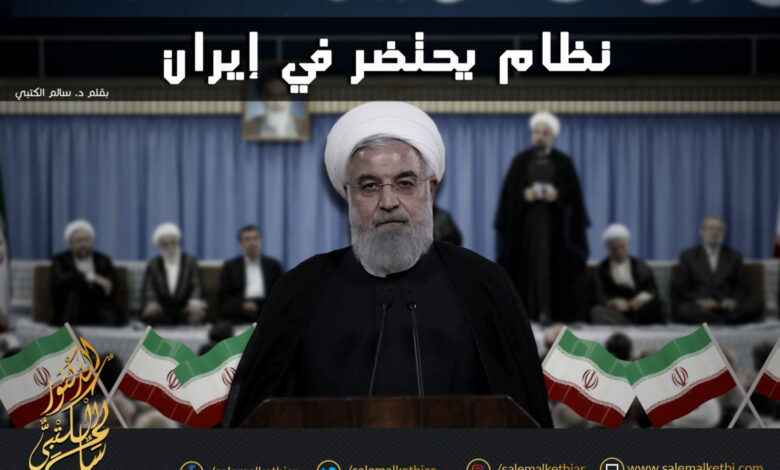
The mullahs’ regime is dying in Iran and is living its last months and may be weeks. The Iranian regime is using the Shura Council to escalate pressure on Rouhani. Iran’s president has to make changes in his government team to calm the protests or he will be renounced.
Joining the protests, Iranian Bazaar businessmen have certainly given it extra strength. They are an influential player in the Iranian political process. Hundreds of traders held a strike against the collapse of the currency. Iranian hardliners in the regime are taking advantage of these protests to oust Rouhani from office and to make him a scapegoat for the current economic crisis. Out of the ordinary, the pro-hardliners media provide full coverage of the protests. It was the Grand Bazaar that played a crucial role in the events of 1979. Then, traders joined the clergymen to overthrow Shah Mohammad Reza Pahlavi. Traders do not have this kind of power and influence now. But, symbolically, market opinion is important for the Iranians.
Iran’s currency has plunged almost 50 percent in value. The Iranian rial is heading towards a complete collapse with the start of the implementation of the new US sanctions in November. International companies will stop any dealings with Iran. Most of the countries importing the Iranian oil will stop it. The Iranian economy will get a huge blow after losing oil revenues. Crude incomes account for about 65 percent of Iran’s total exports. It is the country’s main source of hard currency.
Iran will experience what Saddam Hussein’s regime had before. Tehran will also face the same pressures that prompted the North Korean leader to initiate dialogue and negotiation with the US for fear of the collapse of his regime. Pyongyang was able to bear the pressure given the nature of its people and its international isolation. The relationship between the Iranian people and the regime is very bad. The ongoing popular protests could have swept the headquarters of government and the presidency in Tehran and Qom alike.
The expected US sanctions have made the economic situation unpredictable. The Iranian people were afraid of conventional investment funds and protecting savings such as assets, real estate, etc. The country has seen a scramble for buying the dollar and the euro to keep them away from the banking system. The Iranian banking system is likely to collapse. All this has led to high records in imported food commodities, especially after a ban on importing more than 100 commodities. The stock exchange activity has returned to low levels. The situation has worsened when the government decided to raise fees for leaving the country. Such move means that Iran has become a big prison.
Bankruptcy is no longer a ghost facing the Iranian economy. Rather, it is a predictable scenario. The government is totally incapable of managing the crisis. The conditions are ripe for any pressure or external intervention to end the mullahs’ regime. But the decision depends on the US vision. Will Washington outset the regime or just put pressure on it so that it changes positions, softens its tone and accepts US decisions?
Newt Gingrich and Rudy Giuliani, Trump’s allies, recently urged regime change in Iran. They thought the prospect is closer than ever after the wave of strikes and protests in Iran. According to reports, Gingrich, a former speaker of the US House of Representatives, and Giuliani, the ex-mayor of New York, told a rally of Iranians opposed to the mullahs’ regime in Paris that Trump needed to escalate pressure on European countries still seeking to do business with Tehran in spite of renewed US sanctions. “The only way to safety in the region is to replace the dictatorship with a democracy, and that has to be our goal,” said Gingrich. The former House of representatives speaker said he did not support arming the Iranian opposition. He stressed that Trump should instead impose further sanctions after pulling out of the nuclear agreement signed with Iran. Gingrich slammed countries seeking ways to allow their companies to keep operating in Iran under the threat of fines for US sanctions-busting. For his part, Giuliani said “freedom is right around the corner,” referring to the recent protests in Iran.
These statements are important to formulate an Iranian and international public opinion. The cause is clear now. But the fastest and most effective is what happens on the ground. The Iranian currency is falling rapidly. The Iranian rial lost about 50% of its value in six months. Unemployment rates are the highest ever. One third of young people under the age of 30 face a lack of job opportunities. Iranians now have the opportunity to overthrow this regime without any external interference.
The mullahs’ economic policy will certainly fail. The Iranian people suffer a lack of freedoms and human rights. The people will not tolerate more suffering to achieve the mullahs’ dreams. The regime’s inability to manage the country will speed up its precipitous collapse. The mullahs have long reduced their achievements in expansionist activities. But the people have nothing to gain from expansionist plans but impoverishment and suffering.
The message of the Iranian people was: Our regime must leave Syria. The mullahs did not pick up this signal since it has been sent months ago. They stubbornly resisted and believed that they were better able to understand the needs of the Iranian people. Tehran’s Grand Bazaar support of the people was a powerful blow. It was a development that made it difficult to talk about tightening the grip on the country’s rule again.