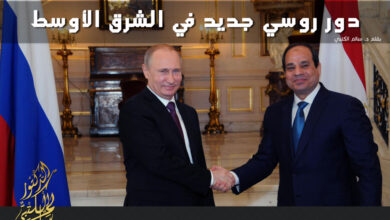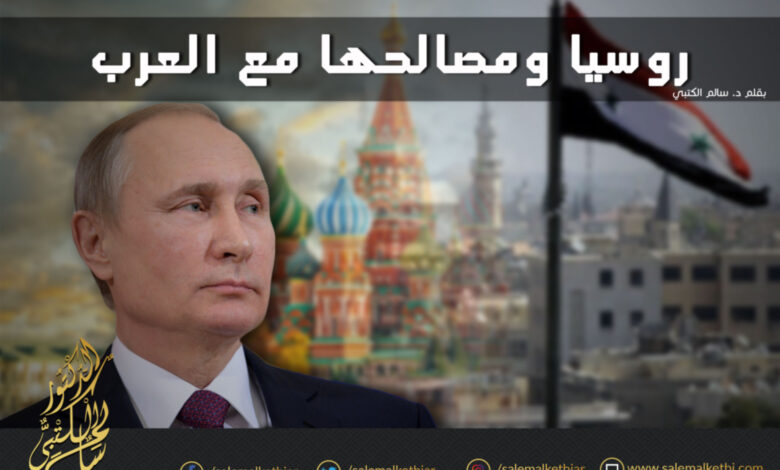
Russia has become an important player in any calculations concerning the developments in the Middle East, especially in Syria.
The Kremlin has been successful in employing mistakes of US foreign policy during the last and current administrations. It has also succeeded in exploiting the weakness and hesitation of the EU to set up an effective foreign policy towards Syria. The Syrian file is vital for the EU. Putin was able to take advantage of the new developments to re-position Russia as a great power on a global scale.
Russia is in alliance with Iran and Turkey concerning the Syrian file. Its alliance with Iran has produced some commitments that could harm Russia’s long-term interests. Israel is very concerned about Iran’s intentions in Syria. Lebanese Hezbollah militias are based in Tehran’s missile bases in Syria. Iran has openly avowed its ambitions in Syria. General Yahya Safavi, the advisor to the Supreme Leader, said in statements published mid-February that Iran’s assistance to Bashar al-Assad was not for free. “Iran needs to recover the costs it has incurred in Syria. Syrians are also willing to do so through their oil, gas and phosphate mines. Currently, Iran is exporting phosphate from Syrian mines,” Safavi said. These statements may seem economic. But Tehran intends to stay in Syria after they wasted billions of dollars backing al-Assad regime and Hezbollah militias. The IRGC brought many sectarian divisions from various countries to take part in the conflict in Syria.
Russia is also risking its interests with several Arab countries. It stands against the will of the international community regarding what is happening in Yemen. Tehran violates the Yemeni sovereignty by sending weapons and equipment to the Houthi sectarian militia. The Houthi militias are an Iranian agent seeking to destroy Yemen and fulfil the Iranian expansionist policy.
Russia recently vetoed an international draft resolution accusing Iran of violating an arms embargo in Yemen. The international resolution was a serious step to stop the bloodshed in Yemen by curbing Iran’s illegal interventions. The Security Council unanimously adopted a rival Russian draft that only extended imposed sanctions because of the war in Yemen.
The international resolution accused Tehran of direct supply of missiles to the Houthi group to wage war against the internationally recognized government. But Russia stepped in to protect Iran’s interests in Yemen. Moscow has questioned a UN report that said the Houthis’ missiles that targeted KSA last year were made in Iran.
The world is aware that Tehran has long provided the Houthis with weapons. But the mutual interests have produced a Russian position contradictory to what Moscow knows well.
The same interests pushed China to abstain from voting on the UN Security Council draft resolution. This is a dangerous fact. International institutions seem to be unable to promote international security because of the self-interests of major powers.
The US has used its veto over and over again to protect Israel’s interests. Russia is now using the same veto to protect Iran’s interests in Yemen, accompanied with China’s abstention from standing up for international justice.
This approach in international relations seems extremely dangerous to international security and stability. The Security Council is supposed to maintain world peace. Its decisions are mandatory in accordance with the Charter of the UN. But it is totally incapable of carrying out its tasks because most of its decisions confront the interests of the five permanent members, members that have the veto power.
To refuse the draft resolution, the Kremlin said that the UN report did not include direct evidence that Iran has a hand in arms transfer to Yemen. Such a claim aims to hinder international justice. The world is aware that it is hard to provide direct evidence to condemn Iran with transferring missiles to the Houthis. There is no need for evidence. The Houthi militias possess advanced weapons, including ballistic missiles, but do not have the technology to make them.
Moscow’s positions are based on Russia’s political-strategic interests. The Kremlin must be careful not to antagonize the Arab people. Russia should not commit the same mistake other international powers have committed when they favoured their interests and risked their relations with the Arab people.