In recent years, Iran has violated the Charter of the United Nations and international laws and norms. The international community overlooked these violations in order to negotiate with Iran on a failed deal. It has become clear to everyone that Iran did not respect the spirit of the nuclear agreement. Yet some still defend it on the basis of self-interest, not objectivity.
Regarding the spirit of the nuclear accord, the only point of agreement is that treaties aimed at settling disputes or controversial issues are designed to achieve peace and stability, regardless of the terms, conditions, applicability and other rights and obligations of each of the signatories. So when one party forgets the primary objective, that party harms the spirit of the agreement and undermines the intentions underlying the deal.
The strategic interests also undermine the objectivity of some major powers regarding Iran’s transgressions and violations of international law, as well as its failure to fulfill the obligations under the deal and engage in a stabilization of the Middle East.
The major powers have to defend their strategic interests and allies. The strange thing is that some of them support Iran in their maleficent projects to sabotage the chances of peace in the Middle East.
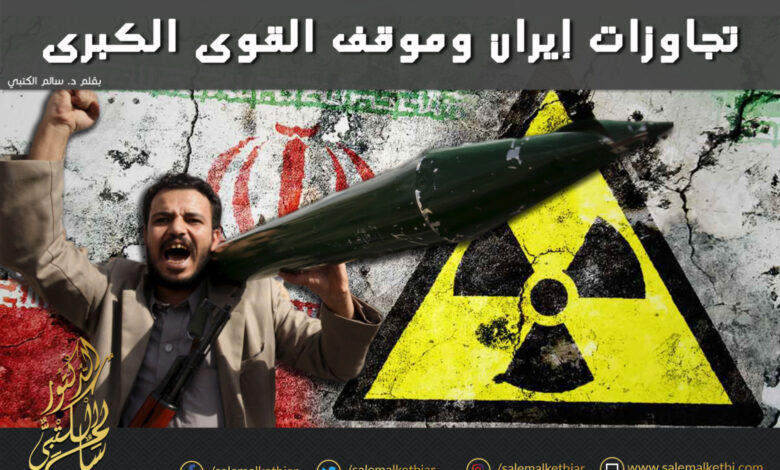
Backed by the Europeans and Russians, Iran continues to support rogue groups and militias in the Gulf region, one of the world’s most sensitive regions and a linchpin of global economy. As a result of Iran’s continuing smuggle of weapons and rockets to Yemeni militias, the Houthi group launched yesterday a new ballistic missile towards the Saudi capital of Riyadh. Although Saudi defenses intercepted the missile attack, a firm international stand should be made against this threat.
The Iranian-made missile, Borkan-2, is another evidence that Iran wants chaos in the region on a new level. It is thus necessary for the world to deal with the Iranian violations with seriousness and firmness.
The world was shaken by the recent missile tests of North Korea and imposed unprecedented sanctions on the regime in Pyongyang, as these tests flagrantly violate nonproliferation laws. But the Iranian missile attack was taken lightly.
Iran’s moves are far more dangerous than those of the North Korean regime. But what prevents the world from dealing with this threat is that Iran has been able to disregard everybody over the past years. The strategic mistakes made by previous administrations in major countries such as the United States also helped Iran expand its influence in a strategically important region for the major powers.
We cannot predict what the Iranian regime is preparing next, but we can expect anything from the regime of President Hassan Rouhani, who recently boasted his country’s influence in Iraq, Syria, Lebanon and North Africa.
The Saudi-led Arab coalition is aware of the magnitude of the challenges that lie ahead. The allied countries are firmly convinced that the security of the GCC and Arab national security are tied together. But the whole world should be well aware of the danger of giving Iran a free hand in exchange of few economic deals.
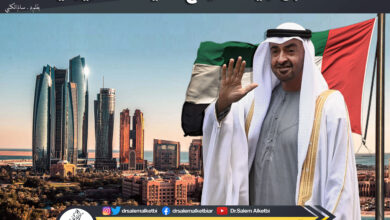
The Iranians should also know that they are opening the door to hell by targeting Saudi Arabia and that the Sunni forces will defend the Kingdom. Saudi Arabia is not alone in the face of Iranian sectarianism. It has the support of influential Arab powers like the United Arab Emirates. Voicing his position on the Houthi attacks on Saudi Arabia, His Highness Sheikh Mohammed bin Zayed Al Nahyan, Crown Prince of Abu Dhabi, Deputy Supreme Commander of the UAE Armed Forces said the country supports the Kingdom, stressing that the security of the Kingdom is an integral part of the security of the UAE. “The hand of evil cannot intimidate the Kingdom.”
It is high time for the international community to act against those who undermine stability and support terrorism in the Middle East and the Gulf. By now, the world should have realized the Iranian danger to global security. The EU and Russia have seen now that Iran’s missiles are being smuggled to the Houthi and Hezbollah militias to wage proxy wars against other countries.