Eight years after the presidency of Barack Obama, the page was turned for the American soft power which some have sought to turn into a “smart power”. President Donald Trump vowed to restore the prestige and international influence of the United States. In April, a few months after taking office, US Vice President Mike Pines said in a speech to a rally in Pennsylvania’s Harrisburg City that President Trump defends allies and fights enemies, that he warned Iran and stood firm against the North Korean regime’s threat and that the world can see the power and firmness of the president. Trump’s actions in Syria and Afghanistan restored American power, he said adding that during 100 days in office, President Trump transformed America and it was just the beginning.
Making America great again is therefore one of the pillars of President Trump’s strategy. It largely explains Trump’s strict approach to dealing with Venezuela. He said in a statement that the US is considering options to respond to the escalating political crisis there, including military intervention, suggesting that Venezuela is a close target to a military strike.
President Trump seems to favor hard rather than soft power strategies, or rather a combination of the two known as smart power. He already succeeded in making America somewhat “great again” unlike how it was under Obama. The former president relied on soft power and experimental approaches like the leading from behind strategy.
Although the risk of world wars in the era of President Trump has increased, nothing strictly indicates that a new global war is coming. President Trump does not have a military background, meaning that threatening of using force aims at increasing US arms sales or bringing new deals to defense companies.
What the White House wants, you can understand it from James Mattes, US Secretary of Defense. His statements are the thermometer that shows if the US administration is hot or cold. So far, the United States has not changed its strategic position on new wars; it still prefers proxy war, still avoids repeating the Vietnam scenario but that does not mean it will not go to war at all with a rogue and arrogant regime like North Korea’s.
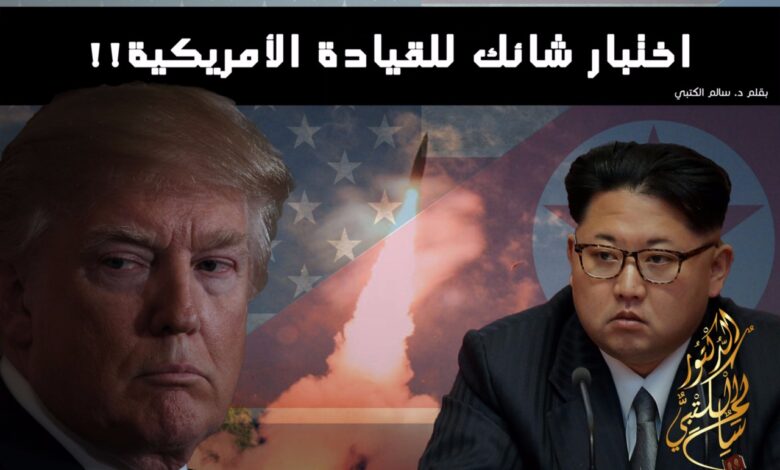
In a UN Security Council meeting on North Korea’s threats, United States Ambassador to the United Nations Nikki Haley said it was necessary to take the strongest actions possible to punish North Korea after its more recent Nuclear weapons test. “The time has come for us to exhaust all of our diplomatic means before it’s too late.” These statements indicate that there is a focus on diplomacy but problematic diplomatic options to deal with the crisis, especially after the Security Council imposed new sanctions described as the harshest before everyone went on looking for “harsher” sanctions on the DPRK.
In fact, the rogue state is not only a threat to the United States and its leadership of the world order but also to global security and stability. As it multiplied its war threats lately, the regime in Pyongyang disregards international sanctions. So new ways must be sought to force the regime to stop its reckless conduct and respect international peace and security.
Unlike dealing with Syria or Iran, dealing tough with North Korea’s violations is subject the international consensus.
The test for the American leadership of the world order vis-à-vis the North Korean threat is not to counter it individually or intervene militarily but in how to lead the world to adopt decisive diplomatic responses that force Pyongyang to comply with international law. The outcome of the crisis will largely determine the next balance of power and the geopolitical sway of competing powers like China and Russia.