Over the past several years, Iranian foreign policy was the main focus of researchers in the Arab Gulf, specifically Iran between the revolution and the State. Many conferences and seminars have been devoted to discussing the alleged Iranian transition from revolution to State. The mullahs are not acting as a State, and are not even using the logic of the revolution. Revolutions have features that can be drawn from history.
Iran’s behavior is not accepted by States and has nothing to do with the revolutionary behavior, especially after the exhaustion and the time-out of the mullahs, which prevent them from the continuation of the momentum of struggle that characterized the early years of the Khomeini revolution of 1979. Iran is still far from the normal behavior of States, as it never adheres to the conventional political norms of States.
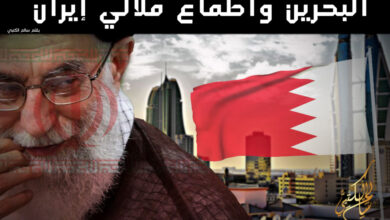
It is obvious that there is a complex crisis in the Gulf-Iranian relations. The GCC countries do not put impossible conditions to sort out conflicts with Iran but call for its commitment to the principles of the UN charter. The GCC countries calls Iran to respect the right of sovereignty, not to interfere in the internal affairs of neighboring countries, and to stop provoking sedition and conspiracies through the exploitation of sectarianism that seeks to destabilize some of the GCC countries. Iran’s actions always reveal the real intentions of the Iranian regime. In the recent past, Iran crudely interfered in Bahrain’s affairs, where Iranian media quoted Bahraini scholars as calling for a general defense and struggle in the street.
This was not the first Iranian inciting case against Bahrain and it will not be the last. The mullahs’ regime does not easily abandon its conspiracies through political appeals. Iran is used to drinking the cup of poison in every crime it commits at the regional level. Iran will be deterred only by sensing the high cost of such crimes.
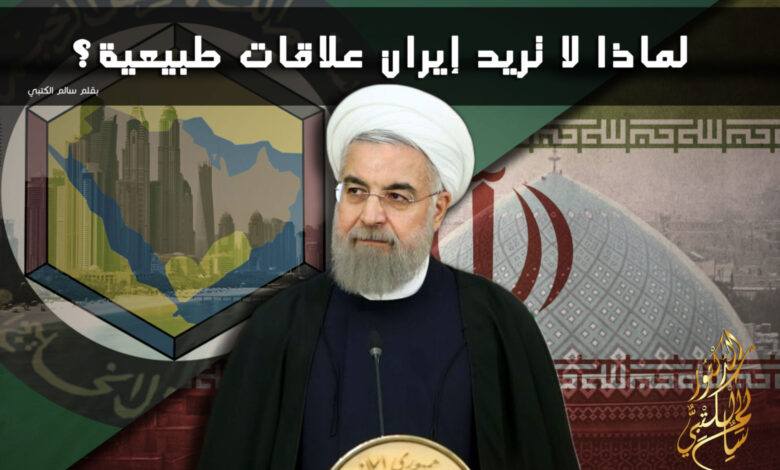
Iran is supposed to build normal relations with the Kingdom of Bahrain and other GCC countries. Some may say that Tehran has normal relations with some of the GCC countries and that the apparent and declared differences are confined to relations between Iran and countries outside the GCC. This is true to some extent, but it does not mean that Iran has goodwill for some and a bad will for others. Iran is opting to use sedition and conspiracies, and when it tries to improve its relations with some of the GCC countries, it seeks only to confuse them and sow strife and discord about how to deal with the mullahs. One of Iran’s strategic objectives is to undermine the foundations of the GCC and form an alternative system that includes Iran.
Theocratic regimes, which are characterized by dictatorship, extremism, and the lack of political balance, discipline and shrewdness, are suicidal systems by nature. Dealing with this kind of systems requires a good and realistic consideration of their true intentions. The Iranian regime is much concerned about the danger of collapse. It always retreats in front of any external pressure that might threaten the system rules. Such regimes do not care about the imposition of sanctions and international siege. They use such mechanisms as a pretext of their failure to achieve development for their peoples.