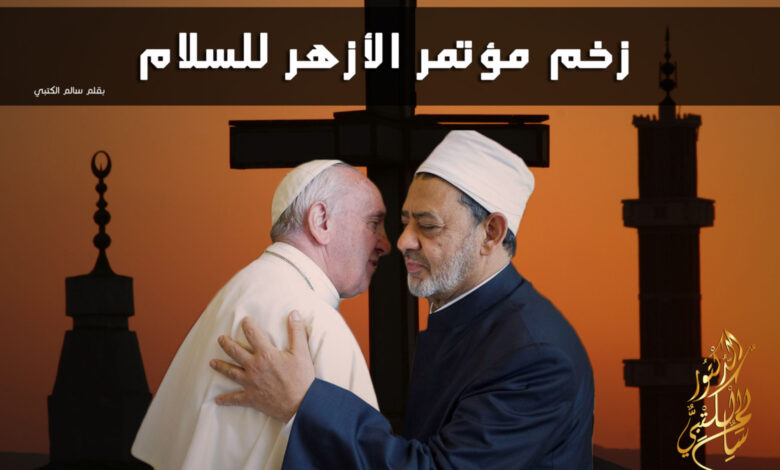
It is commonly agreed upon that the recent Al-Azhar International Peace Conference was an important step on several tracks, including the relationship between Islam and Christianity or the separation of Islam and terrorism.
Muslims and Christendom top representatives, the Sheikh of Al-Azhar and the Pope of the Vatican, meeting in Egypt during the conference, sent a joint message of peace to the whole world that should not go unnoticed, that dialogue continues between Al-Azhar and the Vatican in order to make conspirators and war traders and miss the opportunity to achieve their aims.
Only dialogue and convergence between religions can challenge extremists and terrorist ideologies and instil tolerance, moderation and dialogue in the minds of new generations. We have a precious opportunity to have two religious leaders who believe in the importance of this dialogue and the need for rapprochement between religions and cultures.
Described by experts and specialists as the most progressive pope in the history of the Catholic Church, the Pope has enough charisma, open-mindedness and composure to make him a strong advocate of justice and humanity in the face of cultural conflict and capable of leading the Western world away from the Islamophobia gradually spreading in various regions and countries there. The Al-Azhar Grand Sheikh, the enlightened scholar and philosopher, has an open religious vision and a strong desire to spread moderation, combat extremism and counter terrorist ideology while preserving the original values of the Muslim identity.
In his opening and closing remarks, the Grand Sheikh of Al-Azhar put forward a strong basis for serious future dialogues aimed at building a strong common front against the promoters of the theory of the clash of cultures and civilizations. He made it clear that Islam affirms that difference is inevitable, whether it is a difference in religion, race, language, or color, strongly denying coercive religious practices and highlighting freedom as a pillar in Islam.
The world does not tolerate religious wars and conflicts as new causes of conflict emerge such as climate change, mass migration, water shortage, starvation, only to name a few. With advancing arms and destruction industries, any religious conflict could result in many, many human losses.
We must acknowledge that one of the most important reasons for the rise of the danger of extremist thought is the shrinking role of moderate religious institutions for decades. We paid the price of conflict between ideological currents over a long period of time in the second half of the 20th century. Now, the cultural scene was left empty to the point where moderate institutions, such as Al-Azhar, are being made fun of in the cinema and television, undermining their credibility and giving a valuable opportunity for militants to further their propaganda.
We have to pay attention to the ongoing attempts to carry out ideological and religious attacks against some symbols of Islam such as Al-Azhar. There are anti-religious institutions and the role of religion in life. Antireligious propaganda is worse than terrorism, even if whatever intentions behind it are good.
We have an ideal opportunity to take advantage of the momentum of the recent peace conference to continue building the bridges of dialogue between Islam and Christianity and to spread the culture of moderation, tolerance and dialogue. Our peoples are fine and still have a great deal of moderation and tolerance. The Pope’s visit to Egypt was welcomed and celebrated, as we can see from the social media. Egypt is the bastion of Islam, but also of moderation, tolerance and coexistence.