The world used to believe that Donald Trump is an advocate of isolationism in foreign policy, especially that in the past few months he has been raising the slogan America First. The whole world believed that the United States will not fight for moral principles.
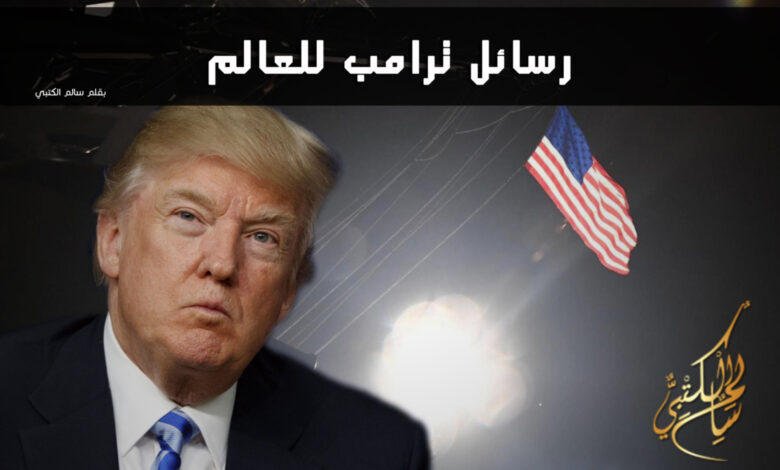
Trump surprised the world when he made a decision to launch 59 Tomahawk missiles against the Shayrat Syrian airbase, which was the point of departure of air fighters that carried out the chemical attacks against civilians in Khan Shaykhun.
A qualitative shift in US foreign policy occurred in the first international test of the Trump administration, which got deeply engaged in Syria and acted contrary to what Trump had claimed—the rejection of US military intervention in Syria.
But why did the Assad regime try to test Trump’s intentions through the Khan Shaykhun attack? Was this done at the behest of Russia, the mullahs of Iran or by a green light from both allies? There are questions about the missile strike and the messages it carries to several parties in the regional and international scene.
I do not think that the American missile strike is of great military importance, given the fact that the Syrian regime has more than twenty airbases that can be used and also that the attacked base has been restored to work, albeit partially, within a few hours. The American missile strike was not surprising because many countries have been informed, including Russia. Media reports, that preceded the strike, implicitly stated that the US administration is considering several military options, including a strike on the Syrian air base from which the fighters launched a chemical attack against civilians.
The missile strike itself is a political and strategic act. The strike reflects the approach of the new American administration, as it has sought to deliver a message, to the US adversaries, that there are no specific rules that can be followed in dealing with Trump administration.
The first and most important message was to the Kremlin, which was very optimistic about Trump’s approach to Russia’s role in Syria. The need was to deliver the message without risking the channels of dialogue with Putin. This goal was achieved through a calculated air strike that cost Putin losing some points in the Middle East at the expense of the Obama administration. This strike has adjusted the balances again, and confirmed that the United States is the effective leader of the existing global system, which decides what is right or wrong in the actions of regimes and states.
Russia has condemned the American strike and was unable to take other actions. In fact, Russia failed to prove its control over the Syrian scene, and found nothing to do in the face of Trump’s offensive. Russia announced the suspension of the air safety agreement with US forces, which aims to avoid incidents in the Syrian air between the air planes of the two sides. In addition, Russia pledged to support Syrian anti-aircraft defences. However, the terms of this agreement will remain valid, because it is linked to Russian and American interests.
The US showed apathy concerning the Russian anger, and has internationally revealed its readiness to do more, and informed Congress and the Security Council about that. The US also expressed the hope that doing more is not necessary, but it is a probable issue especially as it concerns the interest of US national security as confirmed by the US administration.
The second message of the missile strike is to Iran. The American administration wanted to emphasize its seriousness and that its actions match its words. This message is complementary to a previous US message to Tehran, which was “don’t test Trump’s intentions”. This was a firm message concerning Iranian interventions in the region which was received by the Iranian Revolutionary Guards constantly harassing American naval vessels in the Gulf.
The last few years witnessed a series of such incidents, including in April 2015 when the Revolutionary Guard intercepted a US trade ship. In the same year, Iran launched two missiles during a live ammunition exercise in the Strait of Hormuz which US destroyer Harry Truman miraculously escaped. The repeated and unexpected provocations from the side of the Revolutionary Guard tried to take advantage of the Obama administration’s approach to solve the dispute with Iran through negotiations. But now Tehran has to make accurate calculations of such a move, because the Trump administration will not remain silent about any Iranian provocation of the US naval power, specifically in the Gulf.
Certainly, Iranian decision-makers understood Trump’s message. The message to Iran also goes for its proxies in the region, most notably the Lebanese Hezbollah. American rockets could destroy Hezbollah’s strongholds in minutes, if the Trump administration feels that it constitutes a real threat to Israel’s security and stability.
Another important message was transferred to Pyongyang. Hours before the missile strike, Trump disagreed with his advisers about dealing with the North Korean threat, and he insisted that the US could counter the threat either with or without China’s help. The US has sent a naval ship to the Korean Peninsula, before the US Pacific Command ordered the Third Fleet to maintain its readiness and presence in the Western Pacific region.
The most important message is that the US is rebuilding its deterrence power, restoring prestige as the world dominant superpower, and reaffirming its commitment to the security of its strategic allies such as Japan and South Korea.