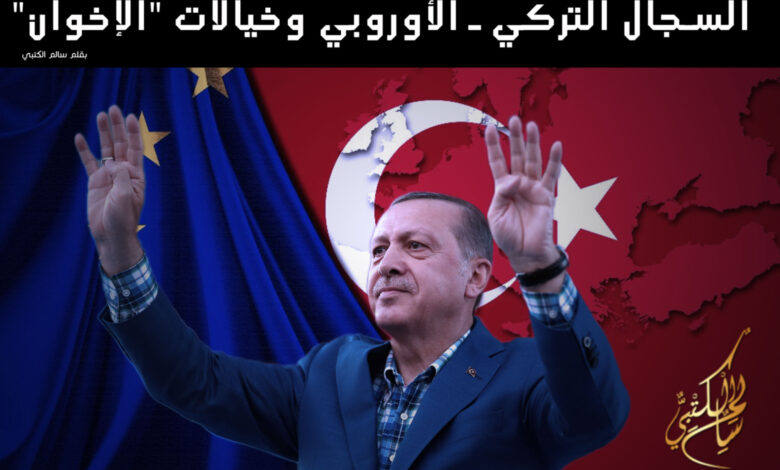
It seems that Arabs only follow up states’ disagreements in the east and the west for alignment. They make hash tags in support of this state against the other. It is a kind of irony to follow up fierce verbal social media disputes of Arabs who support the Turkish President against Netherlands and Germany, or those that back up these two countries against the arrogance of Erdogan.
Theoretically and realistically speaking, the Arab peoples have nothing to do with this battle. Arabs will not get harmed by the political defeat of Turkey nor will they benefit from its victory. The majority of Arabs on social media have extended their differences on internal issues to the outside.
In the recent past, a lot of Arabs were against Turkey on the assassination of the Russian ambassador to Turkey last December. Most Arabs wished that president Putin would wage a fierce war against the Turks in retaliation for the killing of the Russian ambassador. This did not take place and as a result the media of The Muslim Brotherhood became in conflict against them. This position was adopted by those who were disappointed at the Russian ambassador’s assassination, in the dispute between President Erdogan, Netherlands and Germany. They called German and Dutch politicians to take violent attitudes against Turkey, and some of them called Berlin to start war against the arrogant Sultan.
In such disputes and controversies between states, I do not take sides with a party on sympathetic grounds. In international relations, the interests of nations are subject to instantaneous and random feedbacks.
The Brotherhood’s media pokes its nose in any crisis concerning Turkey in a ridiculous manner. Some media paint the picture of President Erdogan as the saver of the Muslim world, and that the man is engaged in battles on behalf of the Arab and Islamic world. This media also promotes perceptions and ideas that make international disputes like a Hollywood movie starring Erdogan.
I regret that The Brotherhood has deceived those who already believe that the Turkish president is taking a struggle against the West in defence of Islam. I do not have any doubts concerning the intentions and objectives of Erdogan, but I am certain that he is acting according to his interests not from a religious perspective. The man signed an agreement with Europe in March last year, stipulating sending new refugees back to Turkey and preventing their transit to Europe, in exchange for three billion Euros and considering cancelling EU visas for Turks joining the European Union. Erdogan changed his attitude toward President Bashar Al-Assad when he realized that the administration of President Trump does not put Assad’s overthrow at the top of its strategic agenda. Erdogan puts dealing with the ambitions of the Kurds at the forefront of Turkey’s strategic accounts in the Syrian crisis.
President Erdogan is simply serving the strategic interests of his country as these are the ABCs of politics where moralism is to be avoided. What is surprising is the position of religion politicians who praise him as the Sultan of the modern era. They also recall the image that the majority of people may have kept in their sub-consciousness about the sultans of the old Islamic State.
The Brotherhood’s media and its supporters in the Arab countries make the political conflicts seem absurd. They use expressions which are odd in the world of politics, to convey statements that may harm them. The media considers Turkey to be brave to face Netherlands and Germany which are perceived as defeated.
Political conflicts are managed according to interests and are not effectively controlled by populist speeches. President Erdogan brought relations between Turkey and Europe as they were many years ago, but he may not be able to succeed, in the few years of his rule, to heal and repair his mistakes.
The positions of Erdogan in handling the crisis with Netherlands and Germany have completely ended Ihsan Oglu’s theory for zero problems with the world. Rather, these positions create issues with the closest NATO partners. It seems that President Erdogan has totally changed his attitudes after the coup. This coup was an opportunity to get rid of the Kemalist perfection, especially that of joining the European Union. Europe is concerned of any mistakes by Turkey that could cost the country its NATO membership, as Turkey is the eastern front of Europe against Russia.
This political haste in crisis management is alarming and feeds unrest in the world. It is difficult to assume that millions of Turks in Europe are not negatively affected by this crisis. The extreme right in Europe may use these conflicts to achieve malicious objectives and promote Islamophobia. These facts may not harm the crisis-makers but the people. Beware.