The strategy of Daesh has shifted recently. Not long ago, the organization claimed responsibility for a machete attack in Charleroi, Belgium. The terrorist attack at two Belgian police officers using such a handy tool is an example of the shifts in the strategy of Daesh. Prior to the assault, several terrorist operations targeted the French city of Nice and the German province of Bavaria and the US city of Orlando, as well as Istanbul and Brussels.
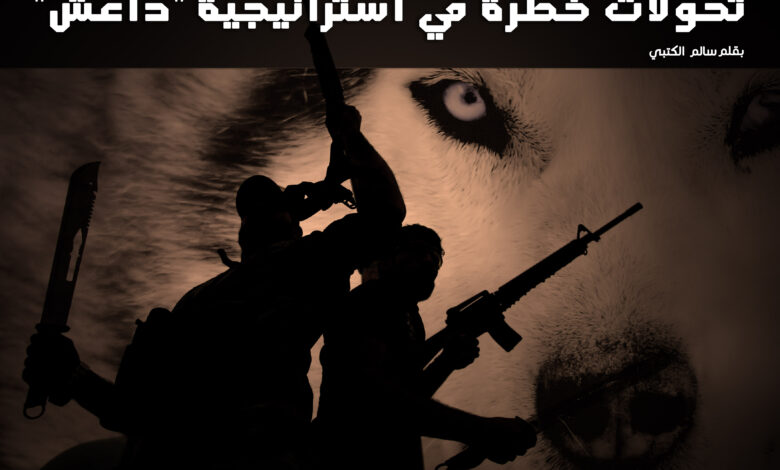
The shift in the strategy of Daesh involves launching individual attacks with simple tools by one or two individuals, known as lone wolves, in an attempt to spread terror in several parts of the target countries.
Most seriously, the lone wolves attack easy targets under weak or minimal security. They often target gatherings of large numbers of innocent victims, impacting those people as well as official and government authorities.
Daesh wants to give the impression it is capable of carrying out its threats, have the upper hand on security forces and have residents and tourists skeptic of their ability to protect them, creating anxiety and a climate of fear in those countries.
The strategic shift is serious for several reasons. First, it puts every Muslim, whether visitors or citizens and nationals of the target countries, in the circle of suspicion and mistrust, which can be destructive to the relationship with non-Muslim and also imprint a negative stereotype of Islam.
Second, lone wolves operate in small numbers to carry out terrorist operations serving the objectives of the organization without having to make direct communication or receive orders or instructions. More often than not, they choose the target, and the tactic and the timing by themselves.
Third, Daesh sends open invitations to its supporters and sympathizers in specific regions and countries to carry out terrorist attacks. That is to say, the organization is only directing the operations. It points the target geographic location without specifying the five W’s of the operations.
Potential supporters, influenced by the Daesh propaganda, often carry out the attacks. That was the case in the attacks in Germany and France, such as the attack by the Afghan immigrant on a passenger train in Bavaria, southern Germany, on July 18, 2016; German Interior Minister Thomas de Maatsere stressed that Daesh inspired the Afghan teen although no evidence of orders or instructions to him was found. The same goes for the vehicle ramming operation in Nice, France, which claimed the lives of 84 people.
Fourth, the organization adopted the lone wolf strategy to destabilize security and stability, using maddened individuals living within Western societies. The organization learned about the social conditions of Muslims in the West and the problems they face, so it attracts even the slightest portion of people facing integration difficulties and filled with anti-social feelings.
Fifth, the new strategy adds fuel into the fire as it ignites sectarian conflicts by targeted people of different sects, compromising social cohesion to pave the way to the organization’s entry in the scene. This happened in Saudi Arabia, where Daesh targeted Shi’ite communities, to ignite sectarian strife.
Sixth, Daesh uses improvised and accessible weapons. It carries out attacks with ‘primitive’ weapons such as knives, cars and even stones as Abu Mohammed Al Adnani, a leader of the group, has called for. This makes carrying the attacks more attractive to many sympathizers with the Daesh ideology and renders tightening security measures sometimes useless. This also helps neutralizing security information networks as attacks are carried by unsuspected individuals with little information about them.
Finally, the terror group takes advantages of people with a non-terrorist criminal record. The perpetrators of the recent terrorist attacks in Europe had criminal records with the public security services and not the special services dealing with terrorist/extremist activities.
Daesh altered its field strategy, but it is the ideology that needs to be countered. The present issue is not the alleged attempt to bring back a caliphate, but the damage inflicted to the relationship between Muslims and non-Muslims around the world. As a consequence, many Muslim travelers, tourists and even citizens living in Western countries citizens, are looked at with unbearable doubt and fear. As recently reported in a media report, carrying a book in Arabic or speaking the language on an airplane is enough these days to raise the concerns of some passengers.
These individual reactions can spread in the future as rightists are earning increased popularity in several Western countries which could further fuel Islamophobia and hostility towards Muslims. We must not simply condone those reactions and attitudes, but we need to intensify efforts to combat the terrorist ideology through educational, religious and cultural channels, along with security measures. It is not in the interest of the Islamic nor the Western worlds to let terrorists and extremists from both sides ignite civilization-scale conflicts.