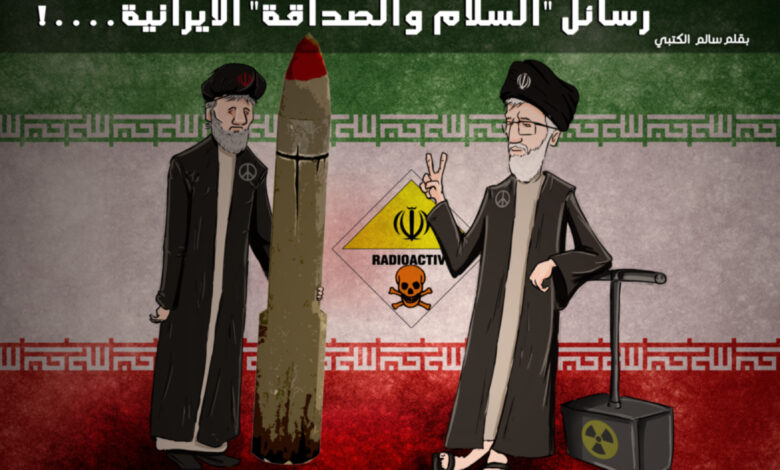
Iran is the only country in the world that performs continuous military exercises throughout the year, according to carefully calculated timings, and declares it is a “peace and friendship message to neighboring countries”, and the latest of these maneuvers took place in the near yesterday, when “Bayt Al Maqdis 28” maneuvers were launched in “Kashan”, in the center of Iran, targeting, according to Iran’s official statement, “firing Nazeat and Fajr-5 rockets, and intended to display the strengths and energies of the ground force units of the Iranian army.” Brigadier General Ahmad Reza Bordstan, ground force commander in the Iranian army, considered that the message of the maneuvers represents “peace and security to friendly and neighboring countries, and a firm and strong response for the enemies of the Islamic Republic of Iran.”
Despite the intensity of the number of maneuvers conducted by Iran annually and their remarkable diversity that makes the army and the forces of the Iranian Revolutionary Guard on continuous combat alert, it is impossible to ask Tehran to completely desist from conducting maneuvers, as it is a right of sovereignty and as the Gulf Cooperation Council countries are committed to a foreign policy of non-interference in the affairs of other countries. But when Iran persists in announcing on an ongoing basis that these maneuvers are friendship and peace messages, this announcement is ironic and raises legitimate intuitive questions: what peace can be brought by missile tests on offensive missiles, not defensive ones ?!
Weapons in all armies have either an offensive or a defensive character, even military doctrines themselves are based on offensive or defensive strategies, and from here we can understand the motives behind military exercises and maneuvers. All the armies of the world have periodic plans and programs for individual or joint military exercises and maneuvers, and this is a fact. But Iran remains among the ideologized systems that are exaggeratedly addicted to maneuvers, taking them as a way to promote a climate of fear and confusion in its strategic environment as an end in itself. The Iranian regime is a tactical system based on the militarization of society, which is reflected in the multiplicity of institutions and agencies that possess hard power in the country, including the army and the Revolutionary Guards and the “Basij” militia that falls under the command of the Guard, which reports directly to Iran’s Supreme Leader, and each of these forces and militias has its own arsenals of weapons and annual exercises that it conducts, which reflects the tremendous emphasis on the principle of militarization and the use of weapons and hard power to a degree that makes it difficult to any observer to be convinced by the messages of peace and friendship by which Tehran is trying to convince and deceive its neighbors.
It is known that maneuvers and military exercises in any armies or military alliances generally involve messages to certain parties in particular, and these messages are a deterrent or warning or intimidation or a display of power and prestige and military capabilities, but saying it is “a friendship message” is nothing but a kind of tampering and sarcasm that does not fit at all with the explicit statements and threats, which the mullahs do not stop for one day from addressing to neighboring countries!
When Iran conducts maneuvers after summit meetings held by the GCC leaders, some Tehran officials come out to claim that there is no synchronization between the two events, and that the maneuvers were programmed … etc. But these are lies and allegations, which are obvious to any sane person. The message of such maneuvers does not carry anything except a message of threat and intimidation, especially that these “programmed” maneuvers take place only after meetings that come out with resolutions and data that clash with the positions of Iran about regional and international issues.
Iran also manipulates words in its statements about the maneuvers, and claims they are peace messages to friends and a warning to enemies, and this is something that needs to be interpreted and understood. What is meant by friends for Iran are its agents and followers and the Shiites in the region in general, and the rest fall into the enemy category, according to the Iranian vision analysis and strategic vision. If the meaning is inside the poet, as it is said, then there is no State that can be classified hostile to Iran, according to the official Iranian political discourse, more than Israel, but reality undermines this hypothesis from the root. Israel does not feel any real or serious danger from Iran, and all what is happening on the part of Tel Aviv is an Israeli politician use of the Iranian noise and empty declarations to attract more US military support and ensure the continuation of the idea of Israel’s regional military superiority.
Can the GCC believe in Iran’s peaceful maneuvers and in the goodness of their purposes at a time when Iranian leaders officially announced that some of these maneuvers aimed at training to close the Strait of Hormuz, which is the lifeblood of economic life to the neighboring countries of Iran? Then which friendship messages may be involved in the closure of the Strait in violation of laws and legal rules on international waterways? And can the GCC believe in the goodwill of Iran when it is experimenting with training on offensive weapons that are not purely for defensive purposes? And above all which good intentions can be involved in maneuvers conducted by a State that does not stop interfering in the internal affairs of some of the GCC countries, trying to stir up unrest and turmoil within these countries again and again?
There are allegations repeated by some of the followers and regional agents of Iran that Iran’s power is an added force to the region, and that a strong State protects the interests of the peoples of the region and protects the independence and prevents major powers to intervene. This discourse is neither true nor logical, as the State that most raises unrest in the region is Iran, and there are many clues and evidence in Yemen, Iraq, Syria, Lebanon and other countries. So how such a naive logic can cover the suspicious expansionary truth of Iran’s regional role.
The truth is that Iran’s maneuvers in their entirety are only explicit threatening messages to neighboring Arab countries. Everyone is aware of Iran’s real intentions and its expansionist ambitions, which were aimed at tightening the strategic sectarian control collar on the GCC through its Houthi proxies in Yemen up to the agents of the “Hezbollah” in Lebanon in the north.