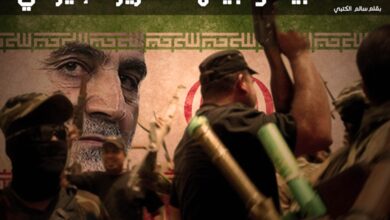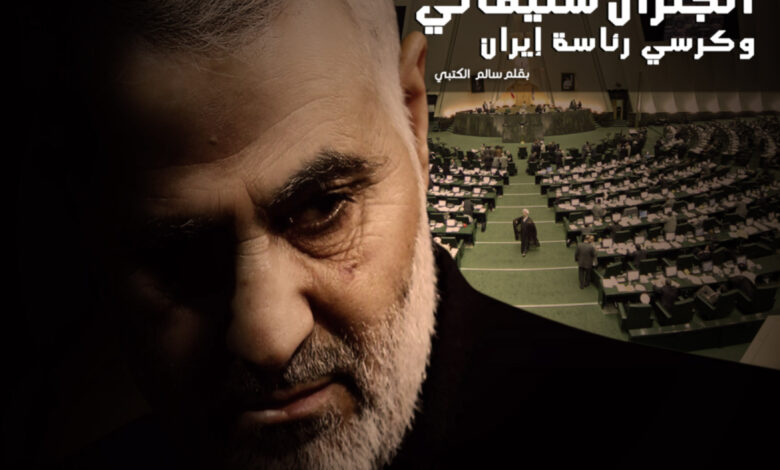
There are indications that have not yet matured that the Iranian hardline current is betting on pushing General Qassem Soleimani, Commander of the Revolutionary Guards, to run for the upcoming presidential elections in the country, scheduled for next year. This development comes on the background of defeats suffered by the hard-liners in the Iranian Shura Council elections.
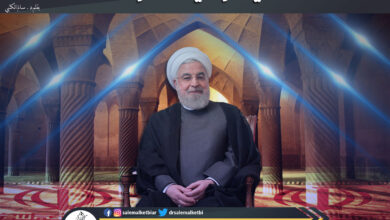
Despite the fact that opportunities related to the candidature of Soleimani are discussed by some known Western studies centers and periodicals, that does not seem a foregone conclusion for the hard-line current in Iran so far for several reasons, the most important of which is the intentions of the Supreme Leader Khamenei himself, and his conception of the next political map of Iran, both after the term of President Hassan Rohani, or in the management of relations with the United States in particular, as just the fact of Soleimani running for the post of president means that Tehran does not intend to change its policies, and that it adheres to extremism and demagogic rhetoric towards the West.
Technically, Khamenei is considered the spiritual father of General Soleimani, and the one who raised him to the front of the Iranian arena in recent years, seizing every opportunity to pay tribute to his role in several vital external files for Iranian foreign policy, as he has already said about him, “Soleimani was a martyr many times on the battlefield … He is the living martyr of the revolution”. And the relationship between Khamenei and Soleimani looks strong since the days of the Iraqi – Iranian war, so there is great confidence in him on the part of the Iranian Supreme Leader. This is why some Iranian affairs experts in the West believe that Khamenei may push Soleimani to the presidential chair in case there is a complication in matters related to regional interests files of Iran, such as Iraq, Syria, Lebanon, Yemen and elsewhere, especially that General Soleimani is one of the ideologized leaders who believe in the idea of the revolutionary expansion, and he has already addressed the reasons for the existence of the Revolutionary Guards in Syria, saying that “the victory or the defeat of Iran today are not in Mehran or Hermchehr, our borders stretched, everything that happens in Egypt, Iraq, Lebanon, and Syria is one of the fruits of the revolution, we have to prove our victory there.”
More importantly, Soleimani may be the next message to Iran’s neighboring countries, the man is ranked by Americans as a “terrorist”, and his name is linked to the failed Iranian plot to assassinate the Saudi foreign minister, Adel al-Jubeir, while he was working as ambassador to the United States in October 2011.
Many factors will resolve the controversy over the choice of Soleimani to run for the next presidential election of Iran, including the course of the Syrian crisis, as he is in charge of the Iranian file in this crisis, and its course can, to a large extent, identify the compass of his future, either by escalating and playing a greater political role, or by seclusion and staying in the shadows as a general who has lost in the Syrian front. Among these factors are also the fate of the Iranian nuclear deal with the West and the position of the next US administration about it. The agreement is at the moment exposed to strong pressure in the American home, and there are chances of freezing it or pushing Iran to violate it, which would be a justification for the United States to cancel it and to act in accordance with a different strategic vision from the next US administration. Here, General Soleimani may be the card played by the Iranians to provoke the US and Israeli concerns, he is a fierce opponent of the agreement, and he may be a reproduction of the scenario of former president Ahmadinejad in his inflexibility towards the West.
What also supports Soleimani’s opportunities is that the militants’ arena is almost devoid of influential elements, The first generation of the Iranian revolution is nearing extinction, and the rest of them suffer from deterioration in popularity, such as what happened with Mesbah Yazdi and others in recent Shura Council elections, which opens the way for Soleimani to follow General Mohsen Rezai, former Commander of the Revolutionary Guard, who took part in the Iranian presidential elections in 2009, won by the former president, Mahmoud Ahmadinejad, whom some hard-liners are now trying to promote his return to take part in the next elections, which is a probable scenario subject to availability of strategic specific conditions and data.
The idea here is that it’s not about real political competition for the post of president, but rather how the leader manages the positions and the chairs of power in Iran, he is the highest real power in this theocratic regime, and he controls the running for office as players control circus puppets, and thus escalation of a “militant” or a “reformer” is in the hands of the guide and no one other than him, and manipulation of labels is mainly subject to the Iranian media machine that puts some figures on the spotlight while removing others from it, according to the game of roles distribution which the system excels at since the Iranian revolution in 1979.
Soleimani may run or not run for the next Iranian presidential election, but the most important point in the Iranian debate about this issue is that Iran has been, and still is, unable to get rid of policies of extremism, which has become institutionalized and has the upper hand in managing the country’s affairs, and there are deep interests to supporters of this trend, particularly with regard to the interests of the Revolutionary Guard and its generals, who refuse to open up to the world and that Iran become a normal country, dealing according to international laws and norms, politically, commercially, and diplomatically, as its leaders insist on the adoption of a “regional bullying”, and the adoption of politics of power and national Persian vanity, and then it seems that there are no considerable opportunities to those who are described as moderates or reformers among the sons of the Iranian revolution, their chances of remaining in the Iranian scene depend on the interests of the ruling elite and the Supreme leader, sometimes they are pushed on the scene as in the cases of President Khatami and to a less degree, President Hassan Rouhani, and sometimes they are pushed to reclusion for the benefit of extremist leaders, who express the truth of the matter about the spirit of the Iranian Revolution and its intentions toward the region and the world.