There is no doubt about the seriousness of the recent terrorist attacks on France, as these bombings involve a lot of very serious dimensions and connotations, so much so that some experts have described them as «the French September 11 » in reference to the attacks of September 11, 2001 on the United States, which represented a historic turning point in the course of international relations and US foreign policy.
When French President Francois Hollande is considers the attacks on his country as a «war on France» and that his country would respond «ruthlessly», it means that we should expect more regional turmoil during the coming period, as many expect the Middle East to become the theatre of the French reply to this «war», as Iraq and Afghanistan were the theatres of the US response to the attacks of September 11, 2001.
No one can predict the aftermath of the events during the foreseeable future, but certainly in this crisis, terrorism brutality has grown dangerous to a degree that institutions and experts are no longer able to predict its coming hit after it was able to bring about a huge breakthrough in the fortifications and security measures in Paris, and carried out criminal attacks that claimed the lives of 129 innocent people.
The loss on the part of Arabs and Muslims and the Islamic religion in these barbaric attacks outweigh the losses of international parties. As soon as the attempts to link Islam to terrorism subside, new terrorist operations launched by organizations falsely claiming belonging to the Islamic religion take place. It is no exaggeration to say that if the enemies of Islam tried to distort our religion, they could not carry out even a small percentage of what was done by the criminals of «Daesh» and «Al-Qaeda» and other terrorism and extremism organizations spreading across the world.
Although this crime was met with widespread condemnation in the whole world, the truth requires to say that the efforts made so far to eliminate terrorism are still lacking a lot, carried out timidly, and are occasionally subject to political interests. They are even used to achieve strategic objectives of some major international powers. Therefore, these efforts seem useless. It is enough to note the passage of more than a year on the military operations carried out by the international coalition that the United States led against «Daesh» in Syria, which operations began in September 2014, and have not achieved quality results on the ground so far, while Russia also engaged in a war against this organization from the beginning of the thirtieth of September, but without achieving results that would change the balance of power on the ground so far!!.
There are record numbers of air strikes and rates of hitting the objectives declared by the various parties involved in the operations, both within the international coalition or outside, such as Russia, which is surprising and imposes in turn, serious questions about the nature of this organization that is able to absorb this huge number of air strikes and stay on most of the land which it dominated before the launch of military operations against it!!
The lesson I can draw from the clashes with Daesh and the attacks on France is that everyone loses in the war against terrorism unless the international community reaches a more realistic formula in the fight against terrorist organizations, rather than expressing sympathy and condemnation. I wish everyone treats this vital file according to its real size and danger and without trivializing or dramatizing. There is also a need to agree on some vital points for the success of the war against terrorism. First, complete and absolute separation between terrorist organizations and Islamic religion not only conceptually, but also in political terms. They do not represent in any way more than a billion and a half billion Muslims, and this must be dealt with on the conceptual and legal and political level. There is a need to reach an international formula of understanding to ensure respect for all religions, and to address the sectarian and religious strife that cause trouble in many regions of the Islamic world. There is also a need for an international understanding on the sensitive religious and sectarian situation in the Middle East, so that regional and international powers stop tampering with this sensitive mosaic and complex reality in order to achieve their interests and strategic objectives.
There is also a need to support the moderate religious institutions efforts in the Arab and Islamic worlds, as well as a need for an international and awareness raising «Marshall» Plan to finance intellectual immunization against terrorism, in addition to addressing the developmental and social problems, whether in the West or the East. If some parts of the Muslim world suffer poverty, corruption, poor education and ignorance, which opens the door to the incursion of extremist ideology, the West also suffers problems of marginalization and poor integration and social alienation and “Islamophobia”, which isolates many Muslims and facilitates the task of the terrorists in attracting and luring them to this dreaded trap.
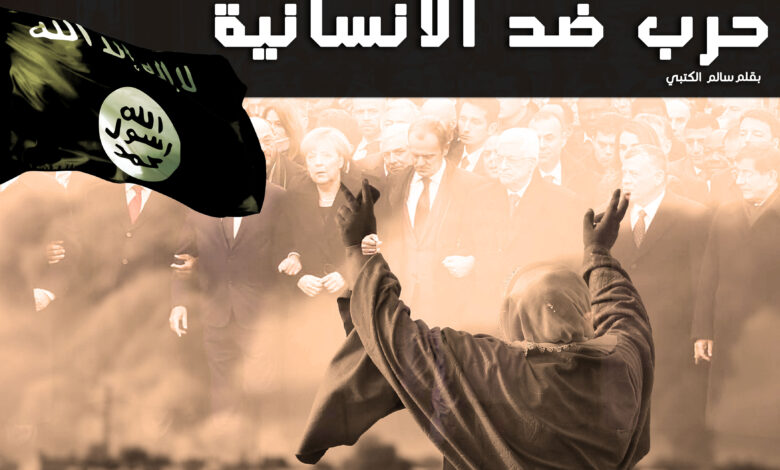
Terrorism in fact is a war against all humanity and not against France, Lebanon, Russia, Egypt or Syria only. Facing it really will not only be by expelling «Daesh» from the territories it controls in Iraq and Syria, as the danger is much more serious than that. May be the military victory that has been expected for some time will only be a temporary “ebb”, followed by a more dangerous “flow”, in light of the results of the historical monitoring and analysis of the terrorist phenomenon, which has developed and deepened and expanded very clearly since the eighties of the twentieth century.
We must recognize, above all, that the West was somehow slow in paying attention to the threat of terrorism. The West realized the magnitude of this risk only after it suffered a series of successive terrorist attacks which culminated in the eleventh of September 2001, despite the fact that terrorism was directing strikes to Arab and Islamic countries several years before that long. Moreover, well-known Western capitals were hosts to terrorism leaders claiming political asylum and so on, and recognizing this fact here is not to determine the responsibilities, but to compensate for the past and engage really in addressing this risk.
I realize that is not the time to cry over spilled milk, and I certainly refuse completely the clear tone of gloat in the comments of some Arab writers and analysts on what happened to innocent people in France, but the issue is very dangerous and worth a pause from the whole world, a pause that matches the level of this imminent and worsening danger.